


Mr. Orwell, if he were here with us, would recognize what he was looking at. Moving past the fascinating advances in technology he missed during this absence, the general outlines of the epistemic tyrannies he warned about are all around.
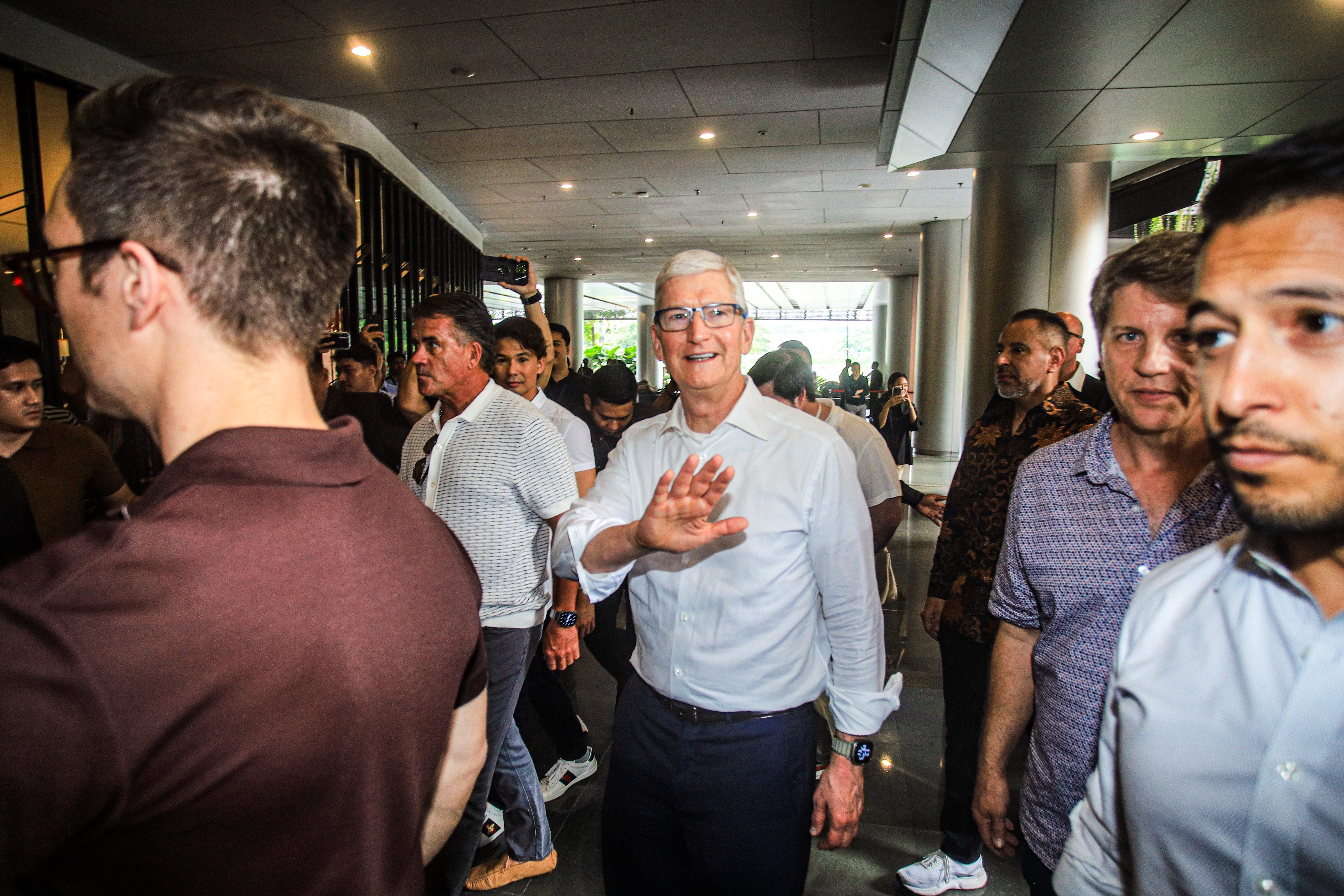
What he would be looking at, this week, is a lake. One of North America’s Great Lakes. On Tuesday, Apple renamed one of them — Lake Ontario — on its Apple Maps application. Users in the United States now see “Lake America.” Users in Canada still see Lake Ontario. Everyone else gets both names — one body of water, two labels, assigned by region settings. No law made the company do it. The president’s order directs federal agencies and the federal names database, and it cannot compel a private label on a private map — and Apple did it anyway.
Orwell’s century had a ministry for this work — a Records Department, clerks, tubes for the old maps, a furnace. Ours is quieter. Nobody seizes the record. The record is a product, and products update. Keep the dates, because the dates are the story: the call was disclosed on Monday, August 31, Tim Cook’s last day as chief executive of Apple. The map changed on Tuesday, September 1, John Ternus’s first.
⁂
The order came on Thursday, August 27, directing the Interior Department and the Board on Geographic Names to scrub Lake Ontario from federal maps, contracts, and communications. The government database was updated within hours. I wrote about the order. MapQuest, a company the country had mostly forgotten, posted a screenshot of the lake that same day with four words under it: “We’re not changing it.” On Saturday, Google folded in three sentences on a product blog. On Monday, Interior Secretary Doug Burgum went on Fox Business‘ Mornings with Maria and described the president’s phone call to Tim Cook as scheduling: “I know that the president reached out to Apple directly, so I’m sure that we may be seeing that change coming up coming up soon to Lake America.” He called it “a little bit of inside baseball.” On Tuesday, the label flipped.
Apple has explained none of it. The company did not respond when the call was reported, and when the rename went live it declined to comment — no statement, no policy page, no byline anywhere on the decision. Google, at least, filed paperwork: a policy, a procedure, a tense with no subject.
For scale: when the president renamed the Gulf of Mexico last year, Google took eight days to comply and Apple took more than three weeks. This time Google took two days, and Apple took five — and the only new variable was a call from Donald Trump to Tim Cook.
Donald Trump’s call to Cook was not a friendly request — it was a reminder. And, no, AI didn’t write that — I did, including the em-dashes — and I will now explain what Trump was reminding Cook of. The ledger is public, and it is long. A million dollars to the inaugural, and a seat in the Capitol rotunda ahead of the men who would run the government. The gold: a custom glass disc on a 24-karat gold base, engraved with the president’s name, handed over in the Oval Office on August 6 of last year beside a pledge of $600 billion — the vocabulary of court, not commerce, as I wrote at the time. The dinner in September, where he practiced his sycophancy at a table of oligarchs toasting the man who had threatened his company by name.
The consideration ran the other way on schedule. April 2025: smartphones exempted from the reciprocal tariffs, the carve-out the company’s entire supply chain breathes through. May of that year: the president said he had “a little problem with Tim Cook” and threatened twenty-five percent on the iPhone. The threat retired in August, in the same room where the gold changed hands: the hundred-percent chip tariff arrived with an exemption for companies building in America, announced with Cook standing beside the desk. The company paid anyway — about $3.3 billion in tariffs, roughly a billion a quarter. Protection, like everything else in this economy, at retail.
And protection is never owned. In February the Supreme Court struck the tariff statute, six to three, and within hours the president imposed a ten-percent global surcharge under a different authority, with no product exemptions this time. That surcharge expired on July 24 when Congress declined to extend it, leaving the older China tariffs standing and every carve-out resting where it has always rested — on one man’s continued sense of being properly honored. CNBCput the choice in plain sight: pursue the refunds the ruling may entitle the company to, or absorb the costs “to avoid angering Trump.”
We will never get a transcript of the call, and we do not need one. A chief executive carrying a three-billion-dollar tariff tab, whose exemptions expire with the grantor’s mood, does not have to be threatened. The exposure is the message. The gold was a premium, and premiums lapse, and by Cook’s last day the insurer had called to say that a lake would do.
⁂
There’s no ministry to march on — Apple is in Cupertino, and nobody is going. The order could not compel the company, and the company does not even claim to have been compelled. Google hid behind grammar. Apple dispensed with grammar. The map changed the way a subscription renews — automatically, at renewal, with no human left in the loop to write to.
The old warning missed the ownership question. The record was nationalized in theory and privatized in fact, and a privatized record is not seized but serviced. The state places a call to the owners of the means of description, and the owners calculate. If you are reading this on an iPhone, the record in your pocket already says Lake America, and no clerk anywhere had to be ordered to put it there. Orwell feared the boot. The durable arrangement turned out to need no boot, no demand, nothing anyone would ever have to defend in a hearing — only a company with a tariff exposure and a president who knows the account number.
Burgum said the quiet part on Fox Business: “I’m sure that we may be seeing that change coming up soon.” A threat would at least concede the possibility of refusal. The Interior secretary discussed a private company’s product as a logistics certainty, the way you discuss a package that has already shipped.
⁂
Cook’s farewell was scheduled in April, when he called the job “the greatest privilege of my life,” and the company’s announcement included the line that matters: as executive chairman, Cook will keep “engaging with policymakers around the world.” The company put it in the press release. The man is leaving the office and keeping the relationships, because the relationships were never the company’s — they were his, purchased in gold, and their maintenance is now listed among his official duties. The tribute portfolio transfers to Ternus with the office.
His successor’s first day was Tuesday. Ternus said in April that he was “humbled to step into this role,” and on his first morning the role included a lake his company had renamed for a president while the ink on his business cards was still wet. He made no decision about the lake. There was nothing left to decide — that is what the week was built to show. Whether Cook himself held the phone has not been reported, and it no longer matters. The account is institutional now.
Somewhere in the West Wing the plaque still sits where plaques sit. The man who carried it in is no longer chief executive. The arrangement did not notice.
⁂
One company declined the week. MapQuest posted its refusal on the day of the order, and when the country remembered the company existed, it posted again: “We’re not changing the name of Lake Ontario. Name it whatever you want at your leisure.” By Tuesday the holdout was the top free app in Apple‘s own App Store — ahead of ChatGPT, usage running at fifty times normal, with general manager Doug Berger crediting the “hundreds of thousands of people” who, in his words, signaled “that we got it right, by downloading our app.” The map that said no sits at the top of Apple‘s store, delivered to iPhone users by Apple, under Apple‘s own label. I wrote in the spring that Steve Jobs built Apple to be the most powerful no in American business. This week the most powerful no in American business belonged to a company everyone thought was dead.
The lake, meanwhile, has two names now, sorted by audience — one for the country that ordered it renamed and one for the country that refuses. Somewhere north of Oswego the label changes at a border no one can see from a boat. The water does not know what the database says. It is the same water on both sides of the line, and the men in the boats call it what their fathers called it. The update has not reached them.
Go Deeper into the Circus
Deadnaming the Lake

The United States Department of State apologized for deadnaming a lake this week; no one made them do it, and no one has made them stop. It happened in the universe we all live in. It is all very stupid and masks dynamics in our society that are very dangerous. Dear reader, I endeavor to explain why that is the case. The post went up on
The Human Printer

The operation’s first visible defensive move of the week was a photograph. It was taken on Thursday, August 20, in the Rose Garden, where Melania Trump ended thirty-two days offstage — she had last been seen beside her husband on July 19, at the FIFA World Cup final in New Jersey — by stepping to a podium at an event built around a
I deleted Google Maps after their capitulation. While I haven't deleted Apple Maps, my default is now Map Quest. For the record, I live a block from the Genesee River and four miles from the shore of Lake Ontario. Virtually no one on this side of the lake will call it anything else.
We are here, in this moment, because of the tech bros.