


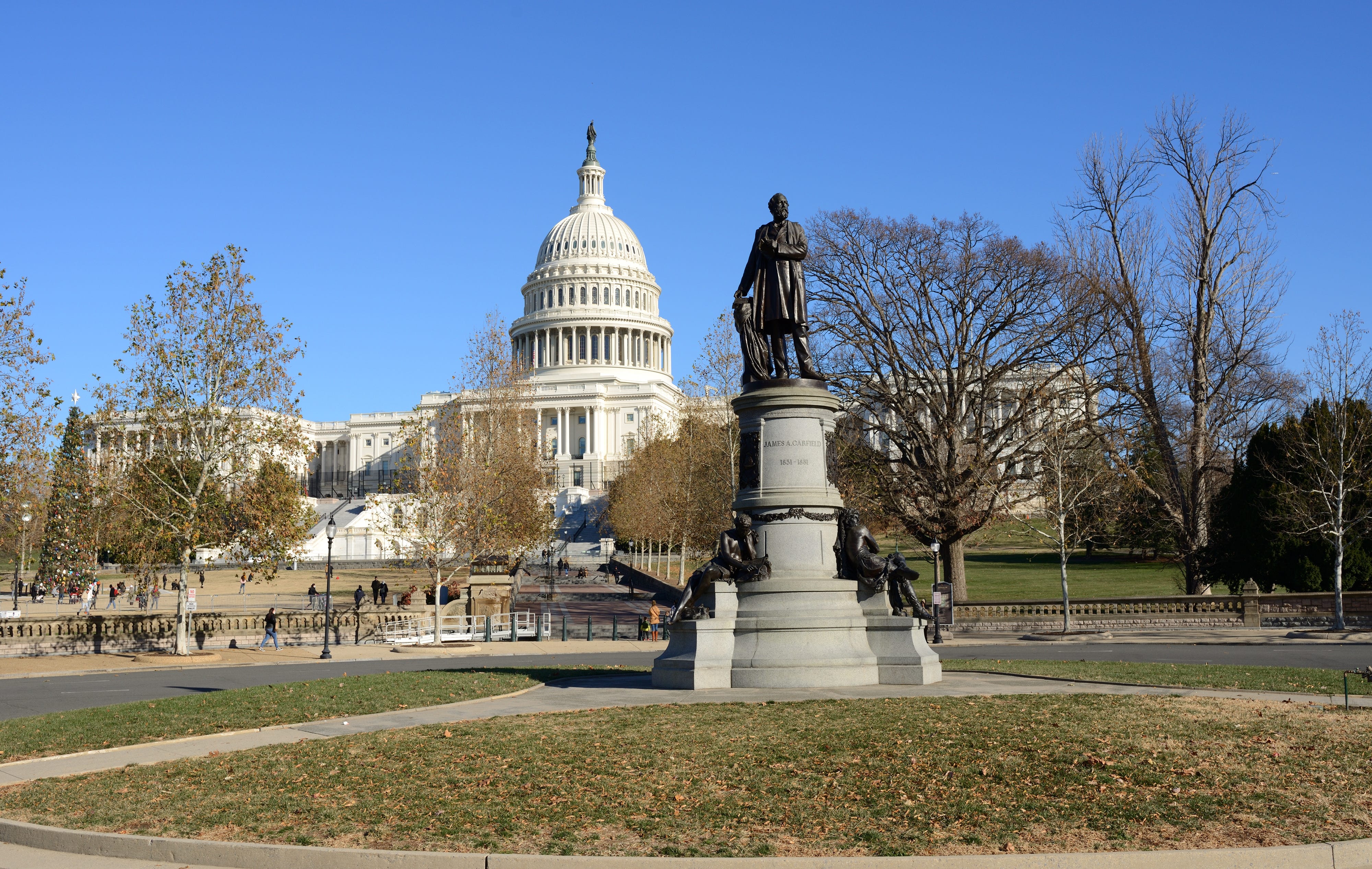
The Supreme Court of the United States this morning, by a 6-3 vote along the only line that matters anymore, overturned a ninety-one-year-old precedent and dismantled the constitutional settlement that has governed the American executive branch since the assassination of James A. Garfield. The case is Trump v. Slaughter. The precedent destroyed is Humphrey’s Executor v. United States. The statutory regime nullified is, in effect, the Pendleton Civil Service Reform Act of 1883 and everything that grew from it — every congressional protection for an independent commissioner, every for-cause removal restriction, every attempt by the legislative branch over a hundred and forty-three years to insulate the operations of the federal government from the personal whims of the man sitting at the desk in the Oval Office.
The president of the United States can now fire the head of the Federal Trade Commission for failing to bring a politically motivated antitrust case. He can fire the chair of the National Labor Relations Board for ruling against a donor. He can fire commissioners at the Securities and Exchange Commission, the Federal Communications Commission, the Equal Employment Opportunity Commission, the Merit Systems Protection Board, and roughly two dozen other multi-member agencies whose entire structural reason for existing was that their judgments would not turn on whether the current resident of the White House liked the outcome. He can do it tomorrow. He can do it without giving a reason. He can replace them with whoever he wants, provided the Senate confirms — and that is the Senate that confirmed Tulsi Gabbard despite being aware she was controlled by a cult.
The Supreme Court has restored the Spoils System and called it original intent.
⁂
John Yoo took a victory lap on television. “This decision is, perhaps, the most important decision about the operation of the government since 1935,” he said. “All those agencies were designed by Congress to be outside the president’s control, and the court says clearly that is not consistent with the vesting by the Founders of the executive power only in the president.” Yoo’s theory of the executive is the same theory it has always been. It is the theory he wrote into the legal memoranda that authorized the United States government to torture prisoners in defiance of the Geneva Conventions — the theory that the Vesting Clause is a constitutional solvent that dissolves every statutory, treaty-based, and common-law restraint on the personal will of the president. The torture memos applied the theory to the laws of war. The decision he is celebrating today applies it to the Pendleton Act. The Vesting Clause is the same eleven words doing the same work, twenty-three years apart.
That is the entire textual basis for the holding. Eleven words. A clause that for two and a quarter centuries was understood by every Congress, every court, and every president to be a routine grant of executive authority subject to the ordinary lawmaking power of the legislature has been transformed, by the conservative legal movement and the six justices it placed on the Supreme Court, into a master key that unlocks every congressional restraint on the personal will of the president. This is not law. This is a retcon. And the people who built it know exactly what they are doing.
⁂
The honest record of what the Founders actually said about the executive branch is available to anyone willing to read it. It is voluminous. It is contradictory in places. It is in places explicitly worried about the very accumulation of personal executive power John Yoo is celebrating today. Hamilton’s Federalist 70 on the need for energy in the executive is the document most often cited by the unitary executive theorists, and Hamilton there does argue for a single executive over a plural one. But Federalist 70 is in conversation with Federalist 69, in which Hamilton goes to enormous lengths to assure his readers that the American president will be nothing like a king — that his powers are bounded, that he is accountable to Congress, that the comparison to the British monarchy is in every meaningful sense disqualifying. Hamilton is arguing that the executive must be unitary in the sense of being one person rather than a committee. He is not arguing that the executive must be unitary in the sense of personally controlling every official in the federal bureaucracy. Those are different propositions. The conservative legal movement has spent fifty years quoting the first and burying the second.
Madison’s record is even more inconvenient for the unitary executive theory. The man who drafted the Constitution spent the rest of his life writing about the dangers of concentrated power. His correspondence with Jefferson during the framing and the early republic is a sustained meditation on how to keep any single branch — and any single officeholder — from accumulating the kind of personal authority that could endanger the republic. Jefferson, for his part, considered the establishment of an executive too independent of legislative control to be among the gravest threats to liberty. Adams worried about it. Franklin worried about it. The anti-federalists worried about it so vocally that the Bill of Rights exists in part because of their worry.
There is nothing in the framing record — the Madison notes, the ratification debates, the Federalist and the Anti-Federalist papers, the Jefferson-Madison correspondence, the Adams correspondence, the records of the early Congresses — that contemplates the Vesting Clause as a constitutional veto on Congress’s ability to structure the federal bureaucracy. Nothing. The Founders did not think they were forbidding the Pendleton Act. The First Congress, which included many of the framers themselves, established executive officers with statutory protections. The early republic argued about removal powers — the famous Decision of 1789 over the Foreign Affairs department — and the resolution of that debate was congressional, not constitutional. Congress decided, by ordinary legislation, how removal would work. No one in that debate suggested the Vesting Clause settled the question. The framers themselves understood that it did not.
When the Pendleton Civil Service Reform Act passed in 1883, in the immediate aftermath of Garfield’s assassination by a disappointed office-seeker — a man named Charles Guiteau who shot the President of the United States in a railway station because he had not been given a patronage job he believed he was owed — no court of the period found the act unconstitutional. No serious legal scholar of the period argued that it violated the Vesting Clause. No president of the period claimed that his executive authority was being diminished in any constitutionally cognizable way. The country looked at Garfield’s body, looked at the Spoils System that had produced the man who killed him, and concluded that staffing the federal government according to political loyalty rather than competence was incompatible with the survival of a functioning republic. That was the consensus. It held for a hundred and forty-three years. It held through the establishment of every modern regulatory agency. It held through Humphrey’s Executor in 1935, in which the Supreme Court ratified what every other branch already understood: that Congress could insulate certain officers from at-will removal in service of the public interest, and that doing so was not a violation of the Vesting Clause but an ordinary exercise of legislative power. It held until this morning.
⁂
The retcon has a documented history. It did not arise from the ground. It was not the product of independent scholarly inquiry that happened, by coincidence, to align with the policy preferences of America’s largest corporate donors. It was manufactured, deliberately, over decades, by a coordinated network of foundations and think tanks and law schools and credentialing organizations whose explicit purpose was to produce the constitutional theories that the corporate right needed in order to dismantle the regulatory state. I wrote about the doctrine and its origins in December, in The Unitary Executive Theory, and in March about its structural character in Conservative Legal Theories and Their Authoritarian Roots. The case for the diagnosis I made then has only strengthened.
The founding document of the project is the Powell Memorandum, written in 1971 by the future Supreme Court justice Lewis Powell at the request of the U.S. Chamber of Commerce. Powell argued that American business was under sustained ideological attack from the academy, the press, and the regulatory state, and that the response had to be a long-term, well-funded counter-mobilization across every domain of American intellectual life. The corporations listened. The money arrived. The Olin Foundation, the Scaife Foundation, the Bradley Foundation, the Koch network — the major donor infrastructure that has bankrolled the conservative legal movement for half a century traces directly to the institutional response to Powell’s call. The Federalist Society was founded in 1982, the same decade fossil fuel money began arriving in legal academia in serious quantities. The unitary executive theory was developed, in its modern form, in the law reviews and the conferences of this network through the 1980s and 1990s. It did not exist as a doctrine before this period. It is younger than disco.
The grooming pipeline that produced the six justices in today’s majority is the achievement of this network. The Federalist Society does not write opinions, but it credentials the people who do, and it has spent forty years building the apparatus that ensures every federal judicial nomination from a Republican administration comes from a pool of candidates who have been pre-screened for ideological reliability on a specific set of doctrines, of which the unitary executive theory is among the most important. The donors paid for the law schools, the law schools produced the scholars, the scholars produced the law review articles, the articles produced the doctrines, the doctrines produced the judges, the judges produced the opinions. Today’s opinion is what the bottom of that pipeline looks like.
The fossil fuel companies, the financial industry, the libertarian foundations — the people who poured the money into the legal academy starting in the late 1970s did so because they wanted exactly this outcome. I have traced the longer arc of this project in The Sovereign Individual Was the Blueprint, the donor class itself in The Economic Royalists, and the operational capture of the Court by the fossil fuel industry in The Industry’s Court in a Stolen Republic. They wanted the regulatory state hollowed out. They wanted the agencies that police monopoly and labor and securities and discrimination and consumer protection brought under the personal control of a president they believed they could buy, and failing that, they wanted those agencies’ independence destroyed so that whoever sat in the White House would owe his ability to staff them to the donors who paid for the campaign. They have now obtained both. The doctrine John Yoo was celebrating on television is forty years old, dressed up as two hundred and thirty-nine. It is, as a description of what the framers understood the Vesting Clause to mean, a fabrication.
⁂
The cost is enormous and immediate. The Federal Trade Commission, which polices monopolies and consumer fraud, is now under the direct political control of the same president whose donors are precisely the monopolists and the consumer-defrauders the FTC was created to constrain. The National Labor Relations Board, which adjudicates union elections and unfair labor practice charges, is now under the direct political control of the same president whose major donors are among the most aggressively anti-union employers in the country. The Securities and Exchange Commission is now under the direct political control of the same president whose donors include the largest beneficiaries of regulatory forbearance in the financial industry. The list runs through every domain in which independent expert administration has, for nearly a century, been the alternative to politically captured enforcement.
The carve-out the Court made for the Federal Reserve in the companion case is the giveaway. There is no principled constitutional distinction between the Fed and the other independent agencies. They are all multi-member bodies established by Congress with for-cause removal protections. If the Vesting Clause forbids one, it forbids the others. If it permits the Fed, it permits the others. The Court invented an exception for the central bank not because the Constitution required one, but because the markets would punish the Court immediately and visibly if it did not. The same conservative legal movement that has spent forty years insisting on bright-line originalist principles immediately abandoned those principles the moment they threatened the asset prices of the donor class. The exception exists because Wall Street wanted it. There is no other reason. A doctrine that requires the elimination of an exception the moment the elimination would cost the donors money is not a doctrine. It is a rationalization. The contradiction is the point.
⁂
The Pendleton Act passed in 1883 because a president had been assassinated by a disappointed office-seeker and the country had decided that it could not survive as a republic if its civil service was filled by political loyalty rather than merit. Every modern democracy on earth has a professional, nonpartisan civil service. Britain has one. Germany has one. France has one. Japan has one. Canada has one. South Korea has one. Australia has one. The professional civil service is not an American invention; it is the universal practice of every functioning representative government in the world, because every functioning representative government has discovered that the alternative — staffing the bureaucracy according to the personal preferences of the elected executive — produces corruption, incompetence, and eventually the collapse of the legitimacy of the state itself. This is not a contested empirical proposition. It is settled across the entire democratic world.
The Supreme Court of the United States ruled this morning that this universal practice is unconstitutional under American law because of an interpretation of eleven words in Article II that was invented in the 1980s by corporate-funded law professors. The interpretation has no support in the framing record. It has no support in the constitutional practice of the First Congress, which included the framers themselves. It has no support in the constitutional practice of any subsequent Congress for a hundred and forty-three years. It has no support in any judicial precedent before the conservative legal movement began manufacturing the precedents itself in the late twentieth century. It is, in the strict scholarly sense, an invention. It is also now the law of the land.
⁂
Charles Guiteau shot James Garfield in 1881 because Garfield refused to make him an ambassador. The country looked at the dead president and understood, with the clarity only catastrophic violence produces, that the Spoils System could not be allowed to continue. They wrote the Pendleton Act in response. They built the modern American administrative state on the foundation of that response. They believed they were building something that would last, because they believed the lesson of Garfield’s death was indelible.
The Supreme Court of the United States ruled this morning that the lesson can be forgotten. That the response was unconstitutional. That the foundation must be removed. That Charles Guiteau, in the constitutional sense, was right — the president should be able to give patronage jobs to whoever he wants, and should be able to fire whoever he wants for whatever reason he wants, because the executive Power shall be vested in a President of the United States of America, and eleven words trump a century and a half of accumulated democratic practice.
I have written before, in They Confirmed Her, about the senators who voted to confirm Tulsi Gabbard knowing what she was, and what their vote signaled about the surrender of institutional self-respect by the political class. Today’s ruling is the same surrender, accomplished by a different branch. The conservative justices have decided that the entire architecture Congress built after Garfield was killed — the architecture of the professional civil service, the architecture of the independent commission, the architecture of the merit-based bureaucracy — was constitutionally illegitimate from the moment of its creation. They have decided this because the institutional apparatus that produced them was built, deliberately, to make them decide it.
⁂
The Court is now the problem. Not in the diffuse sense in which the Court is always in some tension with the political branches. In the precise sense that six justices, products of a forty-year donor-funded credentialing operation, have placed themselves above the constitutional structure they were appointed to interpret, and have used that position to dismantle the legislative settlement of the past century and a half. They have done this in defiance of the historical record. They have done it in defiance of the practice of every other functioning democracy. They have done it in defiance of the explicit intent of the Congresses that wrote the laws they have now nullified. They have done it because they were trained to. They will continue to do it, because there is no mechanism in current American political life acting to stop them. I argued in May, in The Industry’s Court in a Stolen Republic, that structural intervention was the only remaining response to a Court that had been captured by the interests it was supposed to constrain. Today’s ruling is the second receipt on that diagnosis. There will be more.
There is one mechanism, however, that has been in the Constitution since 1789. The framers — the actual framers, not the ones invented by the Federalist Society — anticipated that a captured judiciary might at some point attempt to govern in place of the elected branches, and they provided the elected branches with the tools to respond. Article III establishes that the number of justices on the Supreme Court is set by Congress; it has been changed six times in American history. Article II and Article I establish that federal judges, including Supreme Court justices, hold their offices during good behavior, and may be impeached and removed for failing to meet that standard. The mechanisms exist. They were placed in the Constitution for exactly the situation the country is now in.
The morally serious politicians who will eventually replace the ones currently failing to meet this moment have no available choice on this question. The Supreme Court must be expanded. Thirteen seats is the right number — one for each federal circuit, the same proposal that has been on the table for years and that the present moment now requires. The justices who have acted in flagrant bad faith — who have invented doctrines that contradict the framing record they claim to be honoring, who have applied those doctrines selectively to protect the donor class while imposing them on everyone else, who have given assurances in confirmation hearings about precedents they then voted to overturn — must face impeachment proceedings. Not as performance. As the constitutional remedy the framers themselves provided for exactly this situation.
This is not a radical proposal. The radical thing has already happened. The radical thing is the ruling that came down this morning. Expanding the Court and impeaching justices who have demonstrated through their conduct that they cannot be trusted to interpret the Constitution in good faith is the conservative response — conservative in the actual sense of the word, the sense of preserving what previous generations built — to a judicial coup against the constitutional order. The Pendleton Act was the conservative response to Garfield’s assassination. The expansion of the Court will be the conservative response to Trump v. Slaughter.
Any politician — any senator, any presidential candidate, any governor, any member of Congress — who proposes to lead a serious response to this administration and to the Court that has enabled it, and who is not prepared to commit, explicitly and on the record, to expansion and to impeachment, is not proposing a serious response. They are proposing accommodation. Accommodation will not work. It cannot work. The Court has demonstrated, in the most unmistakable possible terms, that it will use every additional moment of unchecked power to dismantle what remains of the constitutional structure. The accusation of court-packing is empty. The men who packed the Court are the ones who spent forty years funding the operation that produced these six justices. The response to a packed court is to unpack it. There is no other available answer that is consistent with the survival of constitutional self-government in the United States.
The Spoils System has returned. The men who returned it have decided to call it the original Constitution. It is not. It never was. And the historical record of what the framers actually said is available, in its full unedited weight, to anyone willing to look.
The mechanism exists. The Constitution itself has named the remedy. Use it.
⁂
Garfield bled out in a Washington summer in 1881 and the country that buried him did not bury the lesson. The lesson was that a republic cannot be governed by the personal favor of one man. The lesson was written into law. The law has held for a hundred and forty-three years, through wars and depressions and the slow accumulation of a federal state that learned, by hard practice, how to administer itself without falling to its knees in front of whoever happened to be sitting at the desk.
The six men and women who came to work this morning and put their names to Trump v. Slaughter believe they have undone that work. They have not. They have nullified a statute. They have not nullified the country that wrote the statute. The country is older than they are. It is older than the doctrine they invented to flatter their patrons. It is older than the donor network that built them. It has the long memory that all old things have, and the long memory is the thing they have most reason to fear.
There is a wind moving under all of this. The men in the marble building cannot hear it because the building is designed not to let the wind in. They sit in their chambers and read each other’s footnotes and believe they have authored the world. They have not. The world is authored by the people who have to live in it, and the people who have to live in it have been authoring it back for two and a half centuries, every time a court like this one has tried to tell them what they are not permitted to be.
This Court will be remembered. The names of the six are already entered in the long ledger the country keeps of those who tried to sell what was not theirs to sell. They will be remembered the way the spoilsmen are remembered, the way the men who wrote Dred Scott are remembered, the way the courts that struck down the labor laws are remembered — as the obstacle the republic had to overcome in order to remain a republic. The obstacle was overcome before. It will be overcome again.
Help is on the way. The villains of history do not escape it. Of that I am sure.
Go Deeper into the Circus
They Confirmed Her

The story that broke on Sunday in The Washington Post is being read as a story about a cult. It is not a story about a cult. It is a story about the United States Senate.

Unfuckingbelievable. Twilight Zone level ludicrous.
The wolves are in the henhouse ready to devour the established rule of law. Actually they are not wolves—as wolves kill to survive, for sustenance and to nourish their pack. These are humans—certainly an uncivilized tribe who want the death of democracy, who hate America, who hate Americans outside their white, male supremacy circle. They operate in a world of death, destruction and power. They do not care about life. They thrive on a cult of death. Figuratively (on many different levels) and literally in deportation prisons, murders in the Caribbean, bombs in unjust and illegal wars. Mike is right- there is more to come and we need to expand the SCOTUS . Soon!