


You can spend your whole life lecturing people about incentives and still need someone to explain why a man might cheat if it pays. Donald Trump’s teleprompter operator was betting on what Donald Trump would say.
Gabriel Perez had access to the president’s speeches before they were delivered and used that access to trade contracts on whether particular words would appear, according to the Commodity Futures Trading Commission’s settlement order. The order found that he made more than $107,500 in profits from misappropriated information. His advantage over the people betting against him was that he had read the speech.
In August, the commission ordered him to surrender those profits and pay a $65,000 civil penalty, with a three-year trading ban. The exchange had detected the activity and reported it to federal regulators.
You know, it’s funny. I almost feel bad for the guy. His trading was unlawful, as the commission found, and he has to give the money back. Meanwhile, the president he worked for pardoned a man convicted of defrauding investors of more than $660 million. The teleprompter operator gets to demonstrate that the law still works. Someone with a much larger fraud gets a pardon.
You can call Perez’s trades voluntary if you like. I would be interested to know whether the people losing money would have agreed to them with the same information available.
On September 22, the commission’s market-oversight staff issued an advisory about the design of these contracts, warning that outcomes controlled by a small number of people create opportunities for manipulation and the misuse of advance knowledge. Among the preventive measures it discussed were restrictions on insider participation and position limits calibrated to make manipulation less attractive. The advisory explains existing obligations rather than imposing a new blanket ban, but its reasoning is useful: examine how the opportunity to cheat is constructed before inviting everyone to trade.
⁂
On Friday, reporting on the Justice Department’s market integrity unit described a team that had fallen from more than 40 attorneys at the beginning of Trump’s second term to about 10. The administration’s new fraud division, with its emphasis on public-benefits cases, had drawn resources and senior personnel away from the team investigating market manipulation, according to former DOJ supervisors interviewed for the report.
In response, the department defended its remaining expertise and said the offices would share jurisdiction over securities cases. But jurisdiction is permission to do the work. Someone still has to do it.
Suppose you are considering a profitable fraud. Part of your calculation is whether anyone will discover it, and what will happen if they do. Making discovery less likely improves the proposition. You do not need a graduate degree to work this out, although apparently it is possible to acquire an entire political philosophy without getting that far.
An honest competitor has to live with the same calculation from the other side. If I can make more money by cheating than you can make by dealing honestly, and the chance of anyone stopping me keeps falling, your restraint becomes a competitive disadvantage. I can use the proceeds to expand while you explain to your customers why doing things properly costs more.
Telling the honest business owner to wait until the fraud is discovered is a particularly stupid answer when the capacity to discover it is being diminished. Even a successful prosecution cannot guarantee that the money will be recoverable or that the honest competitor will still be in business.
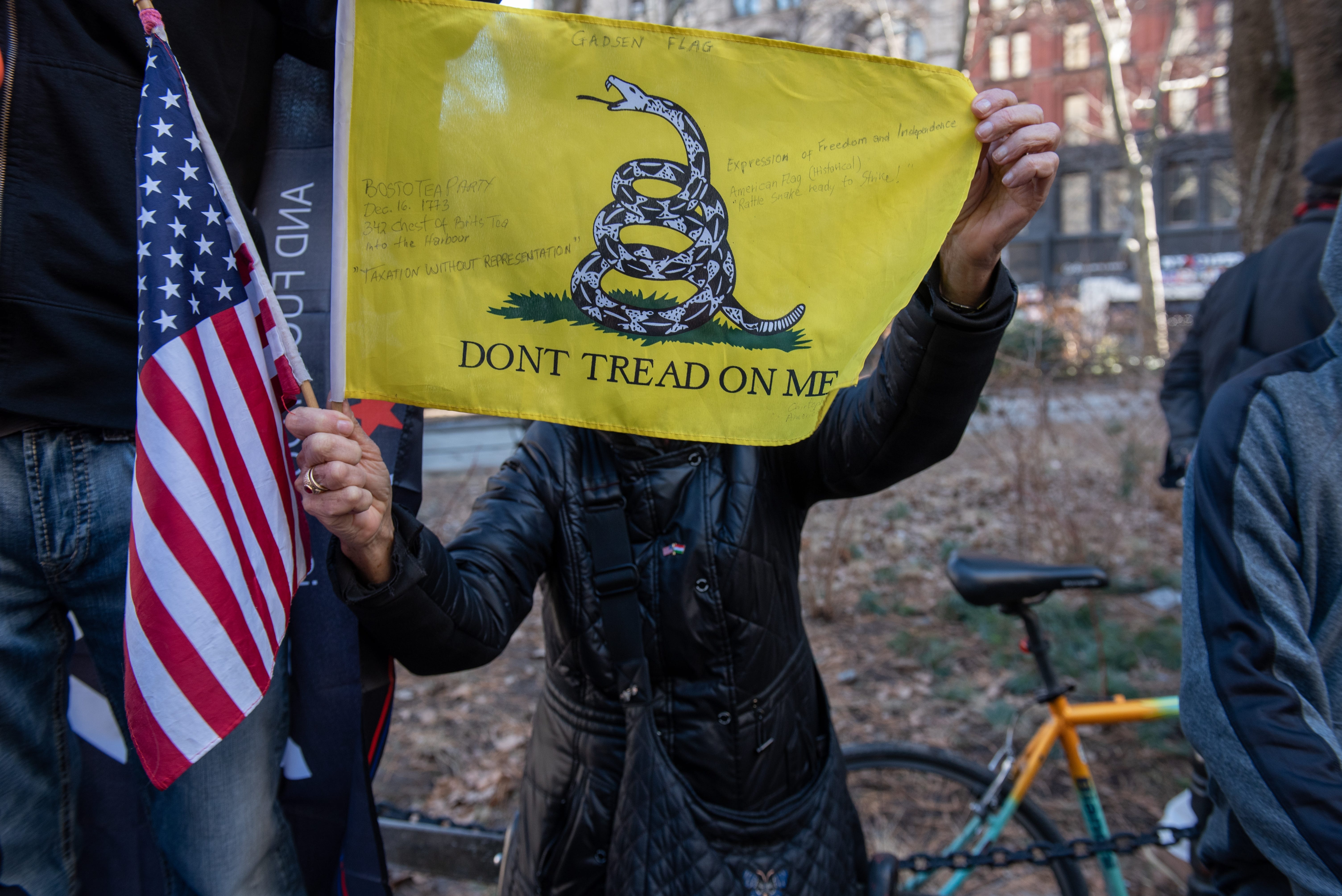
The Libertarian Party’s own platform says that “markets are not actually free unless fraud is vigorously combated”. I agree. A law against fraud needs more behind it than a declaration that fraud is wrong.
The threat of punishment can deter misconduct. It does not follow that we should rely on that threat alone, especially when the person taking the risk expects someone else to absorb the loss.
A central purpose of the Securities Act of 1933 is to require disclosure of significant information about securities offered for public sale, so investors can make an informed judgment. The 1934 act adds periodic reporting requirements for public companies. These laws do not make an investment safe or relieve the investor of judgment. They put obligations on the people asking for the money, rather than making the buyer responsible for discovering whatever the seller would prefer to conceal.
I have argued with libertarians who want to eliminate the SEC and leave this responsibility with prospective investors. Their answer is that private company-rating services would emerge, a kind of Consumer Reports for investing, and competition would make the arrangement better for everyone. I am supposed to find reassurance in the prediction that someone will sell me protection from the people selling me the investment.
An analyst can help me interpret a company’s disclosures. That does not answer whether the company is required to disclose the material facts accurately in the first place. A reputation for good analysis supplies no power to compel a dishonest firm to produce the information it is hiding. Telling the investor to exercise more personal responsibility does not make the missing information available.
We have also had private rating agencies. In its 2015 settlement with federal and state authorities, Standard & Poor’s acknowledged that business concerns affected decisions about its rating models and that it continued issuing positive ratings despite growing awareness of problems with the securities. Decisions about model updates were influenced in part by their effect on relationships with the issuers. The people selling judgments about risk had business interests capable of compromising those judgments.
That failure occurred within a regulated system; it does not prove that every possible private-rating model must fail. An investor-funded service could have different incentives. It would still need reliable access to the facts, and its clients would still need recourse if it deceived them. Announcing that a market for reassurance will emerge answers neither problem.
Private safeguards can do useful work, as the exchange’s role in catching Perez illustrates. But the investor should not have to discover that both the investment and the assurance were dishonest before the law has anything to say about the arrangement. Mandatory disclosure gives private analysis something to work with. Removing the obligation to disclose and promising that analysis will replace it is an invitation to concealment.
The market fundamentalist warns that preventive rules have costs and unintended consequences. Yes. So does leaving the opportunity for fraud intact. You do not get to count the cost of checking the books while treating the losses made possible by never checking them as somebody else’s subject.
Frédéric Bastiat’s What Is Seen and What Is Not Seen begins with a broken window: the glazier’s income is visible, while the things the shopkeeper can no longer buy with the money spent replacing the glass are not. His instruction is to follow the consequences beyond the transaction in front of you.
The compliance bill arrives, and someone can point to it. A customer whose savings were never stolen has no comparable invoice showing what the safeguard was worth. The absence of the fraud becomes an invitation to call the safeguard unnecessary.
Remove it, and the calculation changes. The company saves money immediately; the exposure created for its customers may take years to become apparent. Anyone who can explain Bastiat’s window should be capable of following that sequence without needing to be personally defrauded first.
⁂
Even without fraud, a market can reward decisions that make sense for the person making them while producing a collective disaster. The claim that fewer restraints will yield more rational outcomes has to survive that possibility.
In The AI Trade is a Psyop, I argued that the rewards for promoting the AI story reinforce one another without establishing that the story is true. A venture capitalist can have a career to protect by getting into the next round. Someone buying the stock can expect to sell it to someone more enthusiastic. Joining the trade can make sense even to someone who doubts the premise. The incentive to avoid missing out supplies no missing evidence about the engineering.
You cannot answer that problem by pointing to how much money people are willing to put behind their beliefs. Their willingness to do so is part of what needs explaining. Nor does an eventual correction establish that the resources committed along the way were well used. A market capable of punishing an error after it has become enormous is not, on that account, a market that allocated resources rationally.
The promise that “pure capitalism” will produce better outcomes is a convenient one for someone already rich. It allows him to regard further freedom from public obligation as a contribution to everyone else’s prosperity. For someone struggling to get by, the same promise offers a future in which he will join the wealthy, once the people standing in capitalism’s way have been defeated. His difficulty paying the rent becomes evidence that society is not capitalist enough.
Within that story, a well-meaning person who tries to protect him from exploitation can be made responsible for his hardship. The protection introduced a “market distortion.” Without it, he is invited to believe, the abundance would finally arrive. It is an excellent way to persuade someone with very little money to identify his interests with a person who wants fewer restrictions on how much can be taken from him.
I am suspicious of the judgment being smuggled into that word, “distortion.” Distorted compared with what? Showing that a rule changes a market outcome does not establish that the outcome without it would be more just, or even that it would leave people better off. Calling a safeguard a distortion can spare you the trouble of explaining why the freedom it restricts deserves precedence over the person it protects.
Whether a particular rule makes life more expensive, and whether its benefits justify its costs, are questions to investigate. Name the rule and make the case. The existence of a bad regulation does not make every attempt to protect people an obstacle to the prosperity they have been promised.
⁂
Anyone asking us to rely on punishment after the fact also has to reckon with the president’s willingness to cancel it. Trevor Milton was convicted by a jury of securities fraud and two counts of wire fraud after deceiving investors about his truck company’s technology. He received a four-year prison sentence, and Trump pardoned him on March 27, 2025. Having established the fraud, the government was prevented by the president from carrying out the punishment.
In an October 7 report, the watchdog group Public Citizen identified more than 200 corporations that had benefited from the cancellation of enforcement actions inherited from the Biden administration. Its tally covers alleged misconduct as well as previously resolved cases; it is not a list of 200 convicted corporations, a distinction the report expressly acknowledges.
You cannot read that record alongside the loss of investigative capacity and reasonably assume the only people gaining freedom are honest businesses relieved of unnecessary paperwork. The person who wants to cheat benefits too. So does anyone hoping their misconduct will remain an allegation nobody gets around to proving.
⁂
Michael Saylor told the Atlas Society’s 2022 gala, “We say in the Bitcoin world: Fix the money, fix the world”. In the same speech, he called Bitcoin “the best choice we have to save our civilization”. That is a promise about how people will live together. It cannot be defended simply by pointing to a property of the money.
A fraud paid for in bitcoin is still a fraud. Nothing about the currency establishes whether the seller told the truth, or whether a public official serving the buyer’s interests was bribed. Those questions still require evidence and institutions capable of acting on it. You do not get to dismiss that work as interference and then claim your preferred money has made it unnecessary.
Trump’s offer to the Bitcoin conference in Nashville in July 2024 was less mysterious. “The rules will be written by people who love your industry, not hate your industry,” he told the audience. Anyone who understood regulatory capture should have recognized something worth objecting to in the promise that an industry’s admirers would write its rules.
If you backed that bargain while crowing “fix the money, fix the world,” you owe us an account of the world you helped choose. You cannot point to the usefulness of a payment system when the question is why you supported a politician offering your industry favorable treatment. The political decision was yours. No protocol made it for you.
The prospect of your own enrichment was supposed to coincide with humanity’s liberation. Yet when the practical question became whether powerful people should be constrained, the bargain offered you a place among the favored. Calling that freedom does not oblige the people outside your industry to mistake it for theirs.
I am tired of being lectured about incentives by people who recognize every danger in government power until that power offers to serve them. You promised to fix the world. Explain why the people in it should accept weaker protection from fraud as part of the repair.
I expect the libertarian marketing apparatus to spend the coming years teaching Americans that universal healthcare, taxes on the rich and welfare programs will harm them. The YouTube videos will be beautifully produced. Someone will explain Bastiat and Hayek to an audience being invited to feel smarter than the people asking for help. There will be another reverent performance of the pencil story Friedman popularized, as though explaining how strangers cooperate to manufacture stationery settles whether a corporation should have to disclose what it is selling you. It will be very stupid, and I will be there to call it so.
In Clear Thinking v. Ayn Rand, I wrote: “Objectivism is actually stupid. It’s a stupid philosophy.” I am prepared to extend that judgment to right-libertarianism. We should absolutely fucking regulate markets.
Go Deeper into the Circus
The Hands That Remain Still

Trump and MAGA will fail. I expect the economy to get worse, and I think their ability to persuade Americans to blame everyone else is wearing out. Someone who agrees with that assessment can nevertheless decide to keep helping them until withdrawing becomes the safer choice.
No, We Cannot Agree to Disagree

I do not want to lower the temperature. I think the people responsible ought to feel increasing public pressure until they stop hurting people and answer for what they have done.
I love free markets. I wish we had some.