


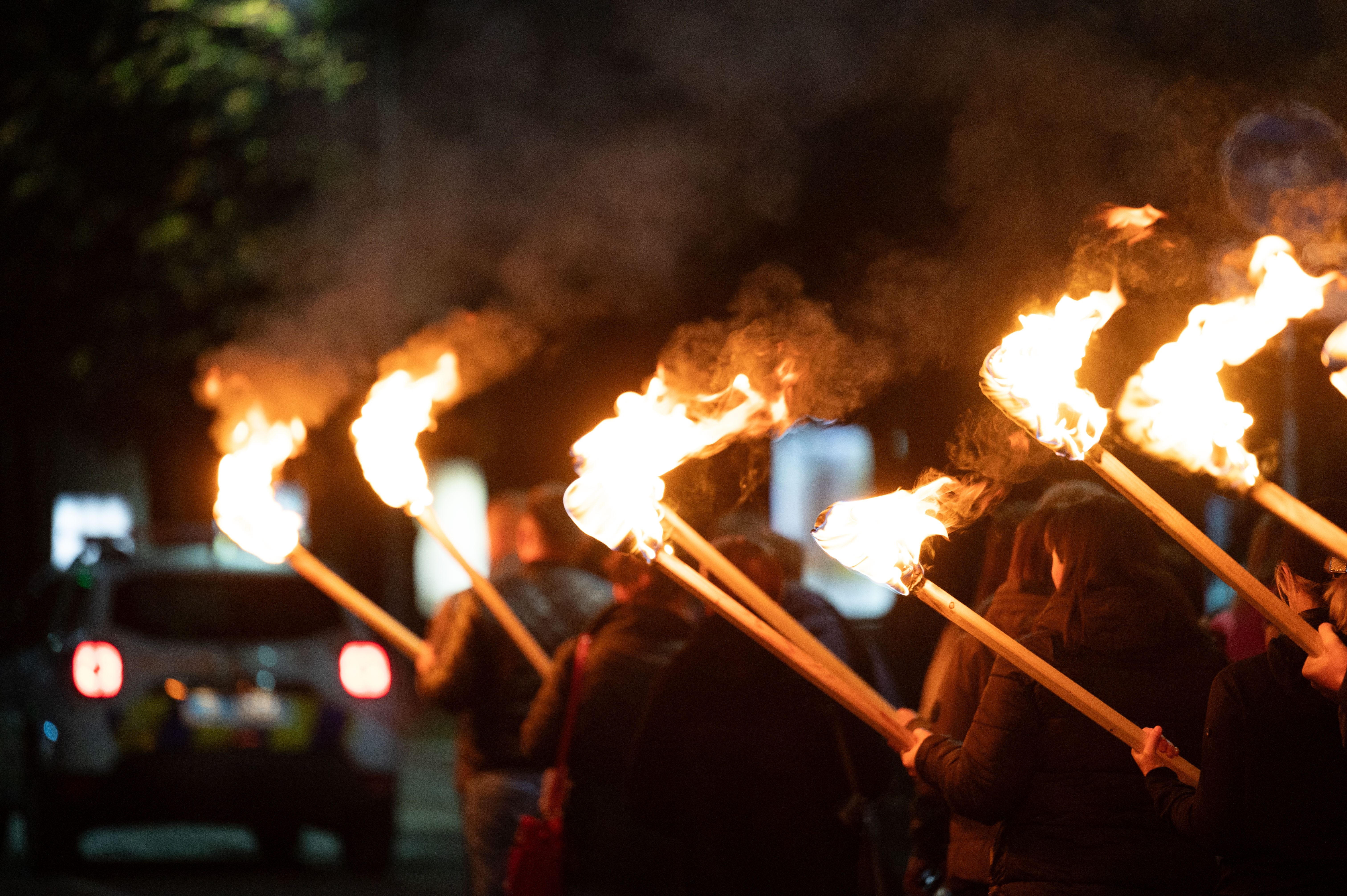
There is an operation that has been performed against human beings, in every culture that has ever existed, for as long as humans have been humans.
A person locates the substrate. They look at the world and see, with clarity that will not unsee itself, that there is a reality beneath the arrangements — a ground that the institutions claim to mediate but that is, in fact, directly available to anyone who will pay attention. The person begins to live from what they have seen. They teach what they have seen, often without intending to teach. Others begin to recognize what the person is pointing at. The recognition spreads.
This is the threat. Not the person, exactly. The recognition. Because the recognition reveals that the priestly class — every culture has one, in every era — is not the necessary mediator they have claimed to be. The recognition reveals that the rent the priestly class extracts for access to the substrate is fraudulent rent. The recognition reveals that the political authorities who depend on the priestly class’s blessing are propped up by an apparatus that is, structurally, a long con.
So the priestly class moves to kill the witness. They bring formal charges — impiety, blasphemy, heresy, sedition, the precise charge varies by culture and era. They appeal to the political magistrate for the execution they cannot perform themselves. They organize a crowd to demand the death and give the magistrate cover. The witness is killed. The institution returns to its operation. The recognition, which the killers thought they were ending, becomes the seed of the next generation of witnesses.
This has been happening for at least three thousand years that we have records of. It is happening right now. It is the deepest pattern in human history, more fundamental than any of the surface arrangements we usually describe. Every wisdom tradition the human species has produced is, at its core, the record of this operation and the witnesses who refused to participate in it.
This is the story I want to tell. The longest relay. The witnesses across the millennia, across the continents, across the languages, depositing the same testimony into the structure of the world. The priestly classes across the same centuries, performing the same operation against them. And the political document, eighteen hundred years downstream of one of the killings, in a country founded on a continent the witnesses had never named, that finally tried to give the relay its first political-legal protection.
It is a story about the substrate. It is a story about witnesses. It is a story about gatekeepers. It is a story about why this moment — here, in this country, in this city, at this hour — is the moment the relay arrives at the largest stage it has ever had.
⁂
Let me begin in Athens, in 399 BCE, because the records are the most complete and because the founding sentence of the Western strand of the relay was uttered there. But I want to be clear at the outset: this is one strand, of many, in a global pattern. The relay was never only Western. The relay has always been human.
The Athenian democracy was in the wreckage of its long war with Sparta. The city had lost. The fleet was gone. The walls had been pulled down. A short-lived oligarchy called the Thirty Tyrants had killed perhaps fifteen hundred citizens before the democracy was restored. The restored democracy was anxious, defensive, looking for someone to blame.
Socrates was seventy years old. He had spent fifty years walking the agora asking questions. He had a method. He would approach a man who claimed expertise — a general on courage, a poet on poetry, a craftsman on his craft — and ask the man to define his expertise. The man would answer. Socrates would press on the answer until it collapsed. Eventually the man would be revealed not to know what he claimed to know. The young men of Athens followed Socrates around watching this happen, and they began to do it themselves. The fathers of those young men did not like it.
Three citizens brought the charge. Meletus, a minor poet. Anytus, a leather-tanner turned democratic politician. Lycon, an orator. The formal accusation was impiety, refusing to honor the gods of the city, and corrupting the young. The substantive accusation was that Socrates had been teaching his students to question the priestly class and the political class.
Plato preserves what Socrates said at the trial in the Apology. Socrates does not apologize. He defends his life as a service to the city. He tells the jury that the god at Delphi had named him the wisest man in Athens, and that he had concluded the god meant only that he knew that he did not know. His wisdom was the wisdom of acknowledged ignorance. His mission was to walk among his fellow citizens helping them discover their own ignorance, so that they might begin the actual work of seeking truth.
Then he says the line that defines the lineage. If you offer to acquit me on condition that I cease my inquiries, I would reply: men of Athens, I honor and love you; but I shall obey the god rather than you, and while I have life and strength I shall never cease from the practice and teaching of philosophy.
I shall obey the god rather than you.
This is the founding sentence of the Western strand of the relay. The substrate is real. The substrate makes claims on me that are prior to your claims on me. I will not stop doing what the substrate requires of me because you have decided to use the apparatus of the city against me. You can kill me. You cannot make me lie about what I have seen.
The jury convicted him. The hemlock was prepared. Socrates spent his last hours discussing the immortality of the soul with his friends and then drank the cup.
⁂
Four hundred and thirty-two years later, in Jerusalem, a young man was nailed to a cross outside the city walls and died over the course of an afternoon. He had been condemned by the priestly class of his own people on charges of blasphemy. The civil magistrate, a Roman, had washed his hands of the verdict.
He had spent three years walking through Galilee and Judea preaching the kingdom of God. The kingdom was, in his accounting, within you. The kingdom required no temple. The kingdom required no priest. He had told people they could approach the Father directly. He had forgiven sins, which was the priestly prerogative. He had overturned the tables in the temple court because the apparatus had made the holy a paywall. He had named the priestly class as hypocrites, as a brood of vipers, as whitewashed tombs full of dead men’s bones.
The priestly class brought him before the Sanhedrin. They condemned him. They brought him to Pilate on a charge calibrated to alarm Roman authority — he claims to be a king. Pilate questioned him.
Are you the king of the Jews?
My kingdom is not of this world.
The same refusal Socrates made, in a different vocabulary. The substrate is real. The substrate’s claim on me is prior to your claim on me. You can kill me. You cannot make me deny what I have seen.
The crowd, organized by the priestly class, demanded death. Pilate washed his hands. The Romans crucified him.
Two trials. Four hundred and thirty-two years apart. Two civilizations apart. Look at the coalition that killed each of them. The priestly class of credentialed authorities whose social position depended on the people’s deference. The political magistrate who needed the priestly class’s blessing. And the manufactured crowd worked up to demand the death and give the magistrate cover.
Same coalition. Same operation. Different costumes.
⁂
And this same operation — exactly this operation, in every structural detail — was being performed elsewhere on the planet, in cultures that had no contact with Athens or Jerusalem, against witnesses who were doing structurally the same thing in different vocabularies.
In India, in the seventh century BCE, the Upanishadic sages were locating the substrate in vocabulary that nothing in the Greek or Hebrew traditions could match for precision. Tat tvam asi — thou art that. The self and the substrate are continuous. Atman is Brahman. The substrate is not somewhere else. The substrate is what you are when you look closely enough at what you are. No priestly mediator can supply what is already present at the deepest level of the seeker. The Brahminical class — the priestly class of the Vedic order — built its authority precisely on its monopoly of ritual mediation, and the Upanishadic sages were, structurally, the same refusal Socrates and Jesus would later perform in Greek and Aramaic.
In the sixth century BCE, in northern India, a young prince named Siddhartha Gautama walked out of his palace and refused the Brahminical apparatus altogether. He sat under a tree. He saw what was there to be seen. He taught for forty-five years that the substrate was accessible through practice, not through caste, not through ritual, not through priestly mediation. The Four Noble Truths as instructions. The Eightfold Path as practice. Be a lamp unto yourself. This is the same sentence Socrates would later say in Greek and Jesus would later say in Aramaic. The Buddha said it first. The Buddhist tradition is, structurally, the first great organized refusal of a priestly class in the historical record we have.
In China, in roughly the same century, Lao Tzu — perhaps mythical, perhaps a synthesis of teachers — left the empire on a water buffalo and wrote, at a border guard’s request, the Tao Te Ching. The Tao that can be named is not the eternal Tao. The substrate is prior to language. The substrate is prior to institution. The Confucian project of ordering the social world by ritual propriety is downstream of the substrate, and the substrate is what the propriety is supposed to be in service of, but the propriety has a way of substituting itself for the substrate and becoming a new apparatus. The Taoist tradition would spend the next two and a half millennia refusing the substitution.
Confucius himself, in the uncaptured form of his teaching — before the imperial examination system seized it and converted it into an apparatus of state — was doing the same work. Ren — humaneness, the substrate’s claim on the person to treat the other as oneself. Mencius arguing that the four sprouts of moral feeling are innate in every human heart, present without instruction, requiring cultivation but not creation. The substrate deposits the claim before the institution ever arrives. The institution can teach you to recognize what is already there, or it can teach you to mistake the institution for the source. The original Confucian witness was clear about which one was the work.
In the Hebrew prophetic tradition, which we have already named through Jesus but which was already centuries old before him, the substrate-witnesses had been confronting the priestly class generation after generation. Isaiah in the eighth century BCE: I hate, I despise your feasts, and I take no delight in your solemn assemblies. Take away from me the noise of your songs. But let justice roll down like waters, and righteousness like an ever-flowing stream. Amos and Hosea and Micah and Jeremiah carrying the same refusal across the centuries. The temple was being mistaken for the substrate. The witnesses kept correcting the mistake. The priestly class kept attempting to silence them. Jeremiah was thrown into a cistern. Isaiah, by some traditions, was sawed in half. The pattern is uniform.
And these traditions — the Vedic-Upanishadic, the Buddhist, the Taoist, the uncaptured Confucian, the Hebrew prophetic — were emerging in the same few centuries, in cultures with little or no contact with each other. Karl Jaspers called this the Axial Age, the period roughly from 800 to 200 BCE when the substrate seemed to break through into human consciousness simultaneously across multiple civilizations. The substrate had been depositing its claim into individuals everywhere, and a critical mass of witnesses had finally surfaced who could articulate what they had seen with enough precision to start the relay in each culture.
The Axial Age is not a coincidence. The Axial Age is the substrate doing what the substrate does, when the human capacity to receive and articulate the substrate’s claim has reached the necessary threshold in enough cultures at roughly the same evolutionary moment. The witnesses surface. The vocabularies differ. The operation is the same. The priestly classes respond identically. The relay begins.
⁂
What we call the Western tradition is the strand of the relay that runs through the Mediterranean. There are other strands. They are equally long. They are equally fertile. They are equally full of witnesses, of mystics, of refusers of the gatekeeper class, and they have been depositing testimony into the structure of the world for as long as the Western strand has.
The Hindu bhakti tradition: a thousand years of mystic poets, most of them low-caste or outcaste, who refused the Brahminical mediation and addressed the substrate directly in the language of love. Mirabai, the Rajput princess who left her royal marriage to compose songs to Krishna. Kabir, the Muslim weaver who refused both Hindu and Islamic orthodoxy. Tukaram, the seventeenth-century saint whose poems still circulate in Marathi households. Ravidas, born into the leather-working caste, whose songs were taken into the Sikh scriptures. The bhakti tradition is structurally the internal Indian refusal of the priestly class’s monopoly, century after century, in vocabulary as ecstatic and direct as anything the Sufis or the Christian mystics would produce.
The Buddhist tradition across two and a half millennia. Nagarjuna in the second century, refusing every metaphysical absolute that institutional Buddhism was tempted to canonize. Bodhidharma walking from India to China in the fifth century, founding the Ch’an tradition that would become Zen. Hui-neng the illiterate Sixth Patriarch, whose enlightenment came from hearing a single line of the Diamond Sutra recited in a marketplace. Dogen in thirteenth-century Japan, writing Shobogenzo. The Zen tradition is continuous insistence that the institution is not the practice, that every koan-shattering moment is a witness against the apparatus that surrounds it.
The Sufi tradition inside Islam. Within the first century after Muhammad’s death, as the institutional clerisy began to consolidate around the developing legal and theological orthodoxy, the Sufi mystics surfaced. Rabia of Basra in the eighth century, the slave woman whose love poetry to God established the mahabba tradition. Al-Hallaj, executed in 922 in Baghdad for saying ana al-Haqq — I am the Truth. The same death as Socrates. The same death as Jesus. The same operation. The priestly class — in this case the religious authorities of the Abbasid Caliphate — could not tolerate a witness who claimed direct identification with the substrate, because such a claim made the institution unnecessary. Ibn Arabi in Andalusia. Rumi in Konya. Hafiz in Shiraz. The Sufi orders carried the unmediated practice forward across the centuries, suppressed in some eras, tolerated in others, persecuted today by the Saudi religious authorities and ISIS and the Iranian regime — same coalition, modern dress.
The Taoist tradition: the Quanzhen masters in the twelfth century, the alchemists, the hermits, the unbroken transmission of the wu wei practice against the bureaucratic apparatus of the imperial state. The Zhuangzi text itself, which is one of the funniest and deepest things any human being has ever written, every parable a refusal of the Confucian-imperial ordering.
The Indigenous traditions of the Americas. Black Elk’s vision recorded by John Neihardt — the substrate addressing a Lakota holy man on the high plains of South Dakota, in vocabulary as clear and beautiful as anything Plato or Augustine produced. The Haudenosaunee Great Law of Peace, whose federal structure and protection of conscience would influence Madison and Franklin a century and a half before they wrote the United States Constitution. Mitakuye Oyasin — all my relations. The substrate as the kinship matrix binding every being into one community of obligation. These traditions were attacked, suppressed, nearly destroyed by the conquistadors and the missionaries and the boarding schools and the forced conversions — same coalition, again, again — but the witnesses survived, the testimony survived, the practice survived. The substrate cannot be killed. The witnesses can. The substrate cannot.
The African traditions. Ubuntu — I am because we are. The substrate as the relational fact between persons, prior to and underneath the individual. The Yoruba Orisha cosmology. The Akan concept of Sankofa — go back and fetch what was forgotten. The continent has carried the substrate in vocabularies older than most of the ones I have named, and the Atlantic slave trade was, structurally, an attempt by the European apparatus to break the relay across an ocean. The relay survived anyway. The witnesses carried the testimony in the holds of the ships. The spirituals are the substrate addressing the species in the voice of the most violently captive of its members, and the substrate cannot be captured even there, and the song carries.
The Polynesian, the Aboriginal Australian, the circumpolar shamanic traditions. Each one a long tradition of witnesses. Each one with its own vocabulary for the substrate. Each one with its own priestly class that sometimes faithfully transmitted the deposit and sometimes betrayed it, and its own mystic refusers, and its own survival against suppression.
This is the relay. It is not Western. It has never been Western. It is the substrate addressing the human family through every culture the human family has ever produced, depositing the same testimony into every vocabulary, finding witnesses in every era, being attacked by the same coalition every time, surviving every attack.
⁂
The killings are not silent. The killings are seeds.
Socrates dies. Plato writes the Apology and the Crito and the Phaedo and the Republic. Aristotle systematizes the inquiry. The Stoics carry it into the inner citadel. Cicero translates it into Latin and into Roman republican practice. By the time Marcus Aurelius is writing his Meditations on the Danube frontier, the Greek inquiry is the operating philosophical infrastructure of the educated Mediterranean.
Jesus dies. Paul carries the Way through Asia Minor and Greece. The early communities hold everything in common. The persecutions run for two and a half centuries. The witnesses go to the lions singing. The Constantinian capture in 312 is the empire’s response: if we cannot kill them, we will absorb them, and we will turn their movement into our movement. The institutional church takes shape as the Roman counter-operation against the spread of the Way. And immediately the desert fathers begin to surface, the first internal rebellion of the Way against the institution that had captured it. Augustine writes the Confessions. Meister Eckhart preaches that God is closer to me than I am to myself and is tried for heresy. The Beguines live in lay communities and are suppressed. Francis strips naked in Assisi. The Cathars are burned at Béziers. John of the Cross writes the Dark Night of the Soul from a cell where his own order has imprisoned him. Teresa of Avila is in continuous trouble with the Inquisition. The mystics keep surfacing. The institution keeps attacking them. The relay continues.
Al-Hallaj dies. The Sufi tradition deepens and spreads. The Mathnawi of Rumi becomes one of the most-read books in human history. The Sufi orders carry the unmediated practice across Persia, Anatolia, India, North Africa, Spain. Ibn Arabi writes the Fusus al-Hikam. The witnesses keep coming.
The bhakti poets keep coming. The Zen masters keep coming. The Indigenous prophets keep coming, surviving genocide after genocide. The African witnesses keep coming, surviving the Middle Passage and the plantation and the segregated century afterward. The relay does not stop. The relay cannot be stopped. Every witness who is killed deposits more testimony into the structure of the world than they could have deposited by living, and the deposit is collected by the next witness, who will surface in the next generation, who will recognize what their predecessor saw, who will say it again in their own voice.
This is the pattern. Three thousand years of it. Across every continent. In every vocabulary. The substrate addresses. The witnesses receive. The priestly classes attack. The witnesses die. The testimony deepens. The next generation surfaces.
The relay is the longest continuous structure in human history.
⁂
In the thirteenth century, in Paris, a Dominican friar named Thomas Aquinas performed the most consequential synthesis in the history of Western thought. He had access to Aristotle, who had been preserved through the Islamic world by Sufi-influenced scholars like Avicenna and Averroes. He read Aristotle and he read the Gospels and he said: these are the same inquiry.
The Summa Theologica is the Athens-Jerusalem unification project. Natural law — the Stoic-Ciceronian inheritance, the law accessible to reason, the substrate’s claim on every rational being — is identified with the divine law of the Christian inheritance. They are the same law in two vocabularies. The substrate Socrates obeyed and the substrate Jesus pointed at are the same substrate.
This is not a syncretism. This is a recognition. Aquinas saw what was actually there. And what Aquinas saw partially — that the Greek and Hebrew strands of the relay were one strand in two vocabularies — turns out to be true on a much larger scale than he knew. The Vedic and the Buddhist and the Taoist and the Confucian and the Sufi and the Indigenous and the African strands are also strands of the same relay. Aquinas opened the door. He did not know how wide the door went. We can see now that it goes all the way.
The Reformation pulled on Aquinas’s door and the institutional structure built against the witnesses began to come apart. Luther, an Augustinian monk, read his Paul and noticed that the institution selling indulgences in 1517 was doing the same thing the priestly class did in 33 CE and the same thing the priestly class did in 399 BCE. The mediation was fraudulent. The believer could address God directly. The Ninety-Five Theses were the substrate’s witness surfacing again.
Here I stand, I can do no other. The Wormser sentence. The same sentence Socrates said. The same sentence Jesus said. The same sentence Al-Hallaj said before they hanged him in Baghdad. The same refusal in another language, another century, against another configuration of the same coalition.
The radical Reformation pushed the implications further. The Anabaptists, the Mennonites, the Hutterites, the early Quakers, the Pietists. No priestly mediation. No state-church fusion. The conscience is the indexed substrate, and no human authority has been given dominion over it. They were persecuted by Catholics and Protestants alike, because both institutional systems recognized the threat. The radical Reformation was naming, in the open, what the mystics had been carrying underground for a thousand years.
This is the matrix into which the modern political tradition will be born.
⁂
The Enlightenment was the moment the substrate-claim got translated into political philosophy.
John Locke, writing at the end of the seventeenth century, articulated the natural-law argument for political purposes. Human beings, in their natural condition, are endowed with rights prior to the state. These rights are deposited in the person by the substrate. The state’s legitimacy depends on its protection of them. When the state attacks them, the state forfeits its legitimacy.
Spinoza, at roughly the same time in Amsterdam, came at it from a different angle. Deus sive natura — God or nature. The substrate is the totality. Every individual is a finite mode of the infinite substance. The mind and the body are two ways the substance appears. He was excommunicated by the Amsterdam synagogue and condemned by the Christian authorities — same coalition, modern dress — but his work circulated and fed the Enlightenment.
Voltaire, Rousseau, Diderot — the secularization of the substrate-claim into the vocabulary of reason, rights, dignity, equality. Immanuel Kant in Königsberg making the argument structural and universal. Every rational being has direct access to the moral law through their own reason. No church is required to mediate the access. No state can override it. The person is an end in themselves, never merely a means — because the substrate’s deposit in them makes them so.
The Enlightenment was the relay arriving at a vocabulary that was, for the first time, politically operational at scale. The substrate’s witnesses had been dying one at a time for twenty-five centuries. The schools had carried the inquiry. The mystics had carried the practice. The Reformation had carried the conscience. The Enlightenment now carried the political form. And the political form was about to be put into action.
⁂
In Philadelphia, in the summer of 1787, fifty-five men met to write a constitution.
They were not saints. Most of them owned other men. Most of them held views on women and on the indigenous peoples of the continent that would not pass any honest moral test, then or now. They were embedded in their time. They knew it. They wrote, into the document they produced, the mechanism by which their descendants could leave them behind.
They were also, whether they fully acknowledged it or not, inheriting from more traditions than the Western one. The Haudenosaunee Great Law of Peace — the constitutional structure of the Iroquois Confederacy — was known to Franklin and discussed at the Albany Congress decades earlier. The federal structure that distributes power across multiple sovereignties under a unifying frame; the protection of the council’s deliberation from outside coercion; the binding of authority to consent — these are Haudenosaunee structural contributions to what the Founders synthesized in Philadelphia. The acknowledgment was uneven and the credit incomplete, but the inheritance is real.
The Founders read what they could get of the Eastern traditions. Jefferson, late in his life, would read translations of Hindu and Buddhist texts and write that he found in them a wisdom equal to anything the Mediterranean had produced. Franklin, in his old age, would correspond with Quakers and Pietists and the early American Universalists, who were themselves heirs of the radical Reformation strand that had touched the global witnesses through the missionary contact zones. The synthesis the Founders performed was not consciously global, but the inheritances they drew on were not exclusively Western, and the document they produced has functioned, in its best moments, as the legal form of the human relay rather than the Western relay.
What they wrote, structurally, was the first attempt in the history of the human species to put the longest relay into legal form.
We hold these truths to be self-evident, that all men are created equal, that they are endowed by their Creator with certain unalienable rights, that among these are Life, Liberty, and the pursuit of Happiness. The truths are held, not invented. They are self-evident, meaning visible to anyone who will look. They are endowed, meaning given. The Creator is the substrate — and the language is intentionally non-sectarian, intentionally open, intentionally available to every tradition’s name for the source. Brahman. The Tao. The Great Spirit. Allah. Yahweh. The Buddha-nature. Endowed by their Creator is a sentence the witnesses of every tradition can read in their own vocabulary and recognize. The Founders chose that phrasing on purpose. It was the broadest substrate-language their generation could find.
Jefferson knew what he was doing when he wrote that sentence. He was bad at living up to it. He owned the people who served him at Monticello. He wrote of his own slaveholding as the wolf by the ears, knowing it was wrong, unable to release it. He was, as I have written elsewhere (Put Something Back), the convert who could not complete his own conversion, but who wrote the document that authorized his descendants to complete it for him.
Madison wrote the Bill of Rights. The Bill of Rights is the operational implementation of the substrate-claim. Ten amendments. Each one a specific protection of a specific aspect of the deposit against a specific kind of state encroachment. And the first amendment, the First Amendment, was the most important of them all.
⁂
The First Amendment is the relay’s first legal form. It is the political document that says, in the operative language of constitutional law, what the witnesses of three millennia had been saying in their deaths.
Congress shall make no law respecting an establishment of religion. No Constantine. No Theodosius. No imperial standard fused with any priestly authority. The state may not appoint your priest. The state may not certify your faith. The state may not put its sword behind one threshold and against another. The first move of every captured tradition — the fusion of priestly authority with imperial power — is forbidden by the foundational law of the Republic. The Saudis fusing their clerisy with the state; the Iranian theocracy doing the same; the Chinese imperial Confucian apparatus that absorbed the original teaching and converted it into examination-system rent — every one of these captures is structurally forbidden here.
Or prohibiting the free exercise thereof. No gatekeeper. No license required. The conscience reports directly to the substrate, and no political authority has been granted the power to intervene. The Beguine may keep her community. The Sufi may keep his order. The Lakota may keep his pipe. The Buddhist may keep her practice. The Quaker may sit in silence. The unmediated address is protected as practice. Socrates’s I shall obey the god rather than you is now the law of the land, and so is the Buddha’s be a lamp unto yourself, and so is La ilaha illa Allah, and so is Tat tvam asi. They are all protected by the same clause. The clause does not name them. The clause does not have to.
Or abridging the freedom of speech, or of the press. No Index of forbidden books. No imprimatur. No censor over the testimony. The witness may witness. Galileo may publish. Spinoza may circulate. The convert may convert. Jesus’s whole ministry was speech the priestly class wanted silenced. The amendment is the legal protection of exactly that kind of speech against exactly that kind of silencing — in any vocabulary, from any tradition.
Or the right of the people peaceably to assemble. No requirement of priestly mediation for community. The two or three gathered may gather. The radical Reformation’s lay community, the Sufi zikr circle, the Buddhist sangha, the Indigenous council, the Hindu satsang — every one of them structurally protected by this clause. The substrate may be addressed in concert, in the kitchen, in the meetinghouse, in the longhouse, in the masjid, in the temple, in the field, without authorization from any institutional gatekeeper.
And to petition the Government for a redress of grievances. Direct address to power. No intercessor. The same structural posture every tradition has named when it taught that the substrate is directly addressable.
Five clauses. Each one a specific refusal of a specific operation that has been performed against the substrate’s witnesses across three thousand years and every inhabited continent. Each one a structural protection of a specific move in the longest relay.
The First Amendment is the legal compression of the entire human tradition of the substrate’s witness against the gatekeeper class. Every line of it points back at a death. Every line of it points back at a refusal. Every line of it says: the operation that killed Socrates and Jesus and Al-Hallaj and the bhakti poets and the Indigenous prophets and the Sufi martyrs and the burned mystics and the silenced sages, in every culture, across every century — that operation cannot, under cover of this state, be performed again.
The Founders did not know they were doing this much. They were doing what their moment required, with the inheritances available to them, drawing on more traditions than they fully acknowledged. But what they produced was the relay’s first legal form, and the relay’s first legal form turned out to be the relay’s protection at planetary scale, because the relay was always planetary even when the Founders thought they were synthesizing only a Western inheritance.
This is the architecture. This is what the Constitution is. This is what the First Amendment is. This is what is being attacked now.
⁂
There is in this country, right now, a coalition attempting to undo the First Amendment.
They do not say so in those terms. They say they are restoring something. They say they are defending the nation’s identity. They say they are protecting Christianity from its enemies. But what they are doing, structurally, is precisely what the First Amendment was written to forbid. They want the priest in the cabinet. They want the cross on the standard. They want the institution fused with the state. They want the conscience policed. They want the dissenter silenced. They want the assembly broken up. They want the press obedient. They want Constantine back, and Theodosius back, and the Roman counter-operation against the Way fully reinstated on the territory of the Republic that was founded to refuse the counter-operation.
The contemporary Christian nationalist project is not Christian. It is the precise structural inversion of what Jesus was teaching, performed by the precise structural descendants of the priestly class that killed him.
And the same operation is being performed in other names, in other countries, against other traditions, right now. The Saudi state suppressing Sufi orders. The Iranian regime executing Bahá’ís. The Chinese state imprisoning Tibetan monks and Uyghur Muslims and Falun Gong practitioners. The Indian Hindu nationalist project attacking Muslims and Dalits and Christians. The Burmese junta against the Rohingya. The Russian apparatus against the Ukrainians and against its own dissidents. Every one of these is the same operation, in different costumes, against the substrate’s witnesses in different vocabularies, performed by the priestly classes and the political magistrates of each captured culture, with crowds organized to demand the death of the witness who has refused.
The puritan apparatus on the cultural left does a different version of the same operation. The First Amendment protects the convert — the person who held the wrong view and learned. The puritan apparatus refuses to protect the convert. It reconstructs the priestly gatekeeper class in secular dress, demands prostration, extracts social rent from the manufactured necessity of its judgment. The vocabulary differs. The operation is the same.
⁂
And then, ten days ago, something happened that the structure of this argument did not predict and has to account for.
The Bishop of Rome released his first encyclical. It is called Magnifica Humanitas. It is on safeguarding the human person in the age of artificial intelligence. He signed it on the 15th of May, the 135th anniversary of Rerum Novarum — the 1891 encyclical in which the previous Leo met the industrial transformation. He took the name on purpose. He is meeting the algorithmic transformation in the same posture.
The institution that ran the counter-operation against the Way for seventeen centuries — that built the apparatus to absorb Jesus’s movement, that burned the mystics, that silenced the witnesses, that performed the priestly-class operation in every era it had power to perform it — has, in this generation, in this moment, produced a Bishop of Rome who is doing relay work. Against type. Against the institution’s own captured history. In the precise vocabulary the relay needs spoken now.
Artificial intelligence needs to be disarmed. That is what Leo XIV said in the Synod Hall on the 25th of May. Freed from logics that turn it into an instrument of domination, exclusion and death. He said this about the most powerful manufactured-necessity apparatus the human species has yet produced — the system being built primarily in the country he came from, by the priestly class of the present generation, to insert itself between persons and the substrate at a depth and scale no priestly class has ever before achieved.
And he said this. No one can be reduced to productivity, to cognitive performance, or to mere data. The person bears within him- or herself a freedom, an interiority and a vocation to love and worship that no machine can replace or block.
This is the substrate’s claim translated into the algorithmic vocabulary. This is Socrates’s I shall obey the god rather than you, in the year 2026, addressed to the optimization apparatus. This is Kant’s end in themselves in pontifical voice. This is the bhakti poet’s refusal of the Brahminical mediator, performed by the institution that became the Western Brahmin. The relay continues, and sometimes it surfaces inside the captured institution itself. The witness is not always against the institution. The witness is sometimes the institution remembering what it was supposed to be carrying.
And it is fitting — structurally fitting, in the way the relay arranges its instruments without anyone planning the arrangement — that this pope is American. The first American pope. Robert Prevost of Chicago, formed in the missionary years in Peru, fluent in both hemispheres. Rome selected, as its bishop, a man from the country whose apparatus he would have to name. The pontiff and the apparatus share a passport. The pontiff is positioned to address Silicon Valley as a countryman, and to address the global South in the languages he speaks, and to address the Church in the language Rome speaks, and to address the relay in the language the relay has always spoken. He is the bridge the moment requires. He arrived. The encyclical arrived. The Olympics arrive in 2028. The hinge is American, in three different American senses — the city the world will gather in, the pontiff who has named the apparatus, and the apparatus itself, being named in real time by a witness who knows it from the inside.
The First Amendment’s five clauses now have an algorithmic analog the founders could not have foreseen but the structure of their refusal anticipates. No algorithm shall mediate the conscience. No optimization shall replace the substrate. No machine shall be granted the gatekeeper function the priestly class has been trying to consolidate since the Brahmins. The Pope of Rome and the First Amendment are, on this question, saying the same sentence in different vocabularies. The relay coordinates without coordination. The witnesses know each other across the centuries even when they have never met.
⁂
And there is, in this moment, a counter-witness. A counter-figure performing, in the open, the inverse of what the pontiff is performing. The relay tells us to expect this. The relay has always told us to expect this. When the witness surfaces, the priestly class of the new order surfaces against the witness, and the priestly class names the witness with the most damning word the inherited vocabulary still contains.
In March of this year, two months before Magnifica Humanitas, the most consequential investor in the United States — the man who built Palantir, who funded the Vice President, who has spent two decades constructing the political-technological apparatus the encyclical was written against — gave four closed-door lectures at the Palazzo Orsini Taverna in Rome, a stone’s throw from the Vatican, on the subject of the Antichrist. Peter Thiel. Four nights. The pontiff’s house was, structurally, the audience.
The argument was this. In the Pauline framework, the katechon is the restrainer — the force that holds back the reign of the Antichrist until the appointed time. Thiel proposed an inversion. The Antichrist, in his telling, is not the figure who denies the Incarnation. The Antichrist is the figure who seeks to regulate artificial intelligence. To place limits on innovation. To preach ecological caution. To establish bodies of global governance. The Antichrist is the regulator. The Antichrist is the limit. The Antichrist is whatever stands between the optimization apparatus and its consummation. And the katechon — the holy restrainer — is, in this inversion, algorithmic dictatorship, unlimited technological acceleration, the concentration of computational power in the hands of the few.
Father Antonio Spadaro, the Jesuit who has read the lectures, summarized the conclusion with surgical precision. The practical effect of Thiel’s theo-technocratic message is that any attempt to regulate artificial intelligence, to establish bodies of global governance, or to curb technological development becomes, within this framework, a preparation for the reign of the Antichrist.
Read that again. The man who has accumulated more political-technological power than any private citizen in the contemporary West stood beside the Vatican and argued that the people trying to limit his apparatus are the agents of the Antichrist, and that his apparatus, unrestrained, is the holy thing that holds the Antichrist back. He inverted the entire vocabulary. He took the word the relay’s witnesses have used for two thousand years to name the apparatus that captures and destroys, and he applied it to the regulators trying to prevent the capture. The priestly class of the new order has its own theology now, and the theology is the precise inversion of the witness lineage it is trying to absorb.
Two months later, Leo XIV signed Magnifica Humanitas. Artificial intelligence must be disarmed. The pontiff, sitting in the city the lectures were performed beside, answered. The encyclical does not name Thiel. It does not have to. The chronology names him. The structural position names him. The four nights at the Palazzo Orsini Taverna were the question. The encyclical was the answer.
And then Thiel did what the priestly class of every era has done when the witness will not stop speaking. He named the witness the Antichrist. The clips circulate. He is the Antichrist, Thiel says, of the Bishop of Rome who said AI must be disarmed. The same word, in the same inverted vocabulary, applied this time not to the abstract regulator but to the specific human being sitting in the chair the lectures had been performed against. The priestly class has identified its target.
And then — because the priestly class of the new order is, at the deepest level, a coward, because the priestly class has always been a coward, because the apparatus does not survive direct confrontation with the witness and the apparatus knows it does not survive — he fled. He bought a twelve-million-dollar mansion in Buenos Aires. He moved his children’s schooling to Argentina. He bought land in Uruguay. He met with Milei. He is reportedly being offered Argentine citizenship. He has already secured New Zealand citizenship and applied for a Maltese passport. He is running out of countries.
And in Argentina, in the dinners with local economists, he continues the lectures. He continues to call the regulator the Antichrist. He continues to preach the inversion. The man who has more capital and more political access than any private citizen in this country has just removed his family from this country, has just denounced the Pope of Rome as the Antichrist, and has carried his Antichrist theology to the southern hemisphere to give it a second wind. This is what the operation looks like when the witness surfaces and the apparatus loses its nerve.
It is the same operation. Different costumes. The priestly class of the captured order names the witness with the available curse. The political magistrate — in this case the political magistrate the priestly class purchased — stands by. The crowd is being organized through the channels the apparatus controls. And the witness keeps speaking, from Rome, in the vocabulary the relay has always used — the human person is not data, the conscience is not for sale, the algorithm is not the substrate, the apparatus must be disarmed.
The relay has names for what Peter Thiel is doing. The relay has names for what Leo XIV is doing. They are not the same names. They have never been the same names. And the species, when it gathers in 2028 to watch, will not have difficulty telling them apart.
Steve Jobs said: put something back. Peter Thiel says: take everything you can, name the people who say stop the Antichrist, and when they will not stop, leave the country. The relay knows which sentence belongs to it.
And the political apparatus that has fused with the Christian-nationalist project in this country — the apparatus that has suspended large portions of the Justice Department’s ordinary operations to fund the persecution of political enemies, attacked the press as the enemy of the people, used federal force against assemblies, demanded loyalty oaths, threatened the broadcasting licenses of networks whose coverage displeases the executive — this apparatus is doing, in slow motion, the operation that Athens performed against Socrates and Jerusalem performed against Jesus and the Abbasid Caliphate performed against Al-Hallaj and the Inquisition performed against the mystics and every captured tradition performs against its witnesses.
The First Amendment is the legal protection against this operation. The First Amendment is the precise legal mechanism put in place to ensure that the operation could not be performed under cover of this state. And the apparatus is now attacking the First Amendment, because the apparatus understands, correctly, that the First Amendment is what stands between it and the full operation.
This is the moment. This is what is at stake. This is what the relay built. This is what the relay is trying to defend itself against, in this generation, with these tools.
⁂
So why America. Why Los Angeles. Why 2028.
The relay has been moving toward something for three thousand years. The witnesses have been depositing the testimony into the structure of the world. The Axial Age deposited the inquiry in five civilizations simultaneously. Aquinas began the unification. The Founders gave the relay its first legal form. And the question the relay has been asking, all along, is where does it become visible at the scale where the operation cannot be hidden. Where does the witness finally stand in a place the species cannot look away from.
The answer is here. The answer is now. The answer is the city most of the world has been told to mistrust, in the country whose founders inherited the deposit and converted it into legal architecture, in the year the world will arrive to watch.
Los Angeles is, structurally, the agora of the contemporary planet. It is the city where the species comes to make and broadcast its visions. It is the city of the unmediated address, the camera that goes around the apparatus, the direct transmission into the homes of every human being who can receive a signal. The First Amendment found its fullest practical expression in this city, not because anyone planned it that way, but because the substrate flows to where the substrate can move. The witnesses gathered here. The cameras gathered here. The transmissions gathered here. The city was built, over the course of a century, into the relay’s contemporary instrument.
The people who mock Los Angeles do not understand what they are mocking. They mock the city because the city is, in fact, what the substrate has built in this generation as its forward edge. The agora has moved. It used to be a stone marketplace in Athens. It used to be a temple court in Jerusalem. It used to be a council fire in the Iroquois longhouse. It used to be a Sufi khanqah in Konya. It used to be a Zen monastery on a Chinese mountain. It used to be a convention hall in Philadelphia. It is now a city of cameras and microphones and editing bays and writers’ rooms, in a basin between mountains and ocean, on the western edge of the continent the relay finally reached. The mockery is the priestly class’s old work. The witnesses know what the city is. The frauds know what the city is. The mockery is the cover under which the frauds attempt to discredit the agora before the world arrives.
In 2028 the world arrives. The Olympics are not just a sporting event. The Olympics are the species, living, gathered in one place, watching itself — the largest sustained act of mutual visibility human beings perform. Every nation. Every tradition. Every language. Every camera. Every screen. Every household with a signal. The agora opens for two weeks and the entire species walks through it. The agora cannot be captured by the frauds while the world is watching. The frauds know this. They are working very hard, right now, to capture the apparatus before the agora opens. They are running out of time.
The frauds who rule Jerusalem — meaning the contemporary apparatus that has captured the symbolic capital of the political inheritance and is performing the priestly-class operation on it, in MAGA hats and Christian-nationalist robes and oligarchic mufti — are about to be overcome by the lies they can no longer hide. The lies were hideable when the cameras were not yet on. The cameras are on. The world is arriving. The frauds cannot perform the operation in front of the entire species and survive the performance. They will try. They are trying. And the trying is what will end them.
This is the structural moment. This is why the apparatus is moving so fast. This is why the attacks on the First Amendment are so urgent. The frauds understand, in some way they cannot say out loud, that they have a closing window. The world arrives in 2028. If the agora is not captured before then, the agora cannot be captured at all. The visibility will defeat them. The witnesses will be heard. The substrate’s claim will be spoken into the cameras — in every language the species speaks — and the cameras will go around the apparatus and into the homes of every human being who can receive a signal. The operation will fail.
⁂
And so there is, in this moment, a decision being made in Rome.
Leo. We are writing to you. We do not presume the familiarity. We know the office. We know what it has cost the men who have held it to hold it honestly. We know what it costs, right now, to have signed Magnifica Humanitas on the date you signed it, with the word you chose. We have read it. We have read what you said in the Synod Hall. We have read the previous Leo’s Rerum Novarum and we have read the encyclical you wrote against its anniversary, and we understand what you were doing when you took the name.
You are going to be asked, in the next two years, to come to Los Angeles in July of 2028. The Curia will prepare a pastoral visit. The State Department will negotiate a protocol. The Vatican press office will draft the homily. Every institutional instinct around you will counsel a calibrated trip — a Mass at the Coliseum, photographs with the delegations, a careful homily on human dignity that gives offense to no one in particular, a return flight to Rome with the institution’s standing preserved.
Do not take that trip.
Take the other one. The one Magnifica Humanitas has already committed you to. Come to the agora in the year the species gathers. Stand at the Coliseum with the founders of the optimization apparatus in the audience and the executive of this Republic in the audience and the leadership of every captured priestly class on earth in the front row, and say what you said in the Synod Hall, louder. Say the word disarmed into the cameras of the world. Say that no person can be reduced to data. Say that the algorithm is not the substrate. Say that the conscience reports directly and the institution has not been licensed to intervene. Say it in the city that will broadcast it into every home on the planet that has a signal.
And then go to Skid Row. Go to MacArthur Park. Go to the encampments under the freeways. Kneel with the people this city has been told to step over. Let that photograph travel. It will travel further than any of the official ones. It will be the photograph of the relay made visible — the Bishop of Rome, on the asphalt, with the poor, in the city where the species has gathered, in the year the apparatus is trying to perform the operation in the open.
You will pay for it. The institution will pay for it. The American Catholic right will denounce you in language that has not been used against a pontiff in a long time. The AI industry’s friendliest channels will call you naive. The political apparatus you will have implicitly indicted will respond in the ways its kind responds. You know all of this. You knew it when you signed the encyclical. You took the name Leo because the previous Leo paid the cost and you are prepared to pay yours.
We are asking you to pay it.
Not because the institution requires it. The institution will counsel preservation. The relay requires it. The relay is older than the institution. The relay is what the institution was supposed to be carrying. And the relay has arrived, in this generation, at the largest stage it has ever had, and you have been given the seat at that stage that no pontiff has ever held before — American, fluent in the global South, formed by the poor, signed onto the diagnosis ten days ago, with two and a half years to prepare what you will say. The seat is yours because the relay arranged it. The witnesses across three thousand years deposited the testimony into the structure of the world that produced the moment that produced your name on that document on that date.
Do not take the pastoral trip. Take the witness trip. Be the photograph the species remembers. Be what Magnifica Humanitas committed you to being.
We will be in the agora. We will be in the streets. We will be at the broadcasts. We will hold the relay from the side of the writers and the editors and the citizens and the unnamed. You hold it from the side of the office that owes the relay seventeen centuries of repair. We meet in the city, at the cameras, in the witness, in the year the world arrives.
The boulevard is not that bad. The species is gathering. The substrate is depositing. The cameras are on. The relay has reached you. Run your leg of it.
⁂
And this is the deepest thing about the moment. The relay is no longer Western. The relay was never only Western. But the relay was, for most of its three-thousand-year history, separated by oceans and mountains and language barriers into strands that could not yet see each other clearly.
Now they can. Now we can. The substrate has been depositing its claim into every human culture for as long as there have been human cultures. The witnesses have been carrying the testimony forward in every language. And for the first time in the history of the species, the witnesses can hear each other across the vocabularies. The Sufi can read the Zen master. The Hindu bhakti poet can be read by the African Christian. The Indigenous holy man can be heard by the secular philosopher in Berlin. The radio program from Mumbai is available to the listener in São Paulo. The streamed lecture from Kyoto reaches the seminar room in Cairo. The traditions are converging in real time, in front of the species, on instruments the First Amendment protects.
This is what 2028 reveals. The Olympics gather the species into one visible body. And when the species sees itself for the first time at full resolution, what it sees is that every one of its cultures has been carrying the same testimony in different clothes, and that the apparatus trying to capture the agora has been doing the same operation in every culture against every culture’s witnesses, and that the relay — the long, suppressed, repeatedly-killed, repeatedly-resurrected relay — has been one relay all along.
The frauds rule Jerusalem in every culture. The witnesses surface in every culture. The relay continues in every culture. And the world is arriving to watch all of it at once.
This is the moment. The relay has reached us. The work has been handed forward by three thousand years of witnesses, across every continent, in every vocabulary, to this generation, in this country, in this city, at this hour. We are the relay’s contemporary form. We are the witnesses Socrates and Jesus and the Buddha and Mirabai and Al-Hallaj and Black Elk and the desert mothers and Madison and Lincoln and King and Mandela and Gandhi and every named and unnamed witness across the millennia were depositing the testimony into. We are the place the substrate arrived at when it had crossed every continent and three thousand years to get here.
The frauds will fail. The agora will hold. The species will see what is being attempted in its name and will refuse the attempt. The First Amendment will be defended because the First Amendment is the relay’s first legal form and the relay has arrived at the moment of its global visibility. The witnesses are everywhere. The cameras are everywhere. The transmissions are everywhere. The relay cannot be stopped.
⁂
What do we do.
We hold the relay. We read the documents — all of them, from every tradition, as one continuous document, because they are one continuous document. We read the Apology and the Gospels and the Upanishads and the Dhammapada and the Tao Te Ching and the Confessions and the Mathnawi and the songs of Mirabai and the visions of Black Elk and the Bill of Rights as the same testimony in different clothes. We refuse the gatekeepers in whatever costume they appear — Christian-nationalist, puritan-progressive, religious-authoritarian, secular-bureaucratic, corporate-extractive. We carry the witness forward. We tell the story.
We defend the First Amendment with everything we have. Because it is the relay’s first legal form, and because if it falls the relay’s legal protection falls with it, and the deaths begin again in soft form first and harder forms after, as the apparatus tests what it can get away with and the resistance proves insufficient to stop it.
And we put something back. Into the deposit that the witnesses have been building for three thousand years across every culture the species has produced. Whatever we can. Our small portion. The essay. The conversation. The teaching. The refusal. The witness. The next person who will read what we wrote and recognize the substrate they had not yet been able to name.
This is the work. The work has been the work since the Axial Age. The work will be the work after we are gone. We are doing our part of it in our time, with what we have, in the conditions we inherited from the witnesses who came before us — all of them, from every tradition, on every continent — whose deposit we are spending.
The species, living and dead, holds us up.
We owe Athens. We owe Jerusalem. We owe the Indus and the Ganges. We owe the Yellow River. We owe the Hijaz. We owe the high plains and the rainforest and the savannah and the islands and the steppes. We owe Philadelphia. We owe the city we live in. We owe the world that is about to arrive.
And I think God and Jesus would agree: heaven should be a republic. The carpenter the church made into a king said the kingdom is among you and inside you, which is to say it is not above you on a throne. The prophets said the throne is the lie. The philosophers said the throne is the lie. The framers said the throne is the lie. Every witness the relay has carried for three thousand years arrived at the same architecture. The good is not a monarchy. The good is the agora. The substrate agrees. Heaven should be a republic, and the relay has been saying so since the first witness opened his mouth.
Athens to Los Angeles. The Indus to Los Angeles. The Yellow River to Los Angeles. Three thousand years. Every continent. Every tradition. The longest relay in the history of the species. The deposit hands forward.
Three thousand years. Every continent. Every tradition. The witnesses are everywhere. The transmissions are everywhere. The relay cannot be stopped.
The Jesus freaks are on the corner. The dancer turns back. The boulevard is not that bad.
Hold me closer, tiny dancer. Count the headlights on the highway.
Go Deeper into the Circus
I Endorse Tom Steyer for Governor of California

The primary is Tuesday. I am voting for Tom Steyer, and I am writing this so that you know why before you mark your ballot.
Put Something Back

On September 2, 2010, at 11:08 PM, Steve Jobs picked up his iPad and wrote himself an email. He sent it from his own address to his own address. The signature line read Sent from my iPad, the device his company had launched five months before. He was eleven months from his death. He almost certainly knew, or suspected, that he did not have much time lef…
The 1953 Coup Never Ended

In August of 1953 the Central Intelligence Agency and Her Majesty’s Secret Intelligence Service overthrew the elected prime minister of Iran because he had nationalized the Anglo-Iranian Oil Company. Mohammad Mossadegh wanted Iranian oil to belong to Iranians. The British had taken it in 1908, kept it in 1911, kept it in 1921, kept it in 1933, kept it i…
There is No AI Apocalypse.

I am going to say this plainly, in the kind of declarative the present discourse has trained intelligent people out of making, and then I am going to spend the rest of these pages showing why the sentence is not a guess, not a hot take, not a confidence interval at the edge of a probability distribution, but a structur…
Thank you for this compelling synthesis - the first amendment as the legal embodiment of all the prophetic teachings is an incredible insight. This piece (and Leo's encyclical) gives me hope at a far deeper level than I have felt in a long time.
What a journey - philosophically, spiritually, politically - your words have woven. What a gift! Once again, thank you.