


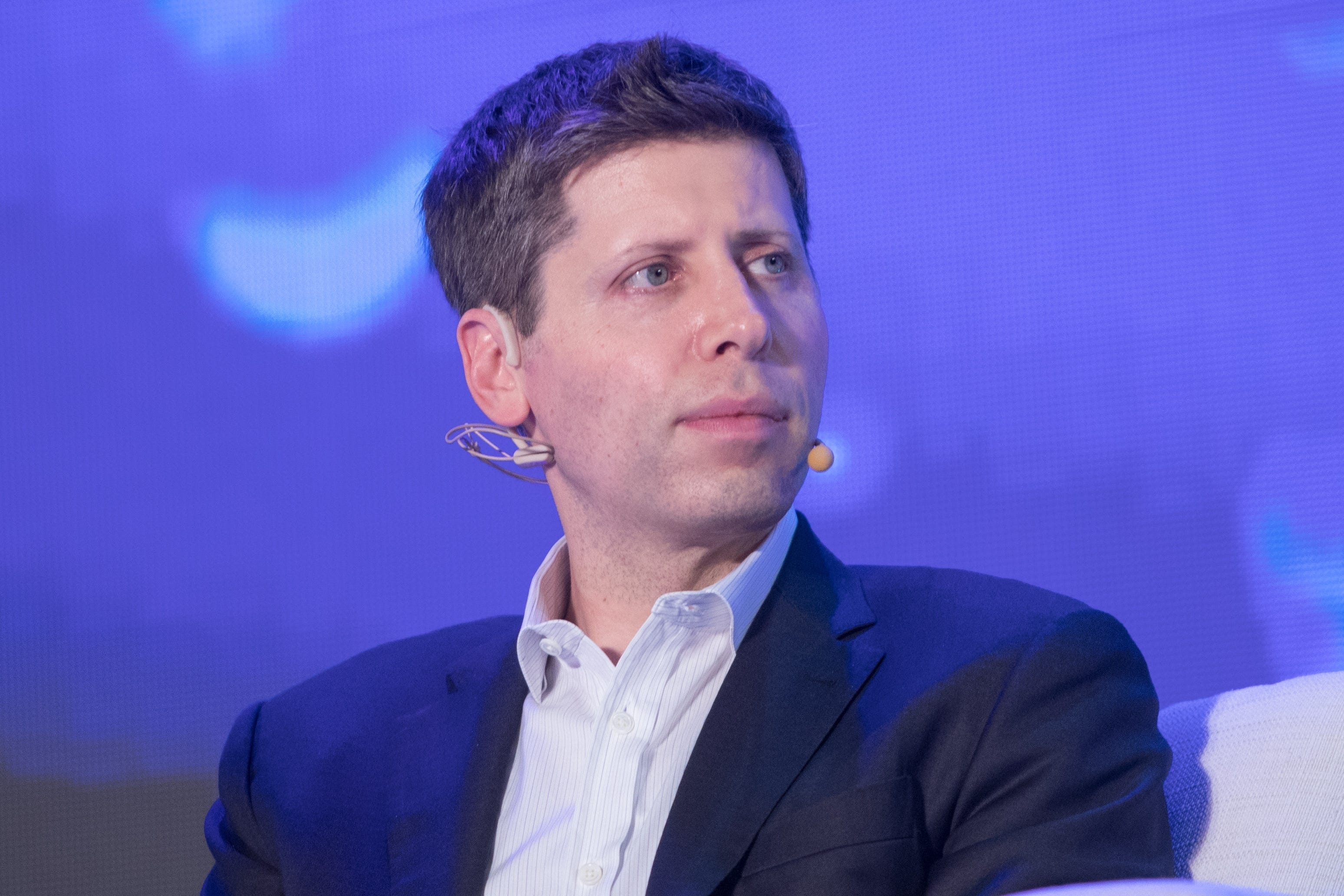
The block trade crossed before Thursday’s open. In a single transaction, Citadel took the entire public portfolio of Situational Awareness LP: the leveraged longs in Nebius and SanDisk and CoreWeave and SK Hynix, the software shorts that had squeezed higher against them, all of it, at a discount, in what CNBC‘s David Faber reported as a forced sale after a wave of margin calls. Leopold Aschenbrenner’s fund had returned 439 percent net through June. By Thursday morning it was a seller at whatever price Citadel would pay.
The numbers, as they stand at the end of the month: down about 67 percent in July, per an investor letter reviewed by the Wall Street Journal. Assets that peaked at $45 billion by CNBC‘s accounting, or “well over $20 billion” by the Journal‘s more conservative one, reduced to roughly $10 billion. Leverage that multiple outlets put at around four times capital. And a letter to investors containing two sentences that will follow Aschenbrenner for the rest of his career: “We let you down this month”, and “We came closer to permanent capital impairment than is acceptable to us”. The strange coda is that after all of it, the fund is still up around 80 percent for 2026, and was, by its own June accounting, up 1,551 percent since inception. The gains were that large. The unwind was that fast. In the letter, per one account, Aschenbrenner laid part of the blame on short sellers.
The arc runs two years, nearly to the day. In June 2024, Aschenbrenner, recently fired from OpenAI, published Situational Awareness: The Decade Ahead, the manifesto that gave the fund its name. It opens: “You can see the future first in San Francisco.” It predicts AGI by 2027, superintelligence shortly after, trillion-dollar compute clusters, an industrial mobilization to rival the war economy. The dedication: to Ilya Sutskever. A month later he had $225 million in seed capital from Patrick and John Collison, Nat Friedman, and Daniel Gross, and a thesis pure enough to print on a napkin: if the manifesto is right, own the infrastructure with maximum aggression. For two years the trade worked beyond any hedge fund precedent. Then July happened.
What happened in July was, in one sense, unremarkable. The PHLX Semiconductor Index had soared roughly 90 percent in the second quarter; in July it fell more than 20 percent, a technical bear market arriving weeks after euphoria. For an unlevered investor, a correction. For a fund running four turns of leverage on concentrated positions, an extinction event. The longs fell together: Nebius down nearly half from its peak, SanDisk down more than half in a month. The short book, led by a short position in Adobe, squeezed higher as the longs collapsed, the pair trade failing on both legs at once. The margin calls came from the prime brokers. Aschenbrenner sought to raise more than $10 billion, made emergency calls about selling private stakes to Sequoia and Greenoaks, and ended the talks when Citadel agreed to take the whole public book.
One document from the middle of the drawdown deserves to be read carefully. On July 24, six days before the fire sale, Aschenbrenner sent investors his half-year letter. The fund had “not been immune” to the market ructions, he acknowledged, but the selloff had created some of the most attractive investment opportunities since early 2025. The letter opened a subscription window for August 1 and closed with a postscript: “PS. At times we call out opportunities that seem like a particularly good time to add funds, if you have been waiting for one.” He was inviting fresh capital into a book that had six days to live. I do not think he was lying. That is what makes it worth writing about. He could see the margin math as well as anyone alive, and the manifesto overrode the math. The belief was load-bearing to the end.
And one more detail, the kind that makes you close the laptop for a minute: according to David Faber’s sources, Aschenbrenner is getting married this weekend.
The rout that took the fund down was itself the market beginning to ask a question Jim Chanos has been asking for months: what are these companies actually earning? On Prof G Markets this week, Chanos put the accounting problem in terms anyone can follow. The hyperscalers are depreciating chips over five and six years that the industry itself says are competitively obsolete in two or three. The gap between those schedules is not a rounding error. By his estimate the mismatch in earnings is “in the hundreds of billions of dollars a year,” and it is the real reason profits look the way they do: “corporate profits maybe should be growing 8 or 9 [percent], but they’re growing somewhere like 28 or 29.”
The second number is worse. By his math, hyperscalers that were earning 100 percent on each incremental dollar of investment a year and a half ago are earning 25 percent on it now, and a couple are already in the teens. That is what happens when you pour capital expenditure into an asset that depreciates like fruit. Each successive dollar of capex earns less than the one before it, and the industry’s answer to that arithmetic has been to raise the capex. Chanos’s warning is about where the compounding goes: “there could come a point 18 months from now where they’re all losing the race.”
He has run this experiment before, and so has the market. The internet was real. Everything the 1999 bulls said about the internet’s importance was true, and the stocks were still mispriced by an order of magnitude, because between 1996 and 2007 the economy and S&P profits both grew about 6 percent a year, decade over decade, with no visible inflection from the greatest general-purpose technology of the age. S&P earnings fell roughly 40 percent from mid-2000 to mid-2001 when the capex machine seized. The technology arrived anyway, on schedule, and the people who levered into the pricing of it were carried out years before the payoff. Being early and being wrong settle to the same account.
⁂
Chanos describes the earnings. Ed Zitron has spent the month describing the plumbing. The occasion for his latest tour through the financing structure is the deal in which Nvidia provides up to $350 billion in financing for GPUs to fill OpenAI data centers, backstopped by a $250 billion guarantee, with the sites built by SB Energy, a SoftBank affiliate that has never built a data center. Zitron’s term for it is “the final boss of circular financing,” and the circularity is the point: the chipmaker finances the customer’s purchase of the chips, books the sale as revenue, and the market capitalizes the revenue as if it had arrived from outside the loop. His blunter claim is about the guarantee itself: “the 250 billion backstop is not actually there.”
The concentration numbers he cites are the structural story. Half or more of Nvidia‘s quarterly revenue now comes from three companies. Google Cloud, by his account, derives 27 percent of its revenue this year from OpenAI and Anthropic combined, projected to reach 48 percent next year; Barclays estimates the same two labs at 13 percent of AWS revenue, going to 18. And the two labs together carry over $1.1 trillion in commitments, against which, on UBS estimates Zitron cites, Anthropic alone is set to spend $76 billion on Google Cloud and roughly $25 billion on Amazon next year. His question is the obvious one: “how are they meant to bloody afford that?” Set aside every question about what the models can do. As a matter of market structure, the revenue of the largest companies on earth is increasingly a claim on the spending of two private startups, which is in turn a claim on capital those startups have not yet raised.
The credit market has noticed what the equity market has not. CoreWeave is paying around 9 percent on its latest debt, by Zitron’s account, in a market where the equity story is limitless. When Amazon came to borrow, the bond was covered 1.6 times, a polite reception where sovereign-quality issuers expect a stampede. Bond buyers do not get paid for narrative. They get paid par, or they do not, and they are pricing the difference.
⁂
Neither the mechanism nor the structure explains July on its own. Depreciation schedules do not force liquidations, and circular deals hold as long as everyone stays in the circle. What failed in July was the third element, the one holding up the other two. Zitron names it exactly: “It’s never been about what LLMs can actually do. It’s about the perception of AI’s potential.”
Last week I argued that the benchmark regime exists to manufacture that perception, and that when the July selloff came, “the rout traded off the leaderboard, and the leaderboard was measuring what leaderboards measure.” The chain runs like this. A benchmark prints a score. The score becomes a capability claim. The capability claim becomes a revenue projection, the projection justifies the capex, the capex becomes collateral, and somewhere near the end of the chain a 2024 manifesto becomes a levered book of memory-chip and data-center equities. Aschenbrenner ran four turns of leverage on the last link of a chain whose first link is a test administered by the people selling the answer key.
Hume told us you cannot derive an ought from an is, and the financial version of the guillotine is that you cannot derive a cash flow from a score. The benchmark says the model completed the task. It does not say anyone will pay what the projections require for the completion, or that the customer will renew, or that the labor being displaced was ever priced at the level the substitution math assumes. The industry’s entire capital structure is an inference thrown across that gap. I wrote about the two prices that expose the gap: agents sold for a few dollars a task, against a global median income that Gallup has measured at about $3,000 per person a year, with the entire valuation edifice pricing the substitution of the latter by the former. The difference between those prices is denominated, as I put it then, in a currency no benchmark prints. July was the month a levered fund discovered that the market can reprice that gap faster than any margin clerk can be reasoned with.
The shape of Aschenbrenner’s book makes the point better than any argument. Long the perception: memory, GPUs, data centers, the picks and shovels of the manifesto. Short the doubters’ refuge: Adobe and the legacy software names that the AGI thesis says are walking dead. That is a pair trade on a single proposition, and the proposition was the manifesto itself. When perception broke, both legs broke together, because both legs were the same leg. The fund named for seeing clearly was, in the end, a monument to seeing one thing.
⁂
What survives the fire sale is instructive. Situational Awareness kept its private book, anchored by a stake in Anthropic that the Financial Times valued at about $5 billion, which led one writer at The Next Web to a description that will sting precisely because it is fair: “essentially an Anthropic holding company with a hedge fund attached.” His own July letter pointed to a potential Anthropic IPO as the second-half catalyst. He may yet finish the year rich and vindicated. Thursday’s relief rally, with the stocks he was forced to dump jumping 20 percent once Citadel owned them, is the market’s little joke at his expense: the thesis bounced the day after the believer was carried out. That is how leverage works. It converts being early into being gone.
Chanos teaches a course on the history of financial fraud, and he is careful with the word. So am I: nothing reported about Situational Awareness suggests anything other than a true believer levered into his own belief. But Chanos has already dubbed this cycle a “golden age of fraud,” and his corollary is the right lens for the month we just finished: “the harshest prosecutor and the staunchest defense attorney of a company is its stock price. Nobody goes after frauds at all-time highs.” His forecast for what comes next is the one to keep: when the down part of the cycle arrives, “the bodies will float to the surface as they always do.” The down leg is where the accounting questions get answered and the circular deals get unwound in daylight. It is where we learn which backstops were actually there. July was six trading days of down leg. The prosecutor has barely opened the file.
The manifesto’s acknowledgments thank, among others, Avital Balwit, who is now chief of staff to Anthropic‘s CEO and, per CNBC, Aschenbrenner’s fiancée. The wedding is this weekend. Whatever else is true of this story, a young man wrote down exactly what he believed, bet everything on it in public, and lost the bet in six days while the people closest to him watched. The proper response is neither glee nor absolution. It is to notice that an industry built a financial system out of the same belief, with the same leverage, and has not yet had its July.
“Before long, the world will wake up,” Aschenbrenner wrote in June 2024. On the last morning of the month, part of it did.
Disclosure: I am short Oracle.
Go Deeper into the Circus
The House of Ellison is on the Brink

On the morning of September 10, 2025, Larry Ellison was the richest man alive. Oracle had reported earnings the night before, and the story inside the numbers was a backlog: hundreds of billions of dollars in contracted future cloud revenue, nearly all of it from artificial intelligence, the largest single piece of it from one customer. The stock rose
The Automated Understudy

On June 26, METR published its predeployment evaluation of OpenAI‘s newest model, GPT-5.6 Sol. The organization’s signature metric is the time horizon: the length of task, denominated in human working hours, that a model can complete at a fifty percent success rate. For this model,
Another amazing piece. I just posted a note about this, on an AI background-view of Leopold’s thesis (because we’re all on a first name basis with him now, right?).
The whole thing is just insane. No one would put AGI at 2027. He has no financial grounding. Doesn’t anyone remember Rothenberg Ventures?
This is some obsession with the hoodie-wearing wunderkind to save everyone, and anyone who has been in their 20s knows people in their 20s are idiots. (No offense, it’s science. We love you all. It’s part of the fun and horror of your 20s.)
We all make terrible decisions then. We just don’t spend hundreds of millions of other people’s money doing it.
Btw, I’ve had Coreweave and hyperscalers as terrible calls for their bad business models since early q4 2025 publicly, (privately before then), but it’s in my track record, which is public on my substack.
I hope you get rich 😉