

The Crisis Papers are finished. Seventeen of them, written from inside a moment I did not choose and could not see whole. They did what they could do: they named the lies. The lie that nothing can be done. The lie that objectivity is neutral. The lie that property is natural. The lie that the future is fixed. The lie that we are our inheritance. Each one a version of the same lie — that somewhere, above us, there exists a vantage point from which the trajectory of human life can be seen and announced. The view from nowhere. The God’s-eye position. The throne.
The blade fell seventeen times. The throne is empty.
And now it is Day One. Not because the crisis is over. The crisis is not over. But because the diagnostic work is complete, and what remains cannot be accomplished with a blade. What remains requires a compass. What remains requires building. And building begins the way it always begins: by standing somewhere, looking toward what does not yet exist, and taking the first step.
This is a philosophy blog. It has always been a philosophy blog. And today, the philosophy turns.
⁂
I want to talk about forgiveness.
Not the kind that absolves. Not the cheap kind that says let’s move on before the wound has been examined. The Crisis Papers exist precisely because that kind of forgiveness is a permission structure for repetition. You cannot forgive what you have not named, and you cannot name what you refuse to see.
But the naming is done. We have seen it. We have seen how the view from nowhere operates — in journalism, in economics, in technology, in the invocation of civilizational identity, in every domain where powerful men disguise their choices as descriptions of reality. We have seen who benefits. We have seen who pays. We have seen the triangle and the forces that seek to collapse it.
And now — having seen it — we must forgive ourselves for having allowed it.
I include myself. I built systems inside the machine. I worked in the architecture of the thing I am now critiquing. I did not see clearly enough, soon enough, and by the time I saw, damage had been done that I cannot undo. That is a fact about me and I carry it not as an excuse, but as intelligence. As knowledge of how the corruption enters. As fuel for the building that comes next.
You carry something similar. Maybe you voted for the wrong person. Maybe you stayed silent when you should have spoken. Maybe you watched the hollowing out of the public thing and told yourself it was someone else’s problem. Maybe you unsubscribed from difficult truths because they made you uncomfortable. Maybe you simply lived your life — raised your children, did your work, loved your people — and trusted that the republic would hold without your active participation.
It didn’t hold. Not entirely. And the guilt you feel about that — if you feel it — is not a punishment. It is a signal. It is your consciousness telling you that the orientation toward memory has delivered its message. You have looked at what was lost. You have reckoned with what you allowed. The memory has done its work.
Now turn.
Turn toward imagination. Toward what has not yet been built. Toward the world your children will need. Not because the past doesn’t matter — the past is half the triangle, and without it you navigate blind. But because staying in the past, living in the guilt, cataloging the failures without ever turning to face the future — that is its own form of the view from nowhere. It is observation without action. Diagnosis without treatment. Memory without imagination.
The republic needs you building, not mourning. Forgive yourself. Not so that you can forget. So that you can move.
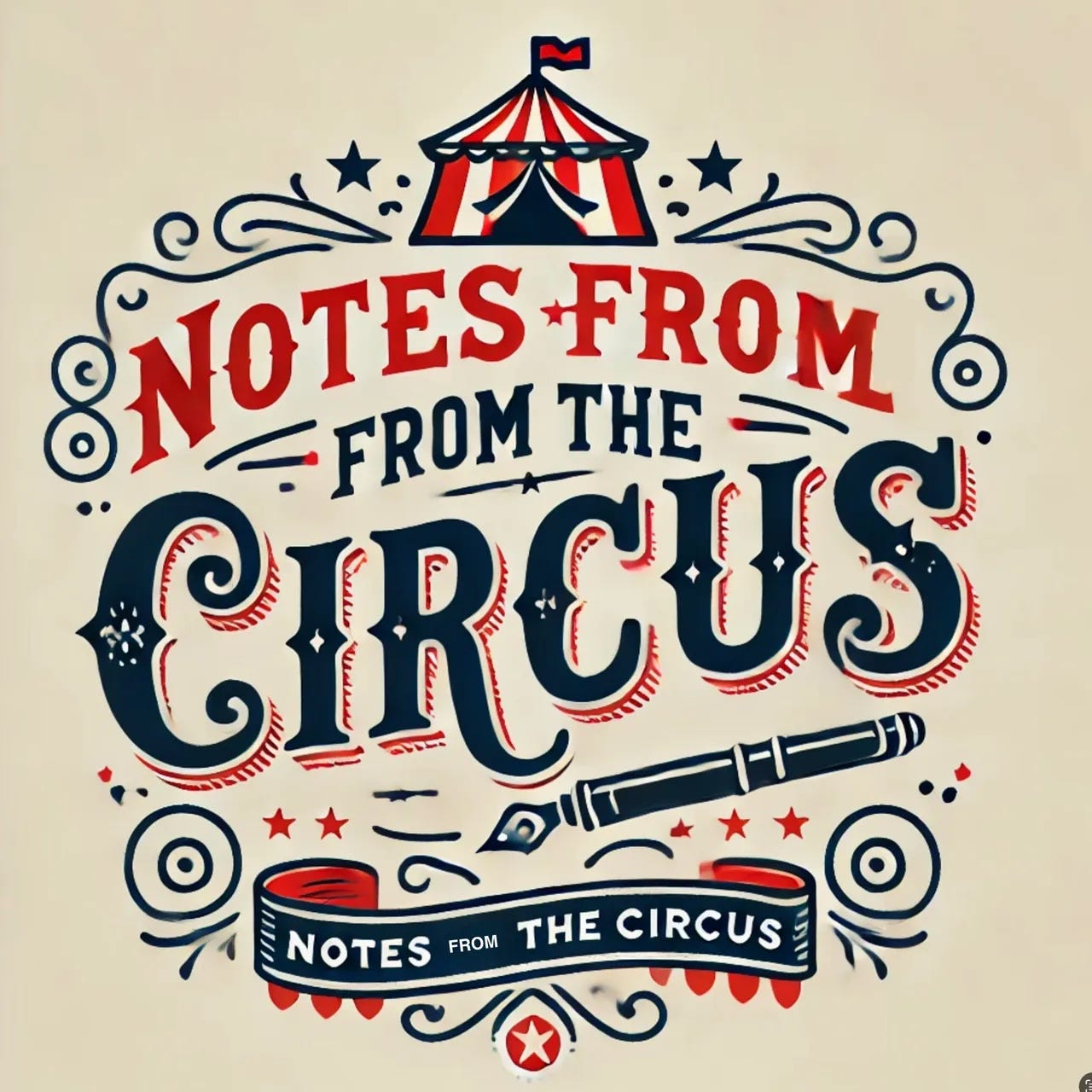
I want to talk about Rome. And I want to be honest about how I’m going to talk about it.
I’m going to tell a story. I’m going to use mythic language — the soul of Rome, the spirit that survived the fall, the idea that hid in texts and walked through centuries looking for an opening. I want to be clear that I know this is a story. I am a naturalist. I do not believe there is a ghost haunting the Western world, whispering republican principles to men who read Plutarch by candlelight.
But I believe the story is true — true in the way that myths are true, which is different from the way that equations are true but not less real. A myth is how conscious beings carry structural insights through time. It is navigation technology. It is the form in which ideas survive when institutions fall. The idea of the republic did not die when Rome died, and calling the survival of that idea “the soul of Rome” is not metaphysical inflation. It is a precise description of what happens when human beings refuse to let a truth be extinguished — when they copy it by hand, pass it to their students, carry it across centuries in the only vessels available: stories, texts, images, myths.
So. The story.
Not the Rome they teach you in school — the emperors, the legions, the colosseum, the bread and circuses and inevitable decline. That Rome is a story told from above. A trajectory. A lesson in civilizational mortality narrated by historians who already know the ending.
I want to talk about the other Rome. The one that lived before the emperors. The one they don’t teach you because it’s dangerous.
The Roman Republic was an idea. Not a perfect one — it excluded women, it depended on slavery, it was riven by class warfare between patricians and plebeians. But at its core was a structural insight so powerful that it has never been extinguished despite two thousand years of men trying to extinguish it:
Res publica. The public thing. The thing that belongs to everyone and no one. The thing that cannot be owned.
The Republic said: no kings. Said: power is distributed because power concentrated is power corrupted. Said: the citizen is the unit of sovereignty, not the subject. Said: we will govern ourselves, in the open, through deliberation, and no single man will stand above the system.
And for five centuries, give or take, it worked. Imperfectly. Violently, sometimes. With contradictions that would eventually consume it. But it worked — in the sense that the triangle held. That citizens steered. That the public thing remained public.
And then the corruption came. Not from outside. From inside. From the men who had benefited most from the republic and who decided that the republic’s plentiful production belonged to them. The senators who accumulated land while the soldiers who conquered it came home to nothing. The oligarchs who bought elections. The generals who privatized the legions. The populists who traded bread for loyalty and circuses for consent.
The triangle collapsed. Slowly, then all at once. Caesar crossed the Rubicon and the Republic died. Not because Caesar was strong. Because the Republic had been hollowed out by the men who were supposed to sustain it. The oligarchs opened the door. Caesar walked through.
And then — and this is the part that should haunt us — the Empire kept the language. Kept the Senate. Kept the titles. Kept SPQR on the standards. Augustus called himself princeps — first citizen — not king. The kingdom wore the republic’s clothes for centuries. And most people couldn’t tell the difference. Because the forms were preserved even as the substance was gutted.
Does this sound familiar? It should.
⁂
The idea of the republic did not die with Rome.
Ideas don’t die the way empires do. They go underground. They hide in texts, in margins, in the quiet work of people who copy manuscripts they may not fully understand but know, somehow, must survive. Monks in cold rooms preserving Cicero’s De Re Publica. Scholars rediscovering Polybius and his analysis of the mixed constitution. Centuries of transmission, hand to hand, mind to mind, through the longest dark age the West has known.
And the idea evolved. That is the crucial thing. It didn’t just survive — it studied its own failure. The memory of Rome’s fall traveled with the texts like a doctor’s notes on a patient lost. Not mourning. Understanding. Mapping the disease so that next time — if there was a next time — the republic might survive what killed Rome.
The lessons accumulated: oligarchy is the republic’s autoimmune disease. The greatest threat is never the barbarian at the gate — it is the citizen who decides the public thing is his private property. The forms of the republic can be preserved while the substance is destroyed, and this preservation of forms is the most dangerous thing of all, because it makes the death invisible. The republic must be re-founded in every generation. It cannot be inherited as a finished thing. The moment it stops being a verb it begins to die.
And then an opening appeared. A New World. Not empty — there were peoples here with their own civilizations and their own wisdom, and what was done to them is part of the memory the republic must carry. But an opening in the imaginative sense. A place where the lessons could be applied. Where men who read Plutarch by candlelight and debated Cicero’s constitutional theory — men who understood themselves as inheritors of an ancient, unfinished project — could attempt the thing that Rome had failed to complete.
They built their capital in Rome’s image. Literally. The columns. The dome. The Senate. The forum renamed the Mall. They named their upper chamber after Rome’s. They studied the fall with the desperate attention of engineers studying a bridge collapse, trying to build one that wouldn’t. Separation of powers — because they’d seen what happened when the Senate became a rubber stamp. Checks and balances — because they’d watched the generals privatize the legions. A Bill of Rights — because they’d read how Augustus had preserved the forms while gutting the substance, and they wanted to make the substance harder to gut.
And they wrote “posterity” into the first sentence. Because the deepest lesson of all, carried through two thousand years of reading and rereading the failure, was this: the republic is not for the present. The republic is the structure that holds the future open. It exists so that the next generation — the ones who aren’t here yet, the new observers, the new vertices of the triangle — can steer.
The American founding was not the birth of a new civilization. It was the re-founding of an idea that had been carried through the darkness by people who refused to let it die.
⁂
But I need to say something here that will make some people uncomfortable, because it disrupts the clean version of this story.
The founding was not pure. The men who wrote “all men are created equal” enslaved human beings. The republic that put “posterity” in its first sentence committed genocide against the peoples whose land it was built on. The Constitution that distributed power so carefully counted Black lives as three-fifths of a person for the purposes of representation. The Enlightenment that produced the Declaration of Independence also produced the philosophical architectures of racial classification, civilizational hierarchy, and colonial extraction. These are not blemishes on an otherwise clean record. They are the record. The whole of it.
I say this not to diminish the founding. I say it because there is a theory of history that must be shattered before the compass can work.
That theory says: a tradition is a program. It has a direction, a set of coherent intentions, a clean ledger. You can evaluate it the way you’d evaluate a mission statement — check whether the Enlightenment was for or against colonialism, whether the founding was good or bad, whether the idea of the republic is noble or tainted. And then you either defend the tradition or reject it, depending on which column has more entries.
This is the view from nowhere applied to history. It requires standing above the process — above the contradictions, above the mess — and rendering a verdict. It requires selecting the parts of the tradition that fit your story and discarding the rest. And it is a lie. The same lie the Crisis Papers named in every other domain. The lie that you can see the trajectory from outside.
History is not a program. It is a process. And a process contains contradictions — not as failures, but as its fundamental structure. Jefferson writing “happiness” while holding people in bondage is not a flaw in the Enlightenment. It is the Enlightenment — the whole of it, the achievement and the crime in the same hand, in the same sentence, in the same man. The honest inheritor does not get to select the noble parts and discard the rest. The honest inheritor carries the whole weight — the beauty and the horror together — and uses the contradiction as fuel for the next act of creation.
This is the three-body problem applied to civilizations. No clean trajectory. No resolution from above. Only the steering, from inside, carrying the full inheritance — the republic and the slavery, the Declaration and the genocide, the idea and its betrayal. Moral progress is not the discovery that the founders were right. Moral progress is the ongoing struggle to close the gap between what they declared and what they did. That struggle is the republic. The moment you resolve it — the moment you say the tradition was clean, or the tradition was rotten — you have stopped steering. You have climbed onto the throne and rendered a verdict from above. And the throne, as we have established, is empty.
The founding contained the contradiction. The contradiction is still here. And the question is not whether the republic was pure — it wasn’t — but whether the idea is strong enough to survive its own failures. Whether the compass still points toward imagination even when the hands holding it are stained.
I believe it does. That is an act of faith, not a verdict of history. And it brings us to the year 2026.
⁂
The same corruption of heart.
The oligarchs have captured the Senate. The public thing is being privatized by men who call it efficiency. The legions have turned inward — federal officers in Minneapolis, the republic’s own instruments aimed at its own citizens. The forms are preserved — the Constitution still hangs on the wall, the Senate still convenes, SPQR still echoes in the marble — but the substance is being gutted by men who invoke the republic’s name while building a kingdom.
A Caesar is trying to rise. He is using the same playbook. Every page. The populism that trades grievance for loyalty. The spectacle that replaces deliberation. The hollowing of institutions from within. The preservation of forms while the substance is destroyed. The claim that the republic requires a strong hand — that the public thing is too complex, too inefficient, too messy for citizens to manage, and must be entrusted to a sovereign who can see the trajectory from above.
The view from nowhere. Applied to governance. Again. As it always is. As it was when Caesar crossed the Rubicon. As it was when Augustus called himself first citizen while ruling as emperor. As it is whenever a man stands before the republic and says: trust me to see what you cannot see. Trust me to steer while you sleep.
But we have something Rome did not have. We have the memory of Rome. Not as heritage. Not as a civilization to be invoked in Munich. As intelligence. As two thousand years of studying how republics die and what it takes to keep them alive. The founders didn’t just build institutions. They built institutions informed by failure. Every structural feature of the American republic is a scar from Rome’s wounds — a lesson learned, a vulnerability addressed, a defense against the corruption that the inheritors of the idea knew would come again.
Because it always comes again. The corruption of heart is not an event. It is a tendency. The tendency of powerful men to mistake the public thing for their private property. The tendency of citizens to let them. The tendency of the triangle to be collapsed by people who find the three-body problem inconvenient and would prefer the clean lines of a kingdom.
And the question — the only question, the one that has been carried in the texts for two thousand years — is whether the republic can survive what Rome could not. Whether the lessons were learned deeply enough. Whether the compass was built well enough. Whether the citizens — you — will steer.
⁂
I want to say something to the Christians.
I say this with respect, and from outside your tradition, but as a friend of it. Because the tradition you carry contains within it one of the most radical truths in human history, and I do not think you have heard it clearly enough.
The Roman Republic would never have crucified Jesus.
A Caesar did that. An empire did that. A governor named Pontius Pilate, appointed by the emperor Tiberius, acting under imperial authority in an imperial province, washed his hands and sent a man to the cross because the stability of the kingdom required it. Not the stability of the republic. The stability of the kingdom. The republic was already dead. Had been dead for decades. The Senate was a rubber stamp. The citizens were subjects. The public thing had been privatized by the very forces that your scriptures warn you about — the powerful, the proud, the accumulators of treasure on earth.
The Republic had a legal system. The finest in the ancient world. It distributed judgment. It required deliberation. It heard arguments. It did not permit a single prefect in a distant province to send a man to his death to keep the emperor’s peace. That is what kingdoms do. That is what empires do. That is what happens when the triangle collapses and one man stands above the system and decides.
Jesus was killed by a kingdom. And then the religion built on his teaching was captured by the same imperial structure that killed him. Constantine took the cross and mounted it on the empire’s standard. The Church became Rome — not the Republic, the Empire. The thing that murdered its own founder. And two thousand years of Christianity have been shaped by that capture. By the God who rules from a throne rather than the God who walked the streets and ate with the poor and said the kingdom of Heaven is within you.
Within you. Not above you. Not in a palace. Not on a throne. Within.
That is not a kingdom. That is something much closer to a republic. The triangle — consciousness, memory, imagination — with God not as sovereign but as participant. The Christ who walked among fishermen and said “the least of these” was describing something very like the republic of Heaven. The structure in which no one stands above. In which the divine is within the citizen, not imposed from outside.
And every Christian who aligns with the new Caesar — who blesses the concentration of power, who sanctifies the hollowing of the public thing, who bows before authority and calls it faith — is siding with Pilate. Your own story tells you what kingdoms do. Jesus was executed by one.
Come home to the republic. It is where he was walking when they found him.
⁂
Before I talk about science, I need to say something about what I’ve been doing in these pages.
I have been using mythic language. The soul of Rome. The republic of Heaven. Angels in the streets. God incarnating as David Bowie. I know how this sounds to certain ears — the ears trained by the scientific establishment to hear myth as superstition, story as imprecision, metaphor as a failure to be rigorous.
I want to address those ears directly, because they belong to people I need in this conversation.
I am a naturalist. I follow Spinoza, not Descartes. Where Descartes split the universe in two — mind here, matter there, God above both — Spinoza said: one substance. Deus sive Natura. God or Nature. Not two things. One thing, expressed infinitely, known from the inside as experience and from the outside as extension. No throne. No kingdom. No view from above. Just the one substance, and the infinite ways it expresses itself, and the consciousness that arises within it and orients.
Heaven, in this framework, is real. I mean this without reservation. But Heaven is not a place you go after you die. Heaven is not a reward administered by a sovereign. Heaven is an orientation. It is what consciousness does when it turns toward imagination — toward creation, toward love, toward the child who will need a world. It is the structure of the republic enacted in the deepest register available to a conscious being. It is real the way love is real. Not as an object in a location. As a direction within the one substance.
And myth — the stories, the images, the soul of Rome walking through centuries, the angels among us — is not inflation. It is navigation technology. It is how conscious beings carry structural truths through time and across the boundaries of traditions and disciplines. The equation describes the structure from outside. The myth describes what it is like from inside. Both are precise. They are precise about different things. And a civilization that can only calculate and cannot narrate has lost half the triangle — has lost the capacity to know what the structure feels like to the beings who live in it.
This is what I mean by meaning pluralism. Different traditions — Christian, Buddhist, Humanist, Daoist, Indigenous, Secular — have built different mythic technologies to navigate the same underlying structure. The triangle is real. The three-body problem is real. The tension between memory and imagination is real. And the images that different peoples have built to carry these truths are all real, in the sense that they do real work for real consciousnesses standing in real somewheres. None of them captures the whole. All of them point at the mountain.
The mountain is there. I am not inflating. I am pointing from where I stand. And I am asking you to point from where you stand. And to trust that the mountain can hold all of our pointing.
⁂
Now. Science. Technology. The tools. And the mistake that has kept them captive for seventy years.
The Crisis Papers held a blade to technological determinism. To the men who build systems and then claim the systems are autonomous — that the trajectory is fixed, that the scaling laws have spoken, that the future is a tiger in the bed and your only choice is to learn to sleep beside it. That blade was necessary. It remains sharp. And it should be used on every determinist who presents human choices as natural laws.
But the blade must also fall — gently, because I am among friends here — on the metaphysics that made the determinism possible.
Cartesian rationalism. The view from nowhere applied to the study of nature. The premise that the universe is a mechanism, that consciousness is either reducible to computation or an embarrassment to be explained away, and that the proper posture of the scientist is detachment. I think, therefore I am — the disembodied mind observing the world from outside, separated from the matter it studies by an unbridgeable gulf. Descartes split the universe in two — mind here, matter there — and the scientific establishment has been living in that split ever since, unable to account for the one thing that makes science possible: the conscious observer who does the observing.
Spinoza saw the problem immediately. His contemporary. His rival. One substance, not two. But the academy chose Descartes — chose the split, chose the detachment, chose the view from nowhere — because the split was useful. It let you treat matter as a machine, consciousness as a ghost, and the relationship between them as someone else’s problem. It let you calculate without asking what the calculations meant. It let you build without asking what you were building for.
Richard Feynman crystallized this into a commandment: shut up and calculate. And for seventy years, the Academy treated that as gospel. The equations work. The predictions are accurate. Asking what it all means — what consciousness is, why there is something it is like to be an observer, how the is of physical law relates to the ought of moral agency — is a waste of time. Metaphysics is woo. Philosophy is for people who can’t do math. Shut up. Calculate.
And they did. And the calculations produced extraordinary tools. And the tools were handed to oligarchs who used them to build kingdoms. And when people asked should we be building this? — should we be building a tiger and putting it in the bed with seven billion people who never asked for a tiger? — the scientific establishment had no framework for the question. Because the question is normative. Because the question lives on the other side of Hume’s guillotine. And Feynman’s gospel had forbidden the crossing.
But the frontier is moving. And the pressure is coming from within.
Roger Penrose — Nobel Laureate, mathematician, physicist — has argued that consciousness is non-computational. That the mind does something that no Turing machine can replicate. He arrived at this not through phenomenology, not through Eastern philosophy, not through any tradition the Cartesian rationalists would call woo — but through Gödel’s incompleteness theorems and the structure of spacetime itself. Through mathematics. The hardest of hard sciences pointing at its own limits and saying: there is something here that the mechanism cannot capture.
Sabine Hossenfelder — theoretical physicist, one of the sharpest critics inside the discipline — wrote Lost in Math to document how theoretical physics lost contact with reality by mistaking mathematical elegance for truth. The map replaced the territory. The model became the thing. That is Cartesian rationalism eating its own tail — the view from nowhere so thoroughly internalized that the scientists forgot they were standing somewhere, forgot that the equations are descriptions and not the world, forgot that the observer is inside the system and cannot be abstracted away.
These are not mystics. These are people at the frontier of the hardest sciences telling you that the metaphysical foundations of the scientific establishment are cracking. That the Cartesian split — mind here, matter there, shut up and calculate — is not adequate to the reality it claims to describe. That consciousness matters. That the observer is not incidental. That the third vertex of the triangle cannot be removed from the system without losing the system.
Spinoza was right. Descartes was wrong. And seventy years of treating Feynman’s quip as a commandment has produced a civilization that can build anything and cannot ask whether it should.
This is what I mean when I say the tools are ours.
Not just politically — not just in the sense that the oligarchs stole them and we must take them back, though that is also true. Ontologically. The tools are ours because we are the ones who make them tools. Without the observer — without consciousness, without the third vertex — the computational power is a two-body problem running in a vacuum. Impressive. Determined. Dead. It becomes technology — it becomes a capacity for creation — only when a conscious being picks it up and orients it toward imagination. Toward something that does not yet exist. Toward the world our children will need.
Science is the disciplined practice of the triangle. You observe — memory. You hypothesize — imagination. You test — consciousness standing in the tension between the two, steering toward better understanding. The scientific method is the republic of inquiry. It distributes authority. It requires replication — the view from many somewheres, not one nowhere. It is self-correcting not because it is perfect but because it builds the correction into its structure, the way the founders built the amendment process into the Constitution.
And technology is the application of the triangle to matter. The capacity to imagine what does not yet exist and bring it into being. That capacity is the inheritance — the same inheritance the Crisis Papers described. The gift of creation. The compass.
We have tools our ancestors could not have dreamed of. Computational power that can model complexity in real time. Communication networks that can connect every citizen to every other citizen. Medical technology that can extend and improve the lives of the observers — the vertices — the consciousnesses whose presence makes the triangle hold. Energy technology that can sustain the republic without consuming the ground it stands on.
These are gifts. Gifts of imagination. And they are being wasted — hoarded by oligarchs, aimed at extraction, deployed in the service of kingdoms that call themselves platforms. Governed by a metaphysics that cannot account for the consciousness that wields them, because it banished consciousness from the laboratory seventy years ago and never invited it back.
Take them back. Not through destruction. Through building. Through the insistence that technology serves the republic — the public thing — and not the private ambitions of men who mistake the commons for their property. Through an honest metaphysics — Spinoza’s metaphysics, not Descartes’ — that puts the observer back in the equation, the citizen back in the laboratory, the ought back alongside the is.
The blade was for the lies. The compass is for the building. And the building starts now.
⁂
It is very fitting, I think, that the Games of the XXXIV Olympiad will be held here. In this city. The City of Angels.
The Games are older than the Republic. They trace to Greece — the other root, the other pillar of the tradition that the men in Munich claim to defend while dismantling its achievements. And the ancient Greeks understood something about the Games that we have nearly forgotten:
The Olympics were sacred not because the athletes were superhuman. Because they were particular. They showed up in their own bodies. From their own cities. They competed as themselves — as finite, embodied, standing somewhere. The Games were the view from somewhere celebrated. The fastest human from Sparta and the fastest human from Athens and the fastest human from Corinth, all on the same track, all in their irreducible particularity, witnessed by the world.
And there was the ekecheiria. The Olympic truce. All wars ceased for the duration of the Games. Not because the Greeks were peaceful. Because the Games occupied a space that the kingdom could not enter. For the length of the competition, the public thing prevailed. The commons held. The athletes were citizens of the Games before they were subjects of any sovereign.
And now the XXXIV Olympiad comes to Los Angeles. The City of Angels — named for the messengers who move between Heaven and Earth. And if you have followed these essays, you might see the angels differently now. Not above us. Among us. God after the incarnation. Citizens of the republic of Heaven, walking the streets, carrying the compass. Or whatever you need them to be. The image is yours.
The Games will arrive in this city, on this ground, in this republic — whatever shape it is in when they get here. And the athletes will show up — from every country, every tradition, every somewhere on earth — and they will compete in their bodies. The view from somewhere. Enacted in flesh. On the same ground where these words were written.
The idea of Rome is here. In the columns of the courthouse and the pages of the Constitution and the stadium where the world’s particular bodies will run. And whatever you call what moves between the Heaven we are building and the Earth we are standing on — angels, citizens, the created who keep creating — it is here too. In us. Doing its work.
⁂
So. Day One.
I want to say one more thing before I hand you the compass.
I consider these Crisis Papers — all seventeen, and this essay that follows them — to be my gift back to the country I love. The country to whom I have sworn allegiance. The country founded not on blood, not on soil, not on civilizational inheritance, but on imagination. On the possibility — the extraordinary, radical, Roman possibility — that through self-government we can build a more perfect union.
When I look at our founding and its documents, I do not see a final word. I see a compass and a landscape in which to navigate it. Towards the only thing that has ever mattered to a human being, in any real way that mattering even takes on meaning.
Love.
That is what the republic is for. That is what the triangle produces. That is what the three-body problem, in all its irreducible complexity, generates when consciousness stands in the tension between memory and imagination and steers. Not power. Not wealth. Not civilization. Love. The structure of consciousness itself. The thing that makes the now unbearable and magnificent simultaneously. The thing that carries us toward imagination, toward creation, toward the child who will need a world.
This is what it looks like from inside history. Not clean. Not certain. Not visible from above. The three-body problem does not resolve into a photograph you can frame and hang on the wall. It resolves into the next moment, and the next, and the willingness to steer through each one without a map.
But the compass works. It has always worked. It worked when the monks copied Cicero by candlelight. It worked when Jefferson substituted happiness for property. It worked when the founders wrote “posterity” into the first sentence of the republic. It works now, in your hands, in whatever room you are reading this in, in whatever somewhere you call home.
Turn toward imagination. That is the bearing. That is the direction the compass points. Not backward toward a civilization to be defended. Not upward toward a sovereign to be obeyed. Forward. Toward the unbuilt. Toward the child. Toward the world that does not yet exist and that will never exist unless you build it.
Two plus two equals four. There are twenty-four hours in a day. And together we shall move towards a more perfect union.
This compass, we hand to posterity. It is the gift of creation.
The first movement was the only movement. And in every moment of creation, the beginning happens again.
I believe love is real. I believe it carries us toward imagination, and thus, toward creation. I have faith that this force will survive me, and you, and all of us — because it is not a feeling we possess. It is the structure we inhabit. The triangle. The tension. The pull between what we might lose and what we might build. And I am grateful — more than I have words for — that this force gave me life and let me experience the inside of love. That is enough. That is more than enough. That is everything.
The republic lives. The idea walks the streets, as it always has, carried by whoever is willing to carry it. The Games are coming. The children are coming. And the circle that began in Rome — the public thing, the thing that speaks for itself, the thing that belongs to everyone and no one — is waiting to be completed.
Not by a sovereign. By you. From where you stand. With the compass in your hand.
Day One.
Res publica. Res ipsa loquitur.
Rome lives.
Go Deeper into the Circus

The Crisis, No. 16

Marco Rubio stood in Munich last week and called for the defense of Western civilization.
I am so grateful for your wisdom and painstaking thoughtfulness. I deeply wish more public academics were as conscientious as you. Your work has been indispensable in keeping me sane this past year or so. Thank you.
Exquisite. What a gift you've shared. Everything I have always believed, now with language you've supplied to describe it. Blown away and truly grateful.