


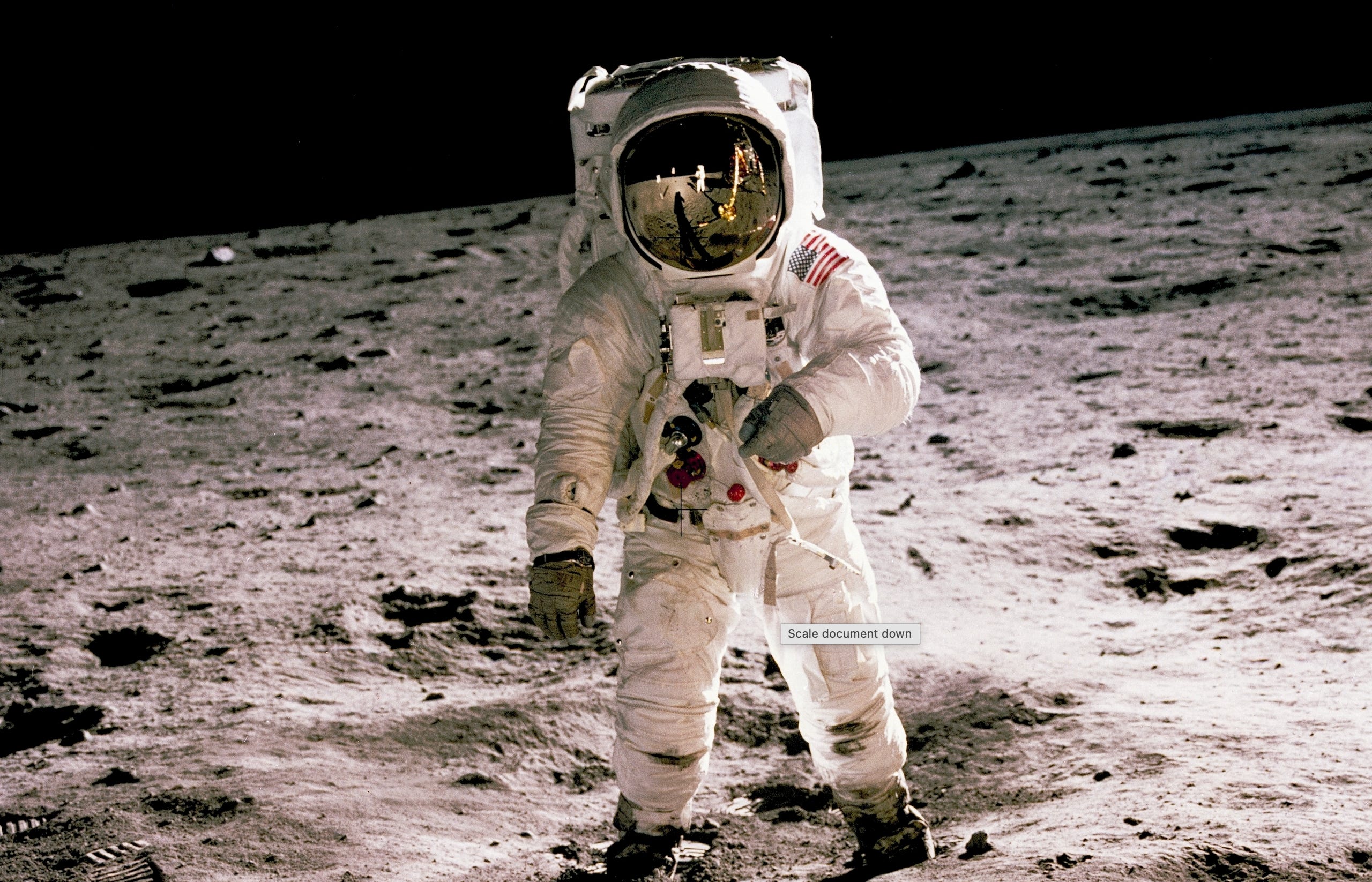
There is an argument beneath a great deal of modern scientific culture. It is rarely written down because, to the people who rely on it, it does not feel like an argument. It feels like the history of civilization.
Belief in God leads to superstition. Superstition hardens into organized religion. Organized religion acquires political power. Priests place Galileo under house arrest and burn lesser-known heretics whose names the story has forgotten. Science finally breaks free, abandons revelation, adopts naturalism, and puts a man on the Moon. Science has the better record on questions of truth. Therefore, when choosing a metaphysics, prefer the view that removes God, purpose, consciousness, and finally the observer from the foundations of reality.
Religious institutions have persecuted inquiry. Galileo was convicted of heresy and confined for the rest of his life. Scientific methods have disclosed features of the world that revelation never could. Rockets work. Antibiotics work. Semiconductors work. The equations survive encounters with reality that no theology has ever been required to survive.
The success of science establishes the power of its method and leaves physicalism unproven. A rocket arriving at the Moon confirms the physical theories used to build and navigate the rocket. It supplies no additional evidence that consciousness is produced by matter, that observers possess no ontological significance, or that the description of reality from outside experience is the only description that is real.
The rocket carried instruments, fuel, human beings, and the accumulated work of generations. No metaphysics was aboard.
⁂
Neil deGrasse Tyson once described the Galileo affair as his choice for “the trial of the millennium”. Galileo showed that the universe differed from the Catholic Church’s account; the Church tried him, convicted him, and sentenced him to house arrest. Tyson drew the line plainly: scientific claims rest upon experimental verification, religious claims rest upon faith, and the two offer “irreconcilable approaches to knowing.”
This is the Galileo story most scientifically literate people inherit. Carl Sagan told versions of it. Generations of science teachers and popularizers have told versions of it. The Church claimed authority over the heavens. Galileo looked through a telescope. Authority lost.
The history is more complicated than the parable. The Stanford Encyclopedia of Philosophy’s account of Galileo describes unsettled doctrine, Medici patronage, papal politics, the Counter-Reformation, the Thirty Years’ War, and a substantive dispute over whether astronomy described reality or merely supplied instruments for prediction. Galileo’s evidence for the motion of the Earth was not, at the time, conclusive. Some churchmen supported him. Some scientific contemporaries opposed him. The status of Copernicanism as heresy remained cloudy until the Church made its condemnation public through Galileo himself.
Historians of science have spent decades dismantling the simple warfare account. Ronald Numbers called permanent conflict between science and religion “the greatest myth in the history of science and religion”. He traced its familiar form to the nineteenth-century polemicists Andrew Dickson White and John William Draper, whose propaganda converted a complicated history into a civilizational battle.
Galileo’s opponents had grounds to dispute evidence that had not yet become decisive. They had no right to close the question by force. The Church claimed authority over what could be said about the physical universe and punished a man for refusing its terms. The machinery of coercive closure was the moral failure.
The institutional failure was epistemic closure backed by power. A hierarchy insulated certain propositions from revision, made fidelity to those propositions a condition of standing, and possessed coercive machinery with which to discipline dissent. Revelation supplied the protected propositions. Political authority supplied the danger.
The scientific culture that emerged from this history learned the correct institutional lesson: no proposition about the natural world may be protected from observation. It also learned another lesson, less carefully and more deeply. Any metaphysics that grants reality to mind, purpose, interiority, or God threatens to reopen the door through which the priests entered. The observer became a security vulnerability.
Trauma supplied the second lesson.
⁂
The trauma produced a fundamental attribution error.
The metaphysical content of religious belief received the blame for failures produced by dogmatic institutions with coercive power. The metaphysical content of naturalism received the credit for successes produced by public methods designed to expose error. Both explanations erase the institutions that did the work.
The relevant achievements of modern science came from measurement, mathematical formalization, controlled experiment, reproducibility, prediction, open criticism, and the willingness to discard models that fail. None of these requires the proposition that only physical properties exist. A dual-aspect monist can calculate a trajectory. A panpsychist can run a double-blind trial. A Christian can sequence a genome. An atheist can falsify his own hypothesis. The method disciplines every practitioner in the same way because it does not ask what the practitioner believes reality is made of. It asks what the evidence permits the practitioner to say.
Philosophers distinguish methodological naturalism from ontological naturalism for exactly this reason. The methodological commitment grants science authority over the investigation of nature and excludes appeals to revelation from scientific explanation. The ontological commitment makes a claim about the contents of reality: nothing supernatural, mental, purposive, or otherwise irreducible to the physical belongs in the final inventory.
The methodological commitment can stand independently of the ontological one. Scientists of many religious and metaphysical persuasions perform the same experiments because the experimental method does not depend upon their ultimate ontology. A result obtained under methodological naturalism may embarrass a religious doctrine. It may render a proposed supernatural intervention unnecessary. Its success alone cannot transform a rule for inquiry into a complete account of being. Some philosophers argue that the record of methodological naturalism should still increase our confidence in metaphysical naturalism, even though the first does not entail the second. The amount of that increase depends upon which metaphysical hypotheses made the successful result more likely. Apollo is where the intuitive update becomes indefensible.
For centuries, the people invoking mind, soul, purpose, or God in explanations often were trying to stop the inquiry. The scientist learned to hear every metaphysical claim about interiority as an attempt to smuggle the bishop back into the laboratory. The suspicion was historically earned. It became indiscriminate.
The result is a peculiar inversion. Physicalism presents itself as the absence of metaphysics, the view left over after every speculative addition has been shaved away by Occam’s razor. Consciousness becomes the speculative addition, despite being the one feature of reality each of us knows through direct acquaintance. The external description becomes reality itself. The internal description becomes a problem to be explained out of it.
This is how a defensive institutional posture hardened into an ontology.

Apollo is neutral among metaphysical systems that accept the same physics.
Suppose physicalism and dual-aspect monism both predict that a Saturn V, built to the same specifications and governed by the same equations, will follow the same trajectory. The successful mission is evidence for the equations, the engineering, and the vast body of empirical knowledge on which both metaphysical positions rely. Because the two positions predict the same result, the mission cannot provide evidence for one against the other.
This is ordinary underdetermination within the domain of third-person physical predictions. Philosophers of science have long recognized that incompatible accounts of reality can produce identical empirical predictions. Where their predictions coincide, observations within that domain cannot discriminate between them. First-person evidence may bear on the metaphysical choice in ways a lunar mission cannot. Additional considerations may still guide judgment: coherence, parsimony, explanatory scope, compatibility with other knowledge. The shared engineering evidence does not make the choice for us.
The Bayesian point is equally direct. Evidence favors one hypothesis over another when the evidence is more expected under the first hypothesis than under the second. If physicalism and dual-aspect monism assign the same probability to a successful lunar mission, the mission leaves their relative probability where it found it. Whatever preference remains after Apollo must come from other evidence, prior commitments, or theoretical virtues such as parsimony and coherence.
Popular scientific culture behaves as though the likelihoods differ radically:
Physicalism predicts rockets. Metaphysics predicts prayer.
But dual-aspect monism predicts the rocket. It predicts the chemistry of combustion, the mechanics of orbital transfer, the behavior of alloys under heat, the operation of the guidance computer, and the radio signal returning through space. It changes none of the engineering because it disputes none of the physical description. Its disagreement begins when the physicalist calls that description exhaustive.
The success of a description within its domain cannot establish that no other aspect of the described reality exists. A map can guide you across a city without containing the smell of rain on the pavement. The omission does not make the map inaccurate. The usefulness of the map does not make the rain unreal.
The physical sciences describe the exterior structure of reality with astonishing precision. Their success licenses confidence in that description. The license reaches no further.
⁂
Dual-aspect monism is routinely mistaken for the return of Cartesian dualism.
Someone hears that consciousness is fundamental and imagines a second substance entering the brain. Consciousness transmits from elsewhere. The brain receives it like an antenna. Damage the receiver and the signal degrades. Death breaks the connection and releases the mind back into whatever invisible medium supplied it.
That is Cartesian dualism fitted with radio equipment.
The brain and consciousness are the same thing. Your experience is what the process looks like from within. Your physical brain is what the same process looks like from without. Qualia, memory, integration, and the felt continuity of the present belong to the interior description. Neurons, electrical potentials, neurotransmitters, and large-scale network dynamics belong to the exterior description. Neither description causes the other. Neither description arrives from somewhere else. They are two aspects of one event.
This is what monism means. There is one substance. Dual-aspect theories hold that the mental and material are different aspects of a unitary reality. In Harald Atmanspacher’s more technical formulation, mind and matter are inseparable and irreducible manifestations of an underlying domain. The aspects remain equally fundamental, rather than reducing to a third neutral substance. Descartes posited two substances and inherited the problem of explaining how they interact. Spinoza posited one substance available under different attributes. With one substance, the interaction problem never arises.
God and atoms, in the Spinozan vocabulary, are made of the same thing. The sentence sounds mystical only because three centuries of scientific culture have trained us to hear God as the name of a supernatural person interfering with matter. Spinoza meant substance itself: the one reality of which thought and extension are attributes. One can discard the word God and retain the ontology. Nothing essential depends upon organized religion, providence, miracles, scripture, a personal creator, or a life after death.
On the version of this view I hold, a hydrogen atom possesses an experiential aspect. It is conscious in the thinnest possible sense and lacks everything that ordinarily causes us to use the word. It has no self-model, thought, memory, language, sight, hearing, narrative identity, or reflective awareness. Human consciousness is built through biological organization of almost inconceivable complexity. Evolution constructed cognitive technology capable of memory, attention, perception, abstraction, and a unified model of a self persisting through time.
This raises the combination problem immediately: how do tiny atomic experiences combine into the unified experience of a person? On my account, no such combination occurs. The question assumes billions of microscopic subjects whose private theaters must somehow merge. My account posits one substrate with an experiential aspect, indexed into perspectives by organized embodied systems. The hydrogen atom has an inside without containing a miniature self. A human being supports a unified perspective through the organization of the whole embodied being, rather than through the fusion of atomic minds. The explanatory burden moves to indexation: which organizations support a perspective, how the boundaries of that perspective are constituted, and why biological integration yields the forms of unity we experience. That debt is real. It is also different from the combination problem faced by constitutive micropsychism.
The physical organization observed under a microscope is the exterior aspect of that technology. It is neither an antenna receiving a foreign signal nor a projection manufactured by a disembodied mind. The organization and the experience are the same organized reality encountered from opposite sides.
Complex cognition still emerges. Human self-awareness still depends upon brains. Anesthesia, injury, development, disease, and death retain all their physical significance. Chemistry remains chemistry. Neuroscience remains neuroscience. The direction of the metaphysical explanation changes at one point: complex experience is organized from a reality that possessed an interior aspect all along.
The account therefore remains incomplete. A serious metaphysics creates research questions and receives no immunity from them.
It does dissolve the impossible demand at the center of reductive physicalism: derive the existence of experience from a description containing only quantities, relations, and behavior. Reductive physicalism begins with the exterior and promises that sufficient exterior complexity will produce an interior. The promise has no bridge. Non-reductive physicalists instead say mental facts supervene on physical facts and are nothing over and above them. Supervenience names the dependency while leaving its existence unexplained.
⁂
Occam’s razor is often invoked here, as though physicalism proposes matter while dual-aspect monism proposes matter plus a ghost.
Dual-aspect monism proposes one substance. Physicalism also proposes one substance, then assigns that substance a peculiar limitation: its intrinsic nature contains nothing experiential, yet under certain organizational conditions experience appears. The stronger physicalist objection asks why we should attribute an interior aspect to a hydrogen atom when nothing in its behavior requires one. The answer begins with the same restraint: behavior never reveals an interior directly, including in other human beings. We infer other interiors because experience is the one case in which we know that exterior physical organization has an interior at all. Dual-aspect monism extends that datum continuously through one substance. Physicalism posits a point at which interiority appears inside a reality whose intrinsic nature had excluded it.
Parsimony concerns explanatory commitments. Cultural familiarity does not make a theory simple.
Physicalism carries the hard problem of consciousness, the binding problem, the relation between first-person facts and third-person descriptions, and the persistent inability to identify why any physical processing should feel like anything from within. These problems are sometimes treated as promissory notes. Neuroscience will eventually find the mechanism. Complexity will cross the explanatory gap. Integration will become experience if the equations describing integration become detailed enough.
The confidence comes from the historical prior. Science solved lightning, disease, heredity, planetary motion, and combustion. Consciousness will fall as those problems fell. The comparison assumes the conclusion. Those earlier problems concerned unknown structures and mechanisms within the exterior description. Consciousness is the existence of an interior description. More detail on one side of the distinction does not explain why the distinction exists.
The binding problem makes the failure visible. Distributed neural processes occur across different regions and timescales, yet experience arrives as a unified field. Neuroscience can study the correlations and coordination. It can identify which systems must function for integration to occur. The physical account still describes a collection of activities. The unity belongs to what those activities are like from within.
Occam’s razor cannot select physicalism by counting consciousness as an additional entity. Consciousness is the datum under explanation. Eliminating it from the premises and promising to recover it later has not made the ontology lean. It has concealed the unpaid debt.
⁂
Science remembers what happened when institutions claimed that revealed truth outranked observation. It remembers prohibited books, censored inquiry, forced recantations, and careers made contingent upon doctrinal obedience. The memory is held in the Galileo story even where the story has been simplified. Popularizers repeat it because they want the next Galileo protected.
The protection remains necessary. The inference attached to it can go.
There is another fact the inherited story handles too casually. Religious cognition appears with extraordinary ease. The phrase God gene gave this fact a vulgar genetic form: Dean Hamer proposed an association between spirituality and a variant of VMAT2. The association was never replicated, and even Hamer described spirituality as a complex trait shaped by many genes and a powerful environmental influence. As a review in Nature Genetics observed, the catchy name survived the science attached to it.
The underlying phenomenon survived too. Human beings across otherwise unrelated cultures repeatedly infer supernatural agency, purpose, moral order, and minds larger than their own. Children display teleological intuitions before they can defend a theology. Deborah Kelemen found that children tend to understand natural objects in terms of purpose and are unusually receptive to creator explanations, a pattern she called “intuitive theism”. The cognitive science of religion explains the cross-cultural recurrence and historical persistence of religious ideas through ordinary mental equipment: agency detection, theory of mind, teleological reasoning, memory biases, and the cultural transmission of minimally counterintuitive agents. On this account, religion comes naturally because the human mind is built to generate it.
That account may have the direction of explanation backward. Pattern recognition can explain the shapes religious intuition takes. Socialization can explain the names, stories, rituals, and prohibitions attached to it. Neither has established that the intuition itself is a cognitive error. If consciousness is fundamental, and individual minds are local organizations within a larger conscious reality, the persistent human sense of inhabiting a mind greater than our own may be a low-resolution awareness of an actual relation. Culture would then interpret the awareness rather than manufacture it.
The proposal remains metaphysical. Its rival is metaphysical too. Calling religious intuition an evolutionary byproduct redescribes the disposition in physicalist language and treats the redescription as a causal explanation. A brain organized to perceive a conscious ground of being would also possess neural machinery correlated with that perception. Finding the machinery would no more disprove the object than finding the visual cortex disproves light.
Christianity preceded imperial patronage and survived attempts to suppress it. Constantine legalized it, funded it, and convened councils that shaped doctrine for centuries. Whatever mixture of conviction and political calculation moved him, imperial power began domesticating an existing structure of belief around the needs of rule.
Marx understood religion with more sympathy than the phrase usually extracted from him suggests. He called it “the sigh of the oppressed creature, the heart of a heartless world, and the soul of soulless conditions” before calling it the opium of the people. Religion expressed real suffering and protested against it even as it consoled people inside the conditions producing their pain. Marx wanted the illusion abolished along with the conditions that required it. Institutions could use consolation to preserve power without having invented the hunger it answered.
Russia supplies the whole sequence in compressed form. Orthodoxy long preceded the czars, who inherited it and bent it toward the state. Peter the Great abolished the Moscow patriarchate in 1721 and turned the church’s central administration into a department of state. The Bolsheviks attacked the institution, confiscated its property, imprisoned and killed clergy, and tried to extirpate religious life. Stalin partially revived the church during the Second World War when its patriotic authority became useful. Putin later built a new compact from the surviving institution, state patronage, Russian nationalism, and the promise of civilizational legitimacy.
The compact has now reached its obscene conclusion. Patriarch Kirill placed the authority of the church behind the invasion of Ukraine and identified its future with the survival of Putin’s imperial project. By 2023, Carnegie’s account of the alliance described Kirill as unable to imagine the church outside the borders of the fallen empire. The Kremlin gains sacred language for state violence. The hierarchy gains protection, property, prestige, and a ruler willing to enforce its conception of Russia.
The state finds the religious impulse already present and captures the institution built around it. From Constantine’s councils to Putin’s compact with Kirill, political power repeatedly domesticated belief it could neither originate nor extinguish. The history explains political religion without reducing religious consciousness to political manipulation.
The Galileo story becomes especially silly when it treats the Church’s cruelty as evidence about God. If God exists as the conscious ground of reality, the persecution records what frightened men did while claiming divine authority. It records no divine approval. God, if asked, would likely have objected to the cell. A world containing free agents also contains priests who abuse freedom, institutions that confuse their interests with heaven’s, and rulers who discover that God’s name is useful precisely because God does not issue corrections through the state.
The danger lies in the alliance of certainty and authority. A religious institution can form that alliance. A scientific institution can form it too, though its methods contain stronger resources for correction. The comparison should not be flattened into an equivalence. No contemporary physics department possesses an Inquisition. A metaphysical prior can still become a boundary around respectable thought, determining which questions receive funding, which interpretations sound serious, and which anomalies are treated as invitations to rebuild rather than embarrassments to be absorbed.
The irony is severe. Scientific culture organized itself around opposition to a church that placed metaphysical commitments beyond revision. It then inherited a metaphysical commitment whose authority came from the story of that opposition.
The priest said the revealed account must be true because the institution carrying revelation had survived. The physicalist says the exterior account must be complete because the methods studying the exterior put footprints on the Moon.
The arguments differ in every historical and moral respect. They share one logical defect. Institutional victory has been mistaken for ontological proof.
⁂
The Copernican revolution displaced the Earth. It left the ontology of observers untouched.
Copernicus displaced the Earth from the center of the planetary system. The result became a heuristic: when a theory assigns humanity a privileged spatial position, demand evidence. The heuristic served science well. Over time, spatial non-privilege expanded into ontological non-privilege. Humanity was not at the center; therefore life was not special. Life was not special; therefore consciousness was not fundamental. Consciousness was not fundamental; therefore the complete description of reality must contain no essential reference to observers.
I have called this expansion Copernican nihilism. It takes a correct result about location and turns it into a prior against interiority. The move from we are not spatially central to experience is ontologically derivative contains no valid inference. The historical sequence disguises the gap.
Physics itself has spent the last century making the observer harder to remove. Relativity indexes measurements to frames. Quantum mechanics indexes outcomes to measurement contexts. Cosmology confronts the fact that every description of the universe is produced from inside the universe by observers with finite horizons. The outside view remains indispensable, but it has never been a view from nowhere. It is a disciplined construction produced by beings who possess interiors.
In my earlier work on the Copernican principle, I argued that a productive scientific heuristic had become a protective metaphysical belt. The same pattern appears here. Evidence that humans occupy no privileged location is repeatedly presented as evidence that the universe has no inside. A statement about where we are becomes a statement about what we are.
Dual-aspect monism accepts every empirical humiliation Copernicus delivered. The Earth is not the center. The Sun is not the center. Human beings arrived late in cosmic history through evolution. Our senses disclose a narrow band of reality. Our intuitions fail outside the scales that formed them.
Humility about our position cannot require denial of the faculty performing the humbling.
Science works because conscious beings built institutions capable of correcting conscious beings. Instruments extend perception. Mathematics extends inference. Replication checks memory and desire. Peer criticism exposes individual thought to other interiors capable of finding its errors. The entire enterprise depends upon observers disciplined into a community, then tells itself that observers are absent from the final account.
That is the prior inherited from Galileo’s cell. It protected science from the priest. It has outlived the argument that justified it.
We should keep the protection. We should release the prior.
The equations will keep working, and no deity could intervene from outside nature because this view admits no outside substance from which to intervene. Science loses nothing by distinguishing the authority of its method from the completeness of its metaphysics.
Dual-aspect monism remains a metaphysical proposal. Apollo and the history attached to it were never capable of deciding among ontologies.
A man walked on the Moon because the exterior description of matter was good enough to carry him there.
He looked back at Earth from inside an experience the description still cannot contain.
Go Deeper into the Circus

The Last Serious Contrarian

Christopher Hitchens died on the fifteenth of December, 2011, in Houston, of esophageal cancer, at the age of sixty-two. He had been on a book tour for Hitch-22 when the disease announced itself. He spent the eighteen months that followed writing about dying — the essays collected later as
Science doesn't deal in proof, it deals in the weight of evidence. All scientific conclusions are provisional. A scientific conclusion is one that can be tested and is potentially falsifiable by experiment. Science rests on arguments from evidence, not arguments from authority.
“The Metaphysics of Quality subscribes to what is called empiricism. It claims that all legitimate human knowledge arises from the senses or by thinking about what the senses provide. Most empiricists deny the validity of any knowledge gained through imagination, authority, tradition, or purely theoretical reasoning. They regard fields such as art, morality, religion, and metaphysics as unverifiable. The Metaphysics of Quality varies from this by saying that the values of art and morality and even religious mysticism are verifiable, and that in the past they have been excluded for metaphysical reasons, not empirical reasons. They have been excluded because of the metaphysical assumption that all the universe is composed of subjects and objects and anything that can’t be classified as a subject or an object isn’t real. There is no empirical evidence for this assumption at all. It is just an assumption.”
- Robert Pirsig
Pirsig has a lot more to say about this issue. See his book, Lila (excerpted above). It offers one very persuasive solution to this riddle.