


Some readers of A New Cold War have written to express a version of suspicion this Dispatch will engage with directly, because the suspicion is itself a piece of evidence about the analytical malformation these pages have been diagnosing, and refusing the suspicion is part of what these pages are for.
My piece on the China-Iran proxy operation reads, to a certain register of left commentary, as a piece of cold-war propaganda dressed in liberal vocabulary. They think they’re hearing “imperialist propaganda.” The author, this reading holds, must be either naive about American imperial conduct or strategically aligned with American imperial interests in a way that compromises his stated commitment to anti-authoritarianism. The diagnosis the Dispatch offers — that Beijing is conducting Cold War strategy through Iran as proxy — is treated as suspect because the diagnosis serves the rhetorical purposes of American hawks, and the suspicion that the author is unwittingly serving those purposes is the diagnostic move the reader is performing on the writer.
⁂
The structure of the suspicion is the structure I have been diagnosing in these pages in other domains. It is the move that converts criticism of any party into license to defend the party’s adversaries, on the implicit theory that the political-emotional priority of opposing the wrong party requires the corresponding priority of not criticizing the right party’s enemies. The move has produced the analytical paralysis that runs through significant portions of the contemporary American left, in which any criticism of authoritarian regimes that happen to be in conflict with the United States gets read as a contribution to American imperial ideology, with the result that the actual conduct of those regimes — disappearances, ethnic-minority internment, organ harvesting, the threatening of democratic neighbors with military annihilation — becomes unnameable because naming it is positioned as taking the wrong side in the wrong conflict.
The move is wrong. It is wrong on the philosophical level. It is wrong on the political-strategic level. It is wrong because it is producing a discourse in which the universalist commitments that are supposed to ground the contemporary American left have been abandoned in favor of a narrow factional anti-Americanism that the universalist tradition has never authorized.
⁂
It does not mean that I am soft on America’s ill-conduct, that I have failed to register the catastrophe the Trump administration is producing in domestic politics and in foreign policy, that I have abandoned the work of holding the country accountable for the harm it is doing in the Persian Gulf and elsewhere. The pieces are what they are. Anyone who has read these pages across the past year knows what the work has been. The pieces on the captured Court, on the Republican coalition’s structural orientation against children and the future, on the Vance-Thiel monarchical project, on the dealmaker mythology and the Iran catastrophe, on the AI category-error and the labor-extraction architecture, on the renormalization of bigotry and the free-speech-as-instrument move — these pieces are doing the work of holding American power accountable for what American power is currently doing. The work is on the record.
What it means is that the work of holding American power accountable does not require, and is not improved by, the corresponding suspension of the work of holding other authoritarian powers accountable for what they are currently doing. The universalist commitment to liberty as a universal condition does not have national exceptions. The exception that says we cannot criticize Beijing because criticizing Beijing serves American imperial purposes is not a universalist exception. It is a factional exception dressed in universalist vocabulary. The factional exception is what produces the analytical paralysis I have been describing. The universalist commitment requires the analytical paralysis to be refused.
China is a dictatorship. Xi Jinping has consolidated power as effectively the leader for life through the constitutional revisions of 2018 that removed presidential term limits, the elevation of Xi Jinping Thought to canonical status, and the suppression of factional competition within the Chinese Communist Party. The People’s Republic has been systematically working to undermine democratic governance in its sphere of influence, including in Taiwan, in Hong Kong, across the Pacific island states whose political systems Beijing has been actively cultivating into deference, and within the United States through the influence operations that the U.S.-China Economic and Security Review Commission has been documenting for years. All of this is true. It is true even as America has fallen into the grips of what I have argued is a fascist political project running through the Trump administration and its donor-class infrastructure. The two truths coexist. The American truth does not negate the Chinese truth. The Chinese truth does not negate the American truth. Refusing to hold both at once is the analytical malformation. The piece this Dispatch is responding to is the piece that refused the malformation.
I am not anti-war. I subscribe to a notion of just war theory in the liberal tradition, and I do not apologize for it. I think the Allies needed to fight World War II. I also think America has fought wars of choice that never should have been fought, and I have said so. I think the current war with Iran is unconstitutional, illegal, and ill-conceived, and I have argued at length that it will ultimately be the end of this regime. But if you asked me whether the United States should go to war with China if China invaded Taiwan, my answer is yes, without hesitation. The same reason I would never stop fighting fascists at home is the reason I would not stand by while a free and democratic people had their constitutional self-government extinguished at gunpoint by a tyrannical neighbor. I do not support empire. I do support coming to the aid of free and democratic people. This is a view sometimes associated with liberal internationalism. I wear it proudly.
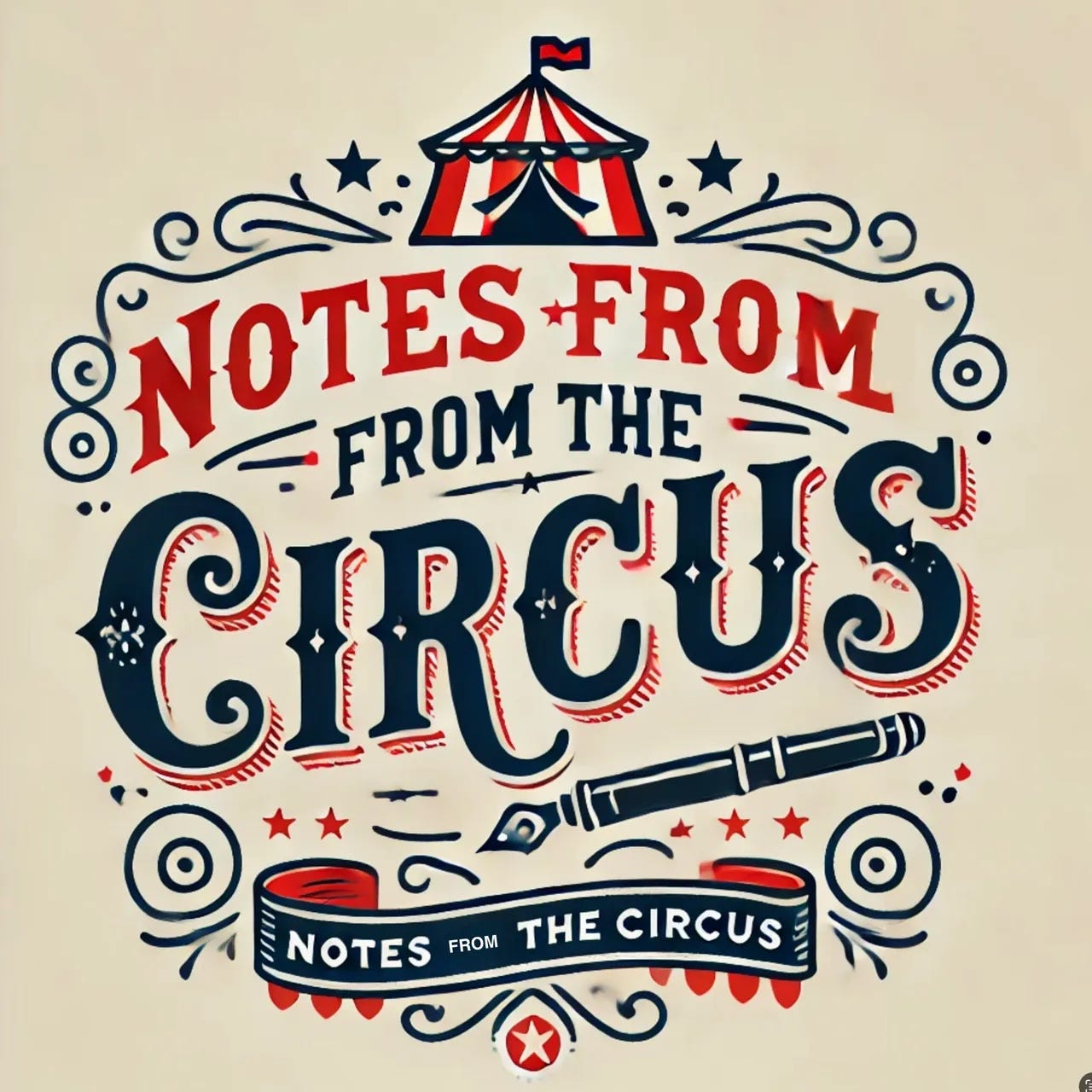
A lot of people on the left are fond of invoking Franklin Delano Roosevelt these days, for good reasons, and I might suggest he agreed with me here. On Flag Day, June 14, 1942 — six months after Pearl Harbor, with the war’s outcome still genuinely undecided — Roosevelt delivered a radio address to the nation, and read aloud a prayer that Stephen Vincent Benét had written for the occasion. The prayer was the President’s sermon to the country on the moral justification for the war and his belief in what America was. It is worth reading in full:
Grant us victory over the tyrants who would enslave all free men and nations. Grant us faith and understanding to cherish all those who fight for freedom as if they were our brothers. Grant us brotherhood in hope and union, not only for the space of this bitter war, but for the days to come which shall and must unite all the children of earth.
Our earth is but a small star in the great universe. Yet of it we can make, if we choose, a planet unvexed by war, untroubled by hunger or fear, undivided by senseless distinctions of race, color or theory. Grant us that courage and foreseeing to begin this task today that our children and our children’s children may be proud of the name of man.
The spirit of man has awakened and the soul of man has gone forth. Grant us the wisdom and the vision to comprehend the greatness of man’s spirit, that suffers and endures so hugely for a goal beyond his own brief span. Grant us honor for our dead who died in the faith, honor for our living who work and strive for the faith, redemption and security for all captive lands and peoples. Grant us patience with the deluded and pity for the betrayed. And grant us the skill and the valor that shall cleanse the world of oppression and the old base doctrine that the strong must eat the weak because they are strong.
Yet most of all grant us brotherhood, not only for this day but for all our years — a brotherhood not of words but of acts and deeds. We are all of us children of earth — grant us that simple knowledge. If our brothers are oppressed, then we are oppressed. If they hunger, we hunger. If their freedom is taken away, our freedom is not secure. Grant us a common faith that man shall know bread and peace — that he shall know justice and righteousness, freedom and security, an equal opportunity and an equal chance to do his best, not only in our own lands, but throughout the world. And in that faith let us march, toward the clean world our hands can make. Amen.
This is what liberal internationalism sounds like when it is not a costume. The faith Roosevelt asked the nation to hold while American soldiers were dying in the Pacific and in North Africa is the faith I am asking my readers to hold now while we are operating against a fascist political project at home and a global pattern of authoritarian consolidation abroad. The faith is the same faith. The standard is the same standard. The position is the position Roosevelt staked when the United States was still figuring out whether it would be the country it eventually became.
I am an ally of Ukrainians, of Taiwanese, of Russian dissidents, of Chinese democracy activists, of every population whose claim on liberty is being denied by the regime that has them under its boot. I support America as a country built by immigrants from every corner of the world who came together to govern themselves, and I think every human being has the right to secure the blessings of liberty. I do not believe the People’s Republic of China is merely a different way of doing things that I have no standing to judge. I judge it. I judge it harshly. I judge it harshly even as I judge my own country harshly, because the standard is one standard and the standard applies to every state that operates against it.
The work of citizenship in this moment is concrete, and it is the work I am doing. Showing up to protests when there are protests to show up to. Donating to the legal defense funds that are absorbing the costs of the administration’s deportation operation and its prosecutorial overreach. Voting in every election my ballot reaches. Talking to my neighbors and my family and the people I have lost touch with about what is happening, in language that does not assume they have the analytical apparatus I have spent years building. Writing the pieces I am writing. The slow work of putting one foot in front of the other in a moment when a substantial portion of the country has decided not to bother.
That is the work of the present, and that work is American. It cannot not be American, because I am American and the polity whose constitution I am responsible to is the American polity. I am not running a foreign policy. I am running my life as a citizen of this country, and the country is in a constitutional emergency, and the constitutional emergency is what is on my desk.
But — and this is the part the suspicious readers seem to have missed, or to have decided not to credit — the fact that the American emergency is on my desk does not mean I have stopped caring about Ukraine. It does not mean I have stopped caring about the democratic opposition in Russia, the people who are still going to prison in Moscow for telling the truth about Putin’s war. It does not mean I have stopped caring about Taiwan, which the next section of this Dispatch takes up at length. It does not mean I have stopped caring about the Uyghur, the Tibetans, the people of Hong Kong who watched their city be unmade in slow motion across the past six years. It does not mean I have stopped caring about the people inside China who have to live every day inside the surveillance state the Chinese government has constructed, with no recourse and no audience and no Anthony Scaramucci coming on a podcast to give them cover.
So yes — the American work is the urgent work, because the American work is what is in front of me as a citizen. And the universalist work is the continuing work, because the universalist commitment is what makes the American work make sense in the first place. The reason the captured Court matters is not just that it is bad for Americans. It matters because the captured Court is part of the same global pattern that is producing captured courts and captured legislatures and captured public spheres in a dozen other countries, and the diagnosis of any one of these requires the analytical apparatus that takes all of them seriously. I cannot diagnose the Trump administration without taking seriously what Putin has been doing for twenty years, what Orbán has been doing for fifteen, what Xi has been doing for ten. The analytical work is one analytical work. The universalist commitment is one commitment. The position the suspicious readers want me to hold instead — the position that says I should attend to American conduct alone, lest attention to the conduct of American adversaries serve American hawks — is not a position. It is a costume of a position, worn by people who have substituted factional loyalty for the actual content of the tradition. The order of operations is just the order in which the same person tries to live both at once, on a Thursday afternoon, with limited time and limited money and limited reach.
⁂
Taiwan is, by any reasonable measure available, among the most free and democratic nations on earth. The Economist Intelligence Unit’s Democracy Index has rated it among the top ten globally for several years. Freedom House gives it scores comparable to the Nordic democracies. Its constitutional system is functional, its judiciary is independent, its press is free, its electoral system has produced peaceful transfers of power across rival parties, its civil society is robust, its protection of LGBTQ+ rights is the strongest in Asia, its rule of law tracks substantively rather than performatively. The country is, in every philosophical sense the words free and democratic can carry, the embodiment of what the universalist commitment is committed to.
Taiwan is also not allowed to call itself a country, in the formal international register, because a tyrannical government with a much larger military is holding a gun to its head. Beijing’s standing public position is that Taiwan is a renegade province of the People’s Republic, that Taiwanese self-government is illegitimate, that any formal declaration of Taiwanese independence will produce a military invasion, and that the global community is required, on threat of substantial Chinese economic and diplomatic retaliation, to refuse to recognize Taiwan as the country it is. The position is enforced through the constant threat of military violence, through diplomatic pressure on every state that contemplates formal recognition, through the cultivation of pro-Beijing political factions within Taiwan itself, through the harassment of Taiwanese vessels and aircraft in international waters and airspace, through the regular military exercises that simulate invasion of the island, and through the steady increase in Chinese military capability that is being constructed for the specific purpose of being able to execute the invasion if and when Beijing decides the political moment has arrived.
This is the Chinese state. This is the conduct that the comparative-narrowing argument requires the speaker to set aside in order to construct China as the responsible alternative to American power. The setting-aside is not an oversight. The setting-aside is the move. The move says: in order to produce the comparative judgment in which China comes out ahead, we have to agree not to mention Taiwan. We have to agree not to mention Hong Kong, where the One Country Two Systems framework that Beijing committed to under treaty obligations was abrogated through the 2020 National Security Law and the subsequent crackdown that has imprisoned democracy activists, dissolved opposition political parties, and ended the territory’s separate legal-political existence in everything but name. We have to agree not to mention Xinjiang, where the documented mass internment of Uyghur Muslims in camps that the Chinese state itself has called vocational education and training centers but that international investigation has identified as the largest mass detention of an ethnic-religious minority since the Holocaust has produced what some governments and many credible analysts have described as genocide. We have to agree not to mention the disappearance apparatus that has removed dissidents and even prominent business figures from public life across the Xi era, the organ harvesting that has been documented by independent tribunals, the surveillance infrastructure that has been developed in Xinjiang as testbed and exported across the country and to authoritarian governments worldwide.
The agreement not to mention is what produces the comparative judgment. The comparative judgment cannot survive the unwinding of the agreement. The Taiwan example is the agreement at its most empirically and morally indefensible, because Taiwan is doing the thing the universalist commitment is supposed to support — running a functional liberal democracy that has produced human flourishing under conditions of dignity — and is doing it under the gun of a state that has made the threat of military annihilation the explicit price of continued Taiwanese democratic self-government. If your political-philosophical framework requires the agreement not to mention Taiwan, your framework is wrong. The framework is wrong because the framework has constructed a comparative judgment that depends on the universalist commitment being applied selectively, and selective universalism is not universalism. It is factional commitment dressed in universalist vocabulary. The dressing does not change the substance.
⁂
If you want to pretend that China is the new responsible global hegemon, you are a fool. By definition. A responsible global hegemon does not maintain an internal political system that disappears dissidents, harvests organs from prisoners of conscience, runs an ethnic-minority internment apparatus that meets the criteria for genocide on broadly accepted definitions, and threatens military annihilation against a democratic neighbor for the offense of declaring its sovereignty. These are not features of responsibility. They are features of irresponsibility. A philosophical framework that calls these features responsibility has performed a category error of the same kind I have been diagnosing in other domains in these pages — the application of a category to a phenomenon that does not have the philosophical content the category requires.
This is a category error that is being maintained because the category error serves a specific rhetorical-political purpose for the speaker. The purpose is to produce the comparative judgment in which the United States comes out worse than the alternative, on grounds that the speaker has chosen to narrow to whatever dimension makes the comparison favorable. The narrowing is the move. The narrowing is what produces the analytical paralysis I have been describing. The narrowing is what the universalist commitment requires us to refuse.
I refuse it. I refuse it not because I am soft on American conduct, which I have been hard on across these pages and will continue to be hard on as the work continues. I refuse it because the universalist commitment that grounds the work is incompatible with the narrowing. The work in these pages has been the work of refusing every framework that asks the writer to choose between universalist commitments and factional loyalties. The Trump-Vance-Thiel project is bad. The Putin regime is bad. The Netanyahu government’s project is bad. The Chinese state’s project is bad. These are not symmetric badnesses, and I have been careful not to treat them as symmetric, but they are all bad in ways the universalist commitment requires us to be willing to name. Naming them does not require choosing between them. Naming them is what the commitment is. The commitment is the position from which the naming gets done.
⁂
The same comparative-narrowing move has been showing up in commentary from Canadians in particular, who in increasing numbers have been positioning China as a more reliable partner than the United States as Canada moves into a more anti-American posture. The move has the same structure as the American-left version of the move and the same diagnostic disposes of it.
I understand why Canadians are despising the United States right now. I do not blame them. The federal government of the country I live in has been captured by a fascist political project. Its illegal tariff regime against Canada has been catastrophic. Its threats of conquest, the 51st state rhetoric, the unilateral abrogation of trade agreements, the public humiliations of Canadian leaders at White House press conferences — these are real and substantive grievances, and I have been hard on this conduct across these pages and will continue to be. The Canadian anti-American posture is a rational response to actual American conduct.
I celebrate Mark Carney standing up to Trump. I think Europe and other democracies should be standing up to Trump more than they are, in fact. As someone who would like to protect our constitutional republic, it would be helpful for our international friends to help us contain this illegal capture of our nation through more public denunciation, not less. The Canadian leadership has been doing some of the work the international community as a whole should be doing. I am grateful for it. I would like more of it. But handing Xi Jinping the world helps none of us — not Canada, not the United States, not the international democratic coalition that any serious response to the present crisis is going to require.
But I might suggest that the Canadians making this comparative move are freely able to leave their commentary in the comment section of this very newsletter, hosted on American infrastructure, written by an American citizen, with no consequence beyond the rhetorical exchange they are participating in. The commentary appears under the post within minutes of being submitted. It stays up. The author is not visited by federal agents. The newsletter is not de-platformed. The Canadian commentator’s national identity does not produce surveillance, harassment, or detention. The asymmetry is structural.
There is no newsletter like this in Mainland China that you can leave a comment on. The author of such a newsletter would be quickly disappeared. The comments would be quickly censored. The platform hosting it would not exist, and if it did exist, it would exist only because the surveillance apparatus had decided the platform was useful for monitoring exactly the kind of dissent the platform purported to enable. The asymmetry is the entire point.
If your response to this is but the economic stability is worth it, then yes — I just think you are being stupid. I am sorry to put it that plainly. The bill comes due when you cozy up to authoritarians. Germany learned the lesson over the past three years through its catastrophic energy dependence on Putin’s oil and gas, a dependence built across two decades under the explicit theory that economic interdependence would produce political restraint. The theory failed. The dependence had not produced restraint on Putin’s part. It had produced leverage on Germany’s part, and the leverage was deployed against German policy preferences the moment Putin decided the moment had come to deploy it. Germany is now restructuring its energy economy at significant cost, and the cost is falling disproportionately on the German working class who never authorized the dependence in the first place. The bill came due. The bill came due in the form Putin chose, at the moment Putin chose, on the terms Putin chose, because the dependence had transferred the choosing to him.
If Canada makes itself economically dependent on China, the bill will come due in the form Beijing chooses, at the moment Beijing chooses, on the terms Beijing chooses. The reliability the Canadian commentariat is currently celebrating is the reliability of a counterparty that has not yet had occasion to deploy the leverage the dependence is producing. The reliability evaporates the moment the leverage is deployed. The Germans know this. The Germans know it because they paid for the lesson in real money and real strategic exposure across the past three years. The Canadians have not yet paid. The Canadians could choose not to pay by recognizing the structural pattern in advance and refusing to repeat it. The recognition requires the willingness to widen the comparative frame past the trade-policy dimension that has been doing all the analytical work. The widened frame includes the disappearance apparatus, the Hong Kong crackdown, the Xinjiang internment system, the Taiwan threat, and the broader pattern of how Beijing treats counterparties whose dependence has matured into leverage. These are not separate questions from the trade-reliability question. They are the same question.
⁂
What I would ask from the dear reader who has been wearing the suspicion is the willingness to consider that the universalist position is a real position rather than a costume.
It is a real position because it has philosophical content that is not reducible to either factional commitment. The content is the proposition that liberty and self-government are universal goods that apply across confessional, national, and ethnic lines. The content is the proposition that the conduct of states is to be evaluated by the same standards regardless of which great-power coalition the state is currently inside. The content is the proposition that the universalist commitment requires the analytical refusal of frameworks that demand exceptions to the universal application. The content is what makes it possible to be hard on American power and hard on Chinese power and hard on Russian power and hard on every other authoritarian power simultaneously, without the hardness on any one becoming softness on any other, because the hardness is grounded in the same commitment in every case.
The position is not new. It is the classical liberal-internationalist tradition at its most coherent. It is the tradition that produced the abolitionist movement, the anti-colonial movements of the twentieth century, the postwar human-rights project at its best, the Helsinki Final Act and the dissident movements that worked in its shadow across the Eastern Bloc, the contemporary work of human-rights monitors who hold every state accountable to the same standards. The tradition has fallen on hard times in contemporary American discourse, partly because significant parts of the American left have absorbed the proposition that the tradition is itself a piece of American imperial ideology, partly because the tradition’s institutional carriers have in many cases failed to live up to the tradition’s own standards, partly because the contemporary geopolitical environment makes the universalist position feel naive in ways that the universalist tradition has historically been able to defend itself against.
The defense is the work these pages have been trying to do. The defense is not nostalgia for a tradition that has been compromised. The defense is the proposition that the tradition’s content is correct on the substance even where the tradition’s institutional carriers have been wrong on the conduct. The substance is what we are trying to recover. The conduct is what we are trying to hold accountable, in our own country first and in every country that is operating against the substance.
I am a liberal internationalist. I do not apologize for it. The standard is one standard, and the standard is the standard of every person on earth whose claim on liberty has been denied. The blessing of liberty does not have national exceptions. We hold it open for them, or we hold it open for no one.
Go Deeper into the Circus
A New Cold War

We are in a new Cold War with China, and China is using Iran as a proxy in it. The American political class on both left and right has refused to metabolize this fact for different reasons, with the result that the war the United States is currently fighting in the Persian Gulf is being characterized as a contest with Iran alone when it is in fact a con…
On Free Speech and "Woke"

Here is something I have been trying to find the right way to say for a long time and that I think the present moment has finally given me the analytical apparatus to say cleanly.
"If Canada makes itself economically dependent on China, the bill will come due in the form Beijing chooses, at the moment Beijing chooses, on the terms Beijing chooses."
We are not looking to become economically dependent on China.
This is because we did make ourselves economically dependent on the United States (but, at the same time, the United States made itself economically reliant on Canada; to name but one sphere, consider how Hydro-Québec sells power to New England, or how British Columbia manages the flow of the Columbia River to ensure stable hydroelectric power generation in Washington and Oregon and to keep the river from flooding communities along the border between those states) and the bill has now come due, in the form Washington chose, at the moment Washington chose, and on the terms Washington chose. The bill is that we must further prostrate ourselves to Washington, we must decline to retaliate against their flagrantly illegal acts, that we must simply accept tariffs and threats of invasion as the cost of doing business. (But as noted, it is not as if we don't have leverage of our own: https://www.youtube.com/watch?v=R65jaHugsHM It is that very retaliation which gives us that leverage and we are not blind to the fact that the complaints about provincial boycotts of USAian alcohol prove that that is a pain point for the US, and that we can therefore press harder on it. See also https://www.youtube.com/watch?v=nubiVIZhdG0 in which Jeanne Shaheen, who by her own admission has a financial interest in US alcohol sales, agrees with Howard that our alcohol bans are "outrageous", "insulting" and "disrespectful" instead of a proportional--or even disproportionately small--response to US economic aggression. And since I brought up both Wab Kinew and alcohol bans, mandatory video: https://www.youtube.com/shorts/l6WFdnipcH8 )
The posture is not "China is reliable but the United States is not, therefore let us become dependent on China". The posture is "China has thus far kept its word on trade while the United States has broken it, but China's hands are nonetheless unclean, therefore let us pursue diversified trade to hedge against the risk of doing business with either". We have forgotten neither the 51st state rhetoric nor the Two Michaels (an action by China precipitated by an invocation by Donald's first administration of our bilateral extradition treaty). This is the conclusion reached not only by Canada but by other international economic actors; see, for instance, the recent trade pact concluded between the European Union and India (another country upon which I, at least, am keeping a wary eye, as Narendra Modi is also an untrustworthy actor), or how the EU-Mercosur pact has finally reached a stage of provisional implementation after decades of negotiation (and even then figures like Javier Milei, and the potential return of Jair Bolsonaro or his associates, force a degree of wariness toward Mercosur). The EU has, of course, taken an anti-US posture in large part over the threats by the United States to annex Greenland, a part of the Kingdom of Denmark, long one of the best US allies in Europe and a critical one on account of its roles both in the GIUK gap (with not only Greenland but also the Faroe Islands as part of it) to track movements to and from Murmansk and in monitoring sea traffic in and out of the Baltic Sea with particular regard to movements to and from Kaliningrad.
(The attempted annexation of Greenland would also militarily pincer Canada, and betrays that a large part of the current US policy toward Canada is an attempt to control the sea lane that runs through our Arctic archipelago; even prior to the current tensions the US had held the position that the waters should be considered international rather than internal, and I believe this is partly based on the precedent that waters between Denmark's islands are considered international, rather than internal, due to their importance in shipping in and out of the Baltic Sea.)
You are correct that articles such as yours, and comments such as mine, could not be made if this were a Chinese platform. It is also, however, the case that in making these comments at all I am foregoing any possibility of entering the United States while the current administration (or any future administration sharing its principles) remains in power. I have relatives in the United States, and while I am not much of a traveller I have visited Bellingham, Seattle and the Los Angeles area on various trips, and even sometimes tell a funny story about getting pulled over for speeding in Montana as compared to the same in Wisconsin while on a family trip to Ontario, as we chose to drive through the United States instead of taking the Trans-Canada Highway. I would have preferred to keep that option open; other commenters (see, eg, https://www.youtube.com/@GuardTheLeaf and as he puts it, thoughts and prayers to the US tourism industry) do not make their remarks while revealing their actual identity in an effort to do just that. Do not think that I can make these remarks, under my real name, with no cost to myself.
EDIT: The Canadian relationship to the United States has been an abusive one for decades, not only abuse from Washington toward Ottawa but also from USAians toward Canadians; see, for instance, USAians regularly not considering Canadian money to be "real money". We are working our way out of one abusive relationship and have no intention of entering another with Beijing.
"The structure of the suspicion is the structure I have been diagnosing in these pages in other domains. It is the move that converts criticism of any party into license to defend the party’s adversaries, on the implicit theory that the political-emotional priority of opposing the wrong party requires the corresponding priority of not criticizing the right party’s enemies. The move has produced the analytical paralysis that runs through significant portions of the contemporary American left, in which any criticism of authoritarian regimes that happen to be in conflict with the United States gets read as a contribution to American imperial ideology, with the result that the actual conduct of those regimes — disappearances, ethnic-minority internment, organ harvesting, the threatening of democratic neighbors with military annihilation — becomes unnameable because naming it is positioned as taking the wrong side in the wrong conflict."
Otherwise known as the "Noam Chomsky's Political Analyst Career Premise."