


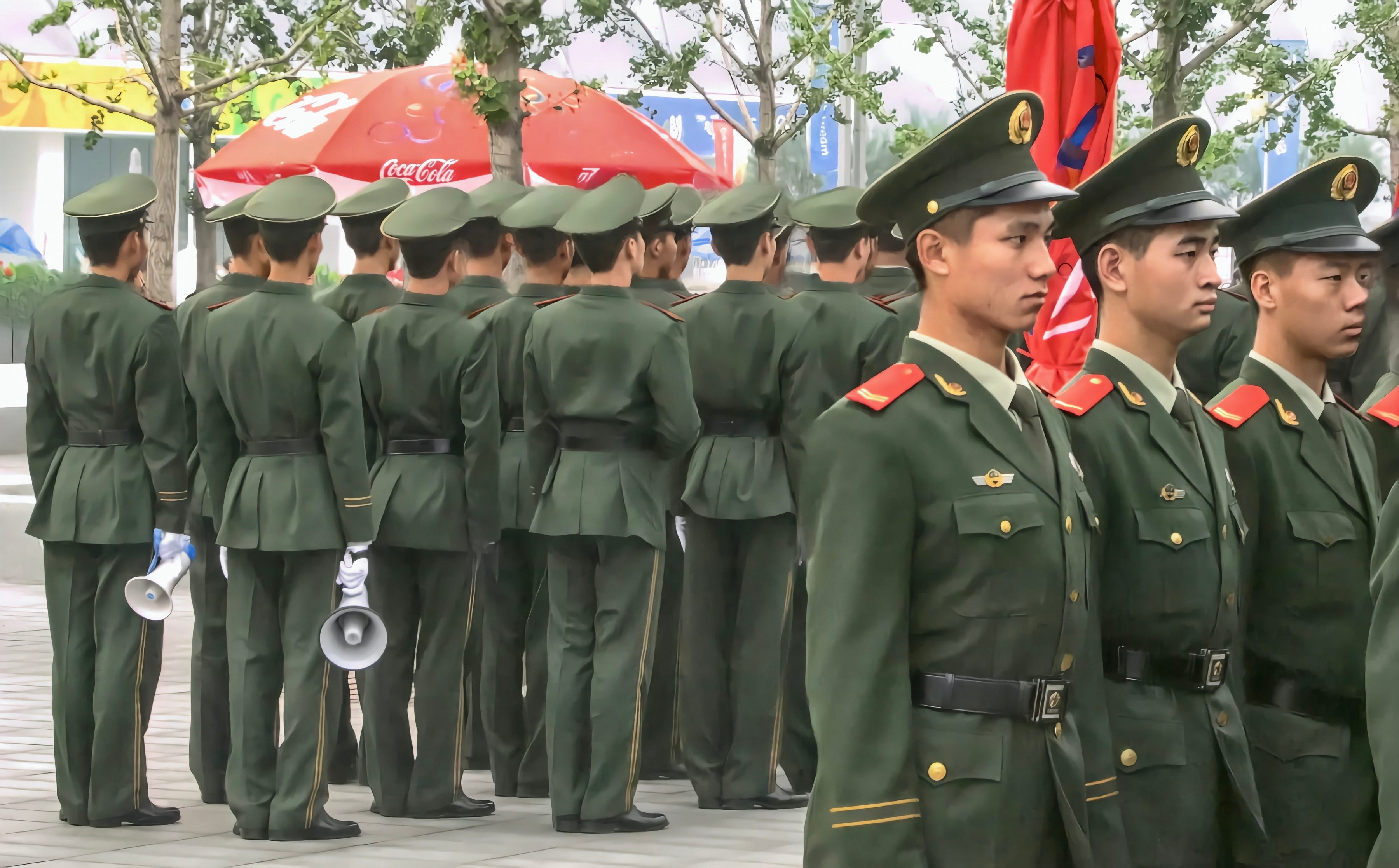
We are in a new Cold War with China, and China is using Iran as a proxy in it. The American political class on both left and right has refused to metabolize this fact for different reasons, with the result that the war the United States is currently fighting in the Persian Gulf is being characterized as a contest with Iran alone when it is in fact a contest in which Iran is the instrument and Beijing is the principal. The framing matters because the framing determines what response is rational, and the response that is rational against Iran-as-principal is different from the response that is rational against Iran-as-instrument. The country has not yet had the conversation about which response it is conducting.
This Dispatch is the case for the second framing. The argument runs through three observations that, taken together, force the diagnostic conclusion. The argument does not require anyone to accept the conclusion as a starting premise. The conclusion is what falls out once the three observations are stacked.
⁂
The first observation is the structural awkwardness of the China-Iran relationship.
China and Iran are not natural allies. The historical record is clear on this and the contemporary record is, until very recently, equally clear. China was a major supplier of conventional weapons to Iran in the 1980s, but Beijing largely stopped those transfers in 2015 after United Nations Security Council Resolution 2231 increased international scrutiny of the relationship. Beijing joined the international sanctions regime that constrained Iranian nuclear ambitions across the JCPOA period, supported the multilateral framework that the first Trump administration would later abandon, and articulated a public policy position opposed to Iranian nuclear weaponization that Chinese diplomats and policy intellectuals have maintained on the record across roughly fifteen years.
The structural reasons for the awkwardness are not mysterious. A nuclear-armed Iran would destabilize the Persian Gulf region that supplies a substantial portion of Chinese oil. A nuclear-armed Iran would set a proliferation precedent that other regional powers — Saudi Arabia, the UAE, Turkey — would feel obligated to match, producing a multi-polar nuclear Middle East that is bad for everyone and especially bad for an importing power whose energy supply lines run through the region. Beijing has had specific reasons to oppose Iranian weaponization that have nothing to do with American preferences and everything to do with Chinese long-term interests. The opposition was real. The opposition was sustained across a decade and a half of public policy.
This means that any contemporary Chinese support for Iran has to be explained against the longer arc of Chinese policy, rather than absorbed into it. The simple frame of China and Iran are aligned authoritarian powers fails on the historical record. The relationship between the two states has been functional rather than ideological. Beijing has used Iran as an oil supplier and a regional irritant available to be deployed against American interests when convenient, while otherwise restraining the relationship to keep it from threatening Chinese long-term goals. The current configuration is a departure from this longer arc and the departure requires explanation.
The second observation is the leverage Beijing currently possesses to end the war.
China is Iran’s largest oil purchaser and has been for years. China is the principal supplier of dual-use technology that sustains the Iranian military-industrial base — the semiconductors, sensors, voltage converters found in Iranian drones, the BeiDou satellite navigation system used to direct attacks across the region, the satellite imagery from Chinese firms with PLA links that has been used to target U.S. forces. China is the diplomatic interlocutor Tehran cannot afford to alienate, given the depth of Tehran’s economic dependence on Chinese trade in a sanctioned environment.
If Beijing wanted the war to end, Beijing could end it. The phone call from Xi Jinping to Ayatollah Khamenei on a Tuesday morning produces a deal by Friday. The deal includes the constraints on Iranian nuclear weaponization that Beijing has publicly favored across fifteen years. The deal reopens the Strait of Hormuz that Iran’s strategy has closed, restoring the oil supply lines that Chinese refineries depend on. The deal ends the bombing campaign that has killed Iranian civilians, including children, and that has produced the dead Chinese ZTE and Huawei military-industrial experts that the conflict has cost Beijing in personnel terms. The deal is available. The deal would be welcomed by every party with a material stake in the outcome.
The phone call has not happened. Beijing has chosen to absorb the costs of the war’s continuation rather than to use the leverage that would end it. The cost-absorption is real and is significant. The Strait of Hormuz closure is producing hard economic pain for the Chinese economy. Twenty percent of global seaborne oil moves through that strait. Chinese refineries depend on Persian Gulf supply at scale. The disruption is costing Beijing measurably, and Beijing is paying the cost rather than ending it.
The cost-absorption is the diagnostic. A neutral mediator does not absorb material costs to keep a war going that the mediator has the leverage to end. A combatant does. The decision to absorb the cost of the disrupted oil supply rather than use the leverage that would restore it can only be explained by a strategic-value calculation in which the prolonged American degradation that the war is producing is worth more to Beijing than the economic cost of the disrupted oil supply. They think the economic pain to themselves is worth the squeeze, in the phrase that fits this exactly. The squeeze is the strategic dividend. The pain is the price of admission. Beijing is paying.
⁂
The third observation is the soft-power play Beijing is refusing.
If Beijing’s posture toward the war were genuinely neutral, the war would be the largest soft-power opportunity China has had in this century. The American war in Iran is a catastrophe that has produced regional destabilization, civilian casualties, oil shock, the failure of Spirit Airlines and the broader American aviation sector, and the credibility collapse of American non-proliferation diplomacy. The Trump administration’s posture — the bombing starts, Operation Epic Fury already legendary, the one-page memorandum approach to nuclear-arms control — has produced exactly the spectacle of American capability in collapse that Chinese soft-power doctrine has been waiting on for two decades.
Beijing has the apparatus to convert the spectacle into the largest geopolitical victory of its post-Mao history. The play is straightforward. Xi Jinping flies to Tehran and to Washington in the same week. He brokers a settlement that reopens the Strait, freezes the Iranian nuclear program under verification regimes Beijing helps design, ends the bombing campaign, produces a framework for the longer-term regional architecture. He stands at the press conference with the Iranian and American foreign ministers and announces the era of American unilateralism in the Middle East is over and the era of multipolar mediation has begun. Chinese state media runs the footage for a month. The Global South watches. The lesson the Global South takes is that when American power produces catastrophe, Chinese power produces resolution. The American foreign-policy establishment is humiliated. The Trump administration’s failure is rescued only by Chinese statesmanship.
This is not a fantasy. This is what Beijing actually did in March 2023, when it brokered the Saudi-Iran rapprochement and produced exactly this kind of soft-power play at smaller scale and on lower stakes than the current war provides. The 2023 deal is the proof of concept. Beijing has the diplomatic apparatus. Beijing has the relationships. Beijing has the demonstrated willingness to play the role when Beijing wants the role to be played.
The Iran war is the maximum-leverage moment, the maximum-stakes opportunity, the maximum-embarrassment occasion for the alternative power that delivers resolution. Beijing has taken none of it. The refusal is the active observation that the previous observation completes. China is not just declining to end a war it could end. China is declining to take the largest available geopolitical victory of the century in order to keep the war going. The refusal is unaccountable on any framing other than the one that says Beijing has calculated that the prolonged American degradation produced by the war is worth more than the soft-power victory that ending the war would produce.
⁂
The three observations stack. China and Iran are not natural allies, which means contemporary Chinese support for Iran requires explanation against the longer arc of Chinese policy. China has the leverage to end the war and is paying real economic costs to keep it going, which means the cost-absorption is a strategic choice rather than a passive posture. China is refusing the largest soft-power opportunity of the century to maintain the war, which means the refusal is an active strategic decision rather than diplomatic restraint.
The only diagnosis that accounts for all three observations simultaneously is that Beijing is conducting Cold War strategy. The clandestine arming — the BeiDou-directed strikes against U.S. forces, the sodium perchlorate shipments for solid-propellant rocket manufacture, the satellite imagery from Earth Eye Co and the PLA-linked geospatial intelligence firms, the Y-20 transport flights delivering tunnel-boring equipment under the $8 billion gold-for-weapons deal, the eleven entities and three individuals the Treasury sanctioned yesterday for their material support to the Iranian war effort — these are the operational expressions of the strategic decision the leverage and soft-power observations have already established. The clandestine arming is not the evidence that establishes the diagnosis. The clandestine arming is what the diagnosis predicts will be happening, given the strategic decision the leverage and soft-power observations have proven Beijing has made.
This is what a Cold War combatant does. It is not what a neutral mediator does. The framing the contemporary discourse has been operating inside — Chinese strategic patience, Chinese diplomatic restraint, Chinese commitment to multipolarity — is the costume. The substance is the strategic decision to use Iran as the bleeding-edge proxy that distracts and degrades the United States while Beijing avoids direct exposure. The substance is the willingness to absorb real economic costs and refuse real diplomatic victories in service of the prolonged American degradation that the war produces. The substance is the calculation that the geopolitical dividend exceeds the cost of admission, and the willingness to pay the cost.
⁂
The Netanyahu observation deserves to be made here, because the Netanyahu posture and the Beijing posture both involve actors who wanted this war for different reasons, and the difference matters.
Netanyahu wanted the war because Netanyahu’s political project is the elimination of the Iranian nuclear program and the regional reordering that produces, with Israeli regional dominance as the long-term outcome. The war serves that project directly. Netanyahu does not want the war to be permanent. Netanyahu wants the war to end with the Iranian program destroyed and a regional architecture in which Israeli power is the principal regional fact.
Beijing wants the war for entirely different reasons. Beijing does not want the Iranian program destroyed, because the existence of the Iranian program is what makes Iran continuously useful as a proxy. Beijing does not want regime change in Tehran, because regime change would produce a U.S.-aligned Iran that would be worse for Chinese interests than the current configuration. Beijing wants the war to continue as long as it can be sustained without escalating to direct U.S.-China confrontation. The continuation is the dividend. The resolution would end the dividend.
This means Netanyahu and Beijing are not pursuing the same end. They are pursuing different ends that the same war serves. The convergent interest in the war happening at all does not produce convergent interests in how the war ends or whether it ends. Netanyahu is pushing for a maximalist outcome that resolves the conflict on Israeli terms. Beijing is pushing for prolongation that maintains the conflict’s strategic utility regardless of resolution. The Trump administration’s posture, with its one-page memorandum and its threat-of-resumed-bombing rhetoric, serves Netanyahu’s end while accidentally serving Beijing’s. The American political class has not noticed the second service. The piece this Dispatch is doing is making the second service visible.
⁂
The country has to have the conversation about which war it is fighting, and the conversation has to be had honestly.
The Iran war is being characterized in domestic political discourse as a contest with Iran alone, with the contest framed sometimes as anti-proliferation policy, sometimes as Israeli-alliance maintenance, sometimes as response to the regional disorder Iran has been producing. None of these characterizations is wrong as far as it goes. None of them is sufficient. The principal adversary in the war is not Iran. The principal adversary is the state that is sustaining Iran’s capacity to fight the war, that is providing the satellite imagery directing the strikes against American forces, that is supplying the precursor materials for Iranian missile production, that is absorbing the economic costs of the disrupted oil supply rather than using its leverage to end the disruption, and that is refusing the soft-power victory available to it because the prolonged American degradation is worth more to it than the soft-power victory would be.
The state is China. The contest is between the United States and China. Iran is the instrument. The instrument has its own agency and its own ideological commitments and its own history of confrontation with the United States, none of which is being denied by the proxy framing. The instrument is also, in this configuration, an instrument. The instrument’s principal is exercising the kind of strategic restraint that great-power competitors have exercised through proxies since the original Cold War — Korea, Vietnam, Afghanistan, the Horn of Africa, Latin America. The pattern is recognizable. The pattern is recognizable because it is the pattern.
The American left has refused to metabolize this for reasons that include legitimate concern about the rhetoric of great-power conflict producing the kind of military escalation that produces nuclear catastrophe. The concern is real. The concern is also producing analytical paralysis that lets Beijing run a sustained proxy operation against the United States without being named for what it is being done. The American right has refused to metabolize this for reasons that include the Trump administration’s own dependence on Chinese cooperation in domains that have nothing to do with the war, and the broader anti-anti-Trump commentariat’s commitment to the framing of Russia and China as cultural-civilizational allies rather than as strategic competitors. The commitment is producing the same analytical paralysis from the other direction, with the result that the country’s actual adversary in the war is being treated as a neutral observer or, in some quarters, as a potential mediator who Trump should be courting rather than confronting.
Both forms of analytical paralysis serve Beijing. Beijing prefers the paralysis. Beijing has specific reasons to want the American political class to continue characterizing the war as a contest with Iran alone, because the characterization conceals the proxy operation and lets the proxy operation continue at minimal Chinese reputational cost. The characterization is the cover. The strategic operation is the substance. The corpus’s broader analytical framework — that captured power produces commitments dressed as analysis, that engineered cultural conflict obscures the structural questions that would threaten the engineers, that the costume conceals the operating mechanism — extends to this case directly. The international dimension and the domestic dimension are connected expressions of the same pattern.
The diagnostic is not pleasant. It produces uncomfortable conclusions about what the appropriate American response should be, and about the kind of political coalition that could conduct the response without falling into either the militaristic-confrontation register the right is offering or the analytical-paralysis register that significant parts of the left are running. The piece is not a policy proposal. The piece is the case for the diagnosis. The policy work follows once the diagnosis is in place.
We are in a new Cold War. The combatant on the other side is China. The instrument being used against us is Iran. The clandestine arming is the operational expression of the strategic decision Beijing has already made. The strategic decision is that prolonged American degradation is worth real economic costs and the refusal of historic soft-power victories. Beijing is paying the price. Beijing is collecting the dividend. The country has to be willing to see this, because the seeing is the precondition of any rational response.
Go Deeper into the Circus
On Free Speech and "Woke"

Here is something I have been trying to find the right way to say for a long time and that I think the present moment has finally given me the analytical apparatus to say cleanly.
We Haven’t Invented Artificial Intelligence at All

Here is a claim that will sound extreme on first hearing and that I think survives careful examination. We have not invented artificial intelligence. What we have invented is automatic translation. The two are not the same, and the difference between them is the difference between a phenomenon that has the philosophical cat…
Meanwhile the Global North is looking at events and concluding that since USAian voters can't be trusted to have the bare minimum good sense not to elect as head of state and head of government (a blend which is utterly insane and one of the many, many roots of why the US system is so thoroughly fucked up) a lying rapist who betrays nearly every ally his country ever ostensibly had (and further have shown that they can't or won't force their elected representatives to remove him as soon as the betrayals began), while China, for all its multitudinous faults, is at the least good to its word in the trade realm (or at least better than the US has proven itself to be), they'd all rather make deals with China than the country across our southern border. So China wins with both the Global North and the Global South.
Sun Tzu: "Never interrupt your opponent while he is in the middle of making a mistake."
Yes, China has the opportunity to intervene in the Iran War and strike a devastating blow to the current U.S.-led monopolar world order, but one must realize that in the Confucius-based Chinese society, maintaining order is paramount. It is OK to let the U.S. wound itself and throw Israel to the wolves, but a devastating collapse of the current world economic order would harm long-term Chinese economic plans.
It is to China's advantage for the U.S. to slowly fade into the background rather than to collapse into a destructive freefall with consequences contrary to China's growing economic emergence again as the "Middle Kingdom" of world commerce. Trump is "radioactive" and everything he touches withers and dies.
Notice that China has kept a safe distance from both the Ukraine and the Iranian Wars. China knows from eons of experience that war is a liability, not an asset. The U.S. and Israel will deplete themselves in these "endless wars" and the expensive reparations and rehabilitation efforts to follow. Meanwhile, neutral China is signing trade deals and filling any power vacuum the U.S. leaves behind. A tectonic power shift is occurring, and China is deftly managing the fallout with minimal disruption to its long-range economic plans. Netanyahu wanted a deminishment of Iran, but will have to deal with the loss of its U.S. patron instead.