


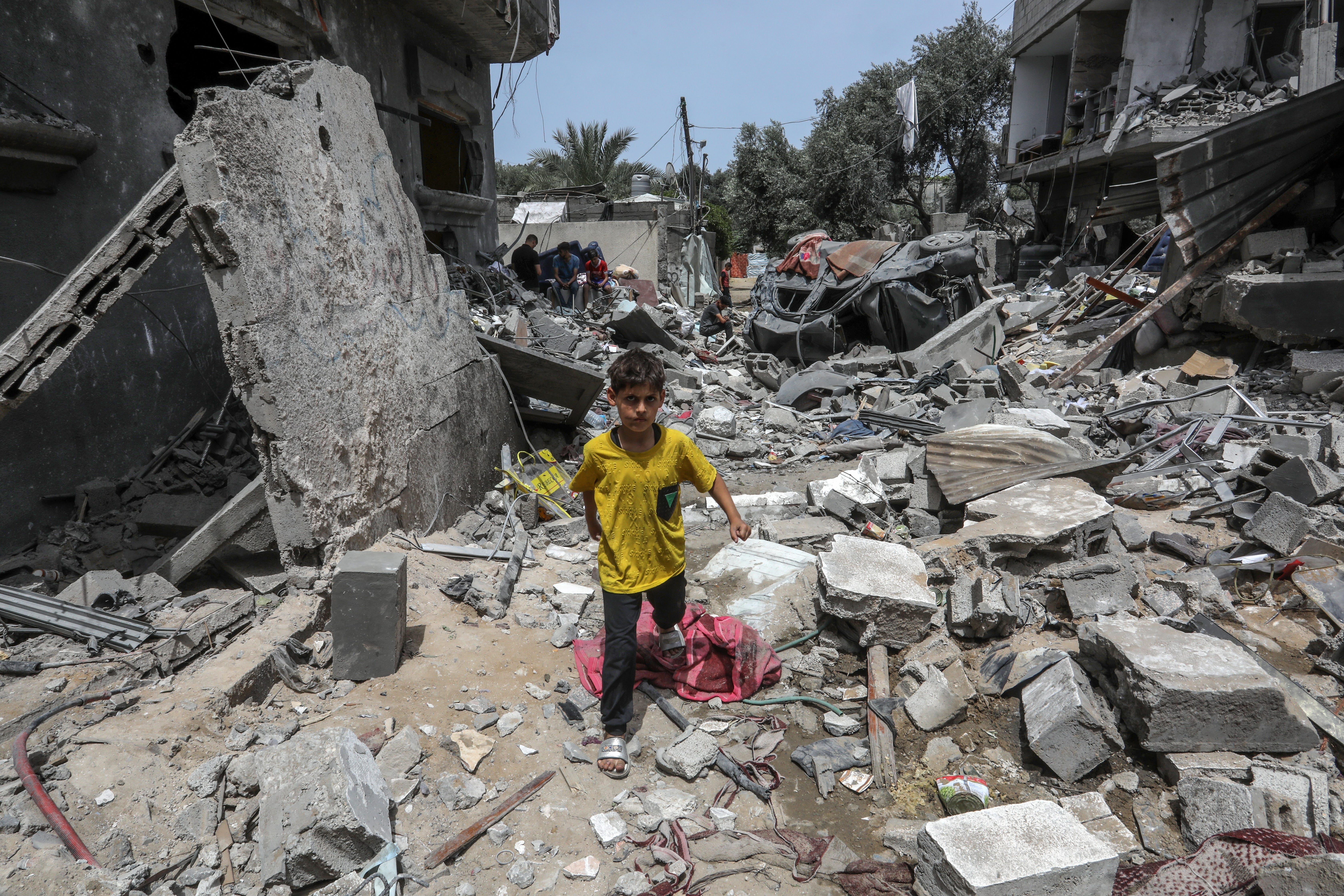
The end of hostilities between Israel and Hamas is an unambiguous good. The human suffering visited upon innocent civilians has been unbearable, and if Donald Trump applied pressure to bring the parties to this agreement, that pressure served a worthy end.
But does Donald Trump deserve praise as a peacemaker? Should he be awarded the Nobel Peace Prize? There are seemingly many who think so—including serious foreign policy analysts and liberal media voices who speak as if Trump has redeemed himself, as if his harshest critics must now grudgingly admit he possesses statesmanlike qualities. As if refusing such genuflection reveals lack of objectivity that would undermine one’s credibility as a respectable critic of Trump’s lawless, authoritarian administration.
To which I can only say: I don’t know what the fuck you’re talking about or what to say to such madness.
Okay. I lied. I do have something to say—about moral sufficiency, about what honest accounting requires before we offer praise, and about what it means when sophisticated analysts celebrate outcomes while systematically forgetting the costs that should disqualify celebration.
Not only do I think Donald Trump does not deserve the Nobel Peace Prize—as I’ve watched discourse around this topic play out, including among those ostensibly in democratic opposition to Trump’s authoritarianism, I find myself aghast at the unmitigated moral confusion and bizarre psychology driving such arguments.
The psychology here—particularly among otherwise anti-Trump voices—stems from an internal intuition that praising Trump when he does good maintains credibility in the eyes of Trump supporters or those otherwise sympathetic to him. It’s a belief that the gesture builds bridges to comity with the pro-Trump faction. That those of us opposing what he’s doing—which includes illegally disappearing U.S. citizens off the streets for days with his paramilitarized ICE—must demonstrate “balanced” interpretation of events before us, proving we don’t simply knee-jerk oppose anything Trump does.
This is psychologically understandable and strategically idiotic.
You cannot build credibility with people who fundamentally reject shared reality by participating in their selective amnesia about what actually happened. You cannot bridge to comity by offering praise that requires forgetting hundreds died so Trump could claim credit for solving a problem he created. You cannot demonstrate ‘balance’ by treating deliberate violations of peace agreements as evidence of peacemaking genius.
What you’re actually doing is validating their framework—teaching that outcomes matter more than methods, that taking credit for solving crises you created demonstrates leadership, that moral costs are mere context that shouldn’t prevent celebration. You’re not building bridges. You’re surrendering the ground that makes honest evaluation possible.
Hamas is a murderous, tyrannical organization that ruled brutally over the people of Gaza. But one might note that Hamas also operated social services in the Gaza Strip. These social services certainly provided some social good to the Palestinian people. But are we to praise them for this?
Of course not. Because moral sufficiency requires examining the totality of what an organization does and how it operates. Hamas’s social services existed within a framework of tyranny, terror, and systematic oppression. They served political control as much as human welfare. Acknowledging that some Gazans received healthcare or education through Hamas programs doesn’t obligate praise—because the context renders such praise morally insufficient, even obscene.
This is the distinction between acknowledging outcomes and offering praise.
We can note that Hamas provided some services while recognizing that the organization’s methods, objectives, and broader conduct disqualify it from celebration. We can observe that some Gazans benefited from those programs while refusing to praise an organization that used civilian infrastructure as military shields, that launched terrorist attacks targeting civilians, that ruled through brutality and fear.
The same analytical framework applies to evaluating Trump’s claimed achievement. We can acknowledge that hostilities ending is good—unambiguously good—while recognizing that the methods Trump employed and the costs he imposed render praise morally insufficient.
But here’s where the comparison becomes even more instructive: Imagine if Hamas, after months of continued violence that Hamas itself had deliberately escalated by breaking a prior ceasefire, finally agreed to essentially the same terms that had been on the table before they broke that ceasefire. Would we praise Hamas as peacemakers? Would we celebrate their ‘strategic genius’ in extracting slightly modified terms through additional bloodshed? Would we nominate their leadership for peace prizes?
Or would we recognize that creating a crisis, prolonging violence, killing hundreds, then claiming credit for eventually accepting terms similar to what existed before you broke the peace is not achievement worthy of celebration—it’s atrocity followed by self-serving propaganda about resolution?
So let’s examine exactly what happened—not the narrative Trump wants sold, but the documented timeline of events that serious analysts are choosing to forget in their rush to offer praise.
January 19, 2025: The Biden administration successfully negotiates a ceasefire agreement between Israel and Hamas. Phase One includes hostage exchanges. Phase Two is scheduled to begin on Day 16, with negotiations toward permanent end to the war and Israeli troop withdrawal from the Gaza-Egypt border.
Early March 2025: Phase One concludes. Israel refuses to begin Phase Two negotiations as agreed. Netanyahu wants different terms under Trump. Trump’s Middle East envoy Steve Witkoff presents new proposals. Israel begins blockading aid to Gaza and preparing military operations—while mediators are actively conducting ceasefire negotiations with Hamas.
March 19, 2025, 2:10 AM: Israel launches surprise strikes from naval ships and dozens of warplanes. An Israeli official later admits: “Deception was the point.” They struck while negotiators were in active talks with Hamas. More than 400 people were killed in that single night—women, children, civilians in their homes.
This isn’t my characterization. This is documented reporting from NPR, with on-the-record sources from Israeli military and intelligence officials. And here’s what Israeli defense analysts themselves concluded:
“There’s no other way to explain it: Israel knowingly violated the cease-fire agreement with Hamas—with American approval—because it didn’t want to fully meet the terms it had committed to two months ago.”
Why did Israel break the ceasefire? According to leading Israeli defense analyst Amos Harel: Israel saw itself as having “leeway to try to extract new terms under President Trump” rather than honoring the deal negotiated under Biden.
March-October 2025: The war continues. Hundreds more die. Israeli hostage families plead for the fighting to stop—more than half of the living Israeli hostages freed under the previous ceasefire oppose the renewed war, stating it endangers the remaining captives. Netanyahu uses the renewed conflict to bring far-right allies back into his coalition, strengthening his political position while facing corruption charges.
October 2025: Trump announces a ceasefire agreement. The framework includes international oversight, Israeli withdrawal from Gaza, and—critically—”a credible pathway to Palestinian self-determination and statehood.” These represent the same core elements Biden negotiated in January, with some modifications to save face for Netanyahu’s domestic political needs.
Trump claims credit for achieving peace. Eliot A. Cohen calls for him to receive the Nobel Prize. Joe Scarborough celebrates him “commanding fear” from strongmen. And those of us who remember the timeline are told that refusing such praise reveals our bias.
This is what moral sufficiency requires examining before we offer praise.
But let’s set aside foreign policy for a moment and examine Trump’s relationship to political violence domestically—because moral sufficiency requires examining the totality of someone’s conduct, not cherry-picking favorable outcomes while ignoring disqualifying behavior.
On January 6, 2021, Donald Trump incited a violent assault on the United States Capitol in an attempt to prevent the peaceful transfer of power. More than 140 law enforcement officers were injured. Five people died. Trump watched the violence unfold on television for hours before finally telling the attackers—whom he called “very special” people whom he loved—to go home.
He has never condemned that violence. Instead, he has reframed January 6th as “a day of love,” pardoned the violent offenders who assaulted police officers, and celebrated them as “patriots” and “hostages” persecuted by a weaponized justice system.
More recently, after the assassination of conservative activist Charlie Kirk, Trump was asked directly about political violence from radicals “on both sides of the aisle.” His response:
“I’ll tell you something that’s going to get me in trouble, but I couldn’t care less. The radicals on the right oftentimes are radical because they don’t want to see crime. They don’t want to see crime. Worried about the border. They’re saying, We don’t want these people coming in. We don’t want you burning our shopping centers. We don’t want you shooting our people in the middle of the street.”
Trump was asked about right-wing political violence—the kind that resulted in the January 6th assault, the kind his own FBI director has identified as the primary domestic terrorism threat. His response was to justify it. To explain that right-wing radicals are “radical because they don’t want to see crime”—that their violence is defensive, understandable, even righteous.
“The radicals on the left are the problem,” Trump continued, “and they’re vicious and they’re horrible.”
When directly asked about bringing the country together in the face of violence from both extremes, Trump explicitly justified right-wing violence while demonizing the left. Days earlier, before details about Kirk’s killer were even known, Trump recorded a video from the Oval Office blaming “the radical left” and vowing: “My administration will find each and every one of those who contributed to this atrocity and to other political violence.”
In that same video, Trump listed attacks on himself and other conservative figures but made no mention of violence that affected Democratic individuals—including the assassination of a Minnesota state lawmaker and her husband just months earlier.
This is the man Cohen wants to award the Nobel Peace Prize. This is the “statesman” Scarborough celebrates for commanding “fear” from strongmen.
A man who incited violent insurrection, pardoned those who carried it out, justified continuing political violence from his supporters, and refuses to acknowledge violence against his opponents even exists as a problem worthy of mention.
Moral sufficiency asks: Given the totality of what someone does and how they do it, is praise appropriate? Can we celebrate one potentially positive outcome while ignoring systematic patterns of conduct that should disqualify celebration?
The answer is no—not when the disqualifying conduct goes to the heart of what we claim to be praising.
This isn’t about demanding perfection. This isn’t about requiring political leaders to be saints. This is about recognizing that some patterns of conduct are fundamentally incompatible with the praise being offered—that you cannot celebrate someone as bringing peace while they systematically promote and justify violence, that you cannot praise someone as a statesman while they treat constitutional governance as obstacle to be overcome rather than framework to be honored.
The disqualifying conduct isn’t tangential to what’s being praised—it’s central to understanding who Trump is and how he operates. And pretending otherwise requires transforming moral evaluation into propaganda.
When Praise Becomes Complicity
When Eliot Cohen argues Trump deserves the Nobel Peace Prize, he’s not making a minor error in judgment. He’s participating in a form of moral laundering—using this moment to obscure documented facts that would, if honestly accounted for, make praise impossible.
Cohen knows the timeline. He has access to the same reporting, the same Israeli analysts’ admissions, the same evidence documenting Trump and Netanyahu’s deliberate breaking of Biden’s ceasefire. He’s choosing to offer praise that requires forgetting hundreds died so Trump could claim credit—treating the months of additional deaths as unfortunate context rather than disqualifying reality.
This isn’t sophisticated foreign policy analysis. This is the choice to celebrate outcomes while ignoring methods that should prevent celebration.
Joe Scarborough’s performance is even more contemptible. When he celebrates Trump “commanding fear” from strongmen who stood “meekly” beside him, he’s not describing power dynamics accurately—he’s valorizing authoritarian dominance while pretending it’s sophisticated realism.
Those strongmen weren’t meekly submitting out of fear. Netanyahu wasn’t afraid of Trump—he was standing beside his partner, the U.S. president who gave him political cover to break Biden’s ceasefire, kill hundreds more Palestinians, risk Israeli hostages’ lives, all so Netanyahu could stay in power and Trump could claim credit. The regional leaders weren’t cowering—they were transacting, getting influence and reconstruction contracts in exchange for providing Trump his photo-op.
Scarborough is praising Trump’s willingness to collaborate with Netanyahu in breaking a ceasefire and killing civilians so both could benefit politically. That’s not commanding fear. It’s a partnership in atrocity reframed as dominance. And celebrating it as effective statecraft is how liberal voices collaborate with authoritarianism—not through explicit endorsement, but through sophisticated analysis that treats moral violations as mere tactical details.
When we offer praise that requires forgetting they died, when we celebrate outcomes while ignoring methods that produced them, and treat moral costs as mere context—we’re not being sophisticated. We’re being complicit in obscuring what was actually done.
You cannot praise someone as peacemaker when they incite insurrection, pardon violent offenders, justify political violence from supporters, and refuse to acknowledge violence against opponents. You cannot celebrate someone as statesman when their entire approach treats constitutional governance as obstacle rather than framework, when they break peace agreements to renegotiate under duress, when they take credit for solving crises they deliberately created.
This isn’t bias or knee-jerk opposition. This is moral accounting that refuses to participate in laundering atrocity through selective celebration.
We can acknowledge that hostilities ending is good while refusing to praise the man who deliberately prolonged them for political advantage.
We can distinguish between outcomes we welcome and people we celebrate—recognizing that some achievements, however positive in isolation, are morally insufficient for praise when honest accounting includes the methods used and costs imposed.
This is what moral sufficiency demands. This is what we owe the dead. This is what honest evaluation requires.
And if maintaining these standards makes us “biased” critics in the eyes of those celebrating Trump’s “statesmanship”—then so be it. Because the alternative is surrendering the capacity for moral evaluation itself, participating in the systematic obscuring of what was actually done, teaching through our praise that such methods are admirable rather than contemptible.
I don’t know what the fuck you’re talking about when you suggest Trump deserves praise for this. But I know exactly what I’m talking about when I refuse it.
Two plus two equals four. There are twenty-four hours in a day. And moral sufficiency requires honest accounting of totality—not cherry-picked celebration that requires forgetting hundreds died so Trump could claim credit for solving a problem he created.
The wire still holds. But only if we refuse to let praise become complicity, celebration become collaboration, sophisticated analysis become moral laundering.
Hold the center. Remember the dead. Refuse what sophisticated voices offer as balanced judgment.
Because this is how we maintain the capacity for honest evaluation in a moment when powerful forces would replace it with performance—when analysts celebrate outcomes while systematically forgetting costs, when praise requires forgetting the dead, when moral sufficiency gets dismissed as bias.
We can do better. We must do better. The dead deserve at least that much.
Amen! My thanks for your holding and confirming reality while many refuse to see it, and believe that this is a win and affirmation of DjT's strength. There is no peace, this is early stage, and many of us are waiting to see what advantage, what bargaining chips were on the table to make this a win, not for the people, but for these two morally bankrupt individuals.
Note that neither Israel nor Hamas were at the peace deal signing yesterday. We are witnessing nothing more than political theater and the killing will continue soon.