


Here is something I have been trying to find the right way to say for a long time and that I think the present moment has finally given me the analytical apparatus to say cleanly.
We have reached a point in American society where the basic taboo against being an open white supremacist, an open antisemite, an open bigot of the ancient and primitive sort, has become elided. The taboo did real work for seventy years. The taboo is now functionally gone, or close enough to gone that the difference does not matter for the political settlement we are now living in. The renormalization happened in plain sight. It happened under the cover of liberal vocabulary. It happened with the active participation of intellectuals and institutional figures who claim the liberal tradition as their inheritance while doing the work that the liberal tradition was specifically built to prevent. The way it happened is what this Dispatch is about.
⁂
The contemporary American left, in the 2010s, produced a cultural-political pathology that I find indefensible and that has been correctly identified as such by people across the political spectrum, including by people whose reasons for identifying it I do not share. The pathology was the centering of identity categories as the central organizing principle of public life, the substitution of administrative-managerial reform for the actual cultural work of moral persuasion, the policing of vocabulary as a proxy for the policing of conduct, the demand for fluency in a constantly shifting set of categories whose maintenance became its own subculture and its own set of class markers. I think this was stupid. I think it failed on its own terms. I think it produced a backlash that has been politically useful to forces with which the people running the pathology have no actual common cause.
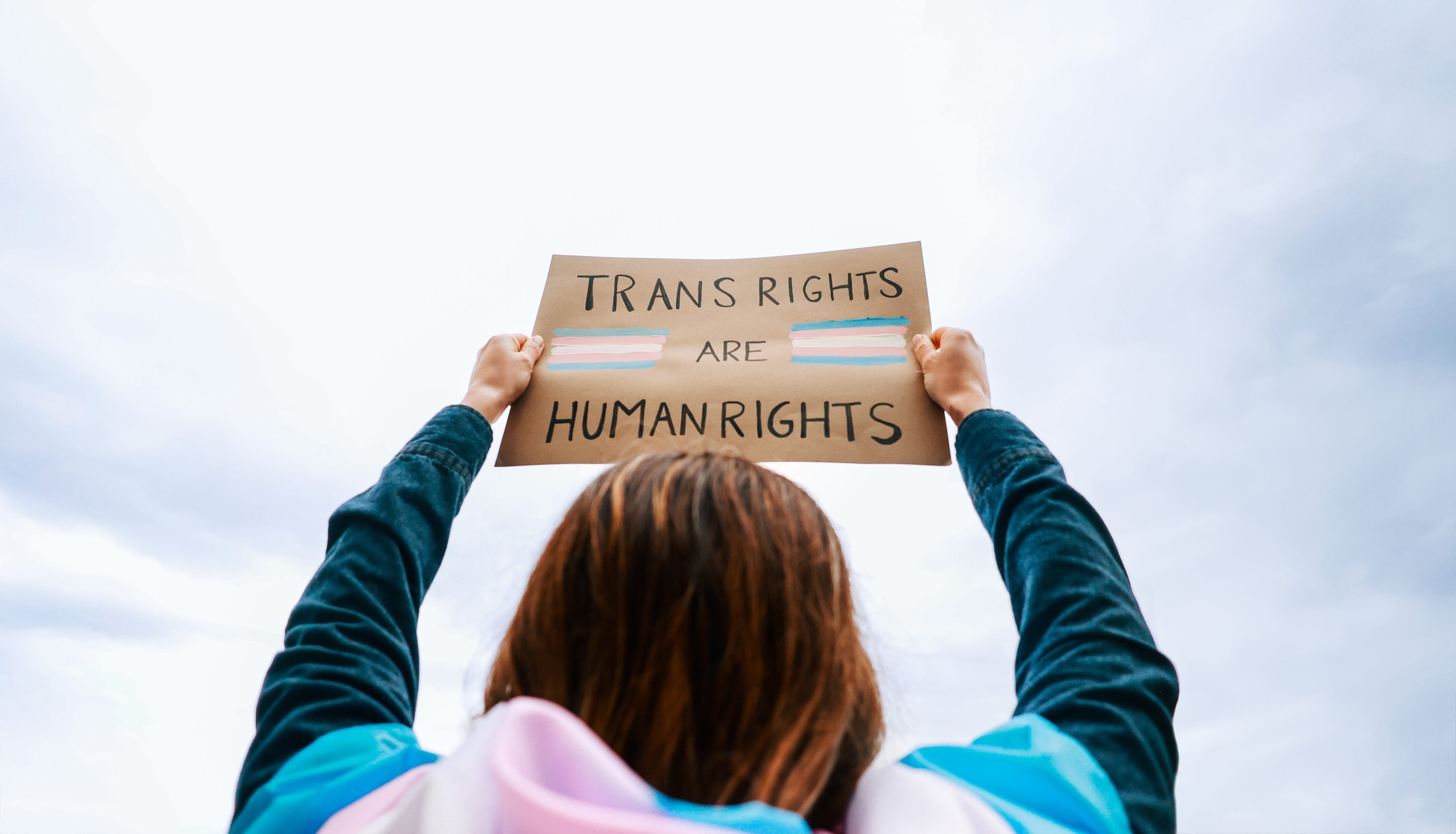
There is something the contemporary critique of the pathology has been unable or unwilling to be clear about. The pathology was a degenerate form of something real, and the real thing was the substantive moral-cultural growth that this country was making across roughly thirty years before the pathology took it over. Gay people becoming people. Trans people becoming people. People of color becoming people in domains where the law had been formally on their side for half a century but the culture had been functionally not. Women becoming people in the workplace and the public square in ways that my mother’s generation was not. This was real moral progress. It was the actual work that the American liberal-democratic project was supposed to be doing. I support it without reservation. I would walk into traffic to defend the proposition that trans Americans should be embraced as normal members of the polity, because the proposition is correct on the substance and because the totality of my life experience tells me it is correct.
The pathology was not the moral-progress project. The pathology was something that grew out of the moral-progress project, partly through the genuine difficulty of converting cultural attitudes into institutional practice, partly through the corruption of foundation-funded NGO ecosystems and corporate diversity-and-inclusion budgets that turned the moral project into a managerial one, partly through the social-media amplification dynamics that rewarded the most performative expressions of commitment over the most substantive. The pathology and the moral-progress project are distinct phenomena. The contemporary discourse has lost the ability to hold them as distinct, with the result that the people defending the pathology position themselves as defenders of the moral-progress project, and the people attacking the pathology position themselves as attackers of the moral-progress project. Both moves are wrong on their own terms. Both moves serve the political project of the people who want the moral-progress project killed by association with the pathology that grew up around it.
The fascist elements of the society — and I use that word carefully, in the sense Anthony Scaramucci articulated to me earlier this week and that Lawrence Rees has documented exhaustively in The Nazi Mind, not in the museum-piece sense the British school and The Fifth Column hosts have insisted on — saw the opening that the pathology created, and they walked through it.
The walk-through has used the liberal value of free speech as its primary instrument. The argument has run roughly like this. The woke censors have taken over the institutions. The woke censors have made it impossible to say true things. The woke censors have policed speech to the point where the public discourse is a managerial fiction. The brave free-speech advocate is the person who refuses to be policed, who insists on saying the things that the censors have made forbidden, who restores the conditions under which honest conversation can occur. The brave free-speech advocate, by this construction, is the person who says the thing the taboo regime had specifically built itself to prevent — that some races are smarter than others, that Jews are running a coordinated project against the country, that immigrants are the source of civilizational decline, that women belong in domestic roles, that trans people are degenerate. The bravery is calibrated to whatever the taboo regime had specifically forbidden. The free-speech rhetoric provides the cover that makes the renormalization legible as liberal courage rather than as what it is.
The construction is dishonest in a specific way that the philosophical apparatus of the liberal tradition can name. The genuine free-speech absolutist — the figure in the Mill tradition who actually believes that the marketplace of ideas requires the toleration of bad speech because the toleration is constitutive of the polity’s capacity to seek truth — is a defensible figure. I have time for that figure. The contemporary right-coded free-speech advocate is, in a substantial number of cases, not that figure. They are deploying free-speech rhetoric selectively, to license the specific speech they want licensed, while remaining silent or hostile when the same principle would license speech they oppose. They were silent when journalists were jailed. They were silent when professors were fired for criticizing Israeli state policy. They were silent when public-school teachers were fired for assigning Toni Morrison. They are silent when ICE raids religious gatherings on the basis of immigration status. The principle is not the principle. The principle is the costume. The substance is the renormalization of the ancient hierarchies that the postwar taboo regime had specifically been built to prevent.
⁂
The identitarian-left pathology and the nativist-reactionary-right project are formally and structurally similar. Both organize politics around essentialist identity categories. Both treat the categories as the central variable for political analysis. Both deploy moral language to police the boundaries of acceptable speech and association around the categories. Both produce subcultures whose members spend significant cognitive labor maintaining fluency in the appropriate vocabulary. Both convert the political conversation into a contest over which categories deserve protection and which categories deserve exclusion. The two formations differ in which categories they center and which moral valence they attach to which categories. They do not differ in their formal architecture.
The reason they share their formal architecture is not coincidence. Both are subsidized, organized, and amplified by competing factions inside the American capitalist class, who have specific reasons for wanting the cultural-political conflict to run hot along identity axes rather than along class axes. The identitarian-left pathology was substantially funded by foundation money and corporate diversity-and-inclusion budgets that emerged in the 2010s as a way of channeling progressive political energy into administrative-managerial reforms that did not threaten the underlying distribution of capital. The nativist-reactionary-right project has been substantially funded by the donor networks I have been documenting across the corpus — the Mercer-Thiel-Singer-Federalist-Society constellation that produced the captured Court I described in The Industry’s Court, the same constellation funding the Platner is a Nazi operation I described in The Target Keeps Showing Up, the same constellation organizing the broader project that operates through the Vance-Thiel monarchical apparatus I described in It Doesn’t Matter What They Believe.
Both factions are operating with capital-class subsidy. Both factions are running cultural projects whose effect is to keep the political conversation away from the structural questions that would threaten the donor class. The conflict between them is engineered, in the specific sense that it is sustained and amplified by money flowing from people who have specific reasons for wanting the conflict to continue. The working-class population that absorbs both messages is being played as the audience for a contest neither side intends to lose to the other and neither side is willing to let escape the cultural-identity frame altogether.
This is the observation that the both sides have lost the plot school has been gesturing at without getting right, because that school usually treats the symmetry as a moral indictment of both sides without asking why the symmetry exists. The symmetry exists because the two formations are, at the level of political economy, products of the same engineering. The engineering benefits the engineers regardless of which faction wins any particular round of the cultural conflict. The cultural conflict is the necessary distraction that the engineers require to keep the structural questions out of the conversation.
⁂
The structural observation I have just made is not an endorsement of historical materialism. The Marxist tradition has produced significant analytical apparatus for identifying capital-class engineering of cultural-political conflict, and parts of that apparatus are genuinely useful for the structural diagnosis. I am willing to use the apparatus where it is useful. I am not willing to accept the metaphysical framework the apparatus has historically traveled with, because the metaphysical framework is wrong about what humans are.
Historical materialism, properly stated, is the claim that the material conditions of production are the explanatory variable for political and cultural phenomena, with everything else — meaning-making, moral judgment, religious commitment, aesthetic experience — treated as superstructure that follows from the material base. The first part of the claim has empirical content and the empirical content is useful for diagnosis. The second part of the claim is metaphysics, and the metaphysics is wrong. Meaning-making is not derivative from material conditions. Meaning-making is constitutive of human experience, which means it is what humans actually are at the level of phenomenological reality, and any philosophical framework that treats it as superstructure has failed at the most basic task of describing the phenomenon it claims to describe.
I have written about this at length elsewhere, in the dual-aspect monism work and the love-grounded liberalism work the corpus has been developing across the past two years. The shorter version is this. Meaning-making is the fulcrum of human existence. Epistemic humility is a permanent condition of conscious experience. The good life is fundamentally contestable and not reducible to material conditions. The polity exists to enable the conditions in which meaning-making across the population is possible, and the test of any political arrangement is whether it expands or constrains the population’s capacity to make meaning under conditions of dignity. This is the classical-liberal philosophical apparatus, articulated through the meaning-making-as-fulcrum framework I have been building, and it is the ground from which the structural observations I have made above can be made without the analysis collapsing into the Marxist political program that has historically traveled with the structural observations.
The Marxist will say that I am doing the analysis without the philosophical apparatus that justifies the political conclusions, and that without the apparatus the analysis is bourgeois. I am willing to absorb that charge. The classical-liberal tradition has things to say about wealth concentration and dynastic accumulation that do not require historical materialism — things I documented in the recent conversation with Anthony Scaramucci about salaried-rich and capital-rich, things grounded in the pre-1980s American consensus against dynastic wealth that both parties shared until the neoliberal era abandoned it, things that connect to a philosophical commitment to preventing capital accumulation across generations from corrupting republican government. None of these arguments require the metaphysics the Marxist tradition wants me to accept as the price of using their structural apparatus. The arguments are mine. The philosophical ground is mine. The political conclusions are mine. The Marxist tradition does not own the structural observation, and the price of doing structural analysis is not the surrender of the meaning-making philosophical apparatus that lets me do the analysis as a liberal in the first place.
So fuck the Marxists, with respect. I remain firmly liberal.
⁂
The free-speech project I have described — the one that uses the liberal value as the instrument for renormalizing the ancient bigotries — works because the philosophical apparatus that would identify the cynical use of the principle has been atrophied across the past several decades, partly through the identitarian-left pathology that gave the cynical use its occasion, partly through the broader collapse of philosophical literacy in American public life, partly through the deliberate work of the donor networks that have funded the cultural-political conflict at both poles.
The work of restoring the apparatus is not a free-speech-versus-censorship project. It is a project of distinguishing free speech as principle from free speech as instrument. The principle is defensible. The instrument is not. The principle requires the toleration of bad speech in service of the polity’s capacity to seek truth, with the toleration sustained by a culture that is robust enough to deny social legitimacy to the bad speech without requiring the state to deny it legal protection. The instrument is the rhetorical move that uses the principle to license the specific speech the user wants licensed, with the user remaining silent or hostile when the same principle would license speech the user opposes.
The polity I want to live in is one where free speech is robust as principle and where the cultural taboos against the ancient bigotries are also robust. These two things are not in tension. They are compatible. The mid-twentieth century maintained both at once, imperfectly and inconsistently, but the maintenance was real enough that the taboo regime did its work for seventy years. The combination is reachable from inside the classical-liberal tradition. It requires the willingness to defend free speech as principle while refusing to grant the cynical-instrumental use of the principle the social legitimacy that the principle’s defenders have inadvertently extended to it.
⁂
What I am asking from the reader who has followed me to the end of this Dispatch is the willingness to hold three things at once that the contemporary discourse has insisted must be held separately or not at all.
The willingness to recognize that the identitarian-left pathology was real and was destructive and was a betrayal of the moral-progress project it claimed to advance. The willingness to recognize that the nativist-reactionary-right project is real and is producing the renormalization of ancient bigotries that the postwar taboo regime had specifically been built to prevent. The willingness to recognize that both phenomena are products of capital-class engineering whose material interest is in the continuation of the cultural-political conflict regardless of which faction wins any particular round.
The combination is uncomfortable because it does not let the reader rest in any of the established camps. The progressive reader cannot dismiss the critique of the pathology as right-coded bad faith because the critique is being made by a writer who explicitly defends the moral-progress project the pathology was a degenerate form of. The conservative reader cannot dismiss the critique of the renormalization-of-bigotry as left-coded hysteria because the critique is being made by a writer who explicitly identifies the pathology as the destructive force that gave the renormalization its opening. The Marxist reader cannot absorb the analysis as Marxist because the analysis is being made from inside a meaning-making liberalism that explicitly refuses the metaphysical framework Marxism requires.
The discomfort is the analytical signature that the diagnosis is doing work the established camps cannot do for themselves. The alternative is the continuation of the engineered cultural-political conflict that has been running this country for a decade and that has produced, as its political-economic side effect, the consolidation of capital and the renormalization of bigotry that the conflict has obscured.
The taboo regime is gone because we let it go. The renormalization is happening because we have not yet found the analytical apparatus to name it. The free-speech rhetoric is doing the work it is doing because we have not yet had the philosophical vocabulary to distinguish the principle from the instrument. This Dispatch is one piece of the work of building the apparatus. There will be more.
Go Deeper into the Circus
We Haven’t Invented Artificial Intelligence at All

Here is a claim that will sound extreme on first hearing and that I think survives careful examination. We have not invented artificial intelligence. What we have invented is automatic translation. The two are not the same, and the difference between them is the difference between a phenomenon that has the philosophical cat…
Some years ago a friend of mine gasped in horror when I referred to something or someone as ‘oriental’. (Don’t remember which) I was completely taken by surprise because to me there was no negative connotation to the term. I was momentarily offended by my friend throwing her moral baggage at me because her tone and body language were so accusatory. However she was a particularly dear friend and I quickly flipped into a realization that it was the vibes from her attitude that stung. I immediately felt grateful to be able to understand the hurtful feeling that blossoms when you feel under attack for political incorrectness. Because I was brought up to actually enjoy making others feel comfortable, I had never experienced such a distrustful negative reaction and had thought that being upset for being accused of being politically incorrect is so inconsequential as to be silly. Now I think that being accused of incivility strikes at a deep seated fear of being ostracized, which we all know was like a death sentence in ancient times.
Our world is so much in flux that there is a sense of instability and lack of safety. So much, so fast, so in your face as to be unavoidable. I think it has sent us scurrying in search of whatever community can seem to offer acceptance and safety. We are all on heightened alert for being offended. And personally I have learned that being offended is like inviting a little troll on board in your life. I have decided that turning the other cheek means letting offensive reactions flow right off you without incorporating any hurt into your life.
That can sound difficult but once you fully realize that incubating negativity feels uncomfortable in the soil of your being a desire grows to never let it in.
I regret to say that I think there are intuitive clever marketers out there who have learned to make money off our fears and sensitivities. We are human but still animals and there will always be predators looking to take advantage. So I suppose that the only defense is to choose not to take offense unless you are actually in danger.
Bravo, Mike. Outstanding piece. I shall cross-post it.