


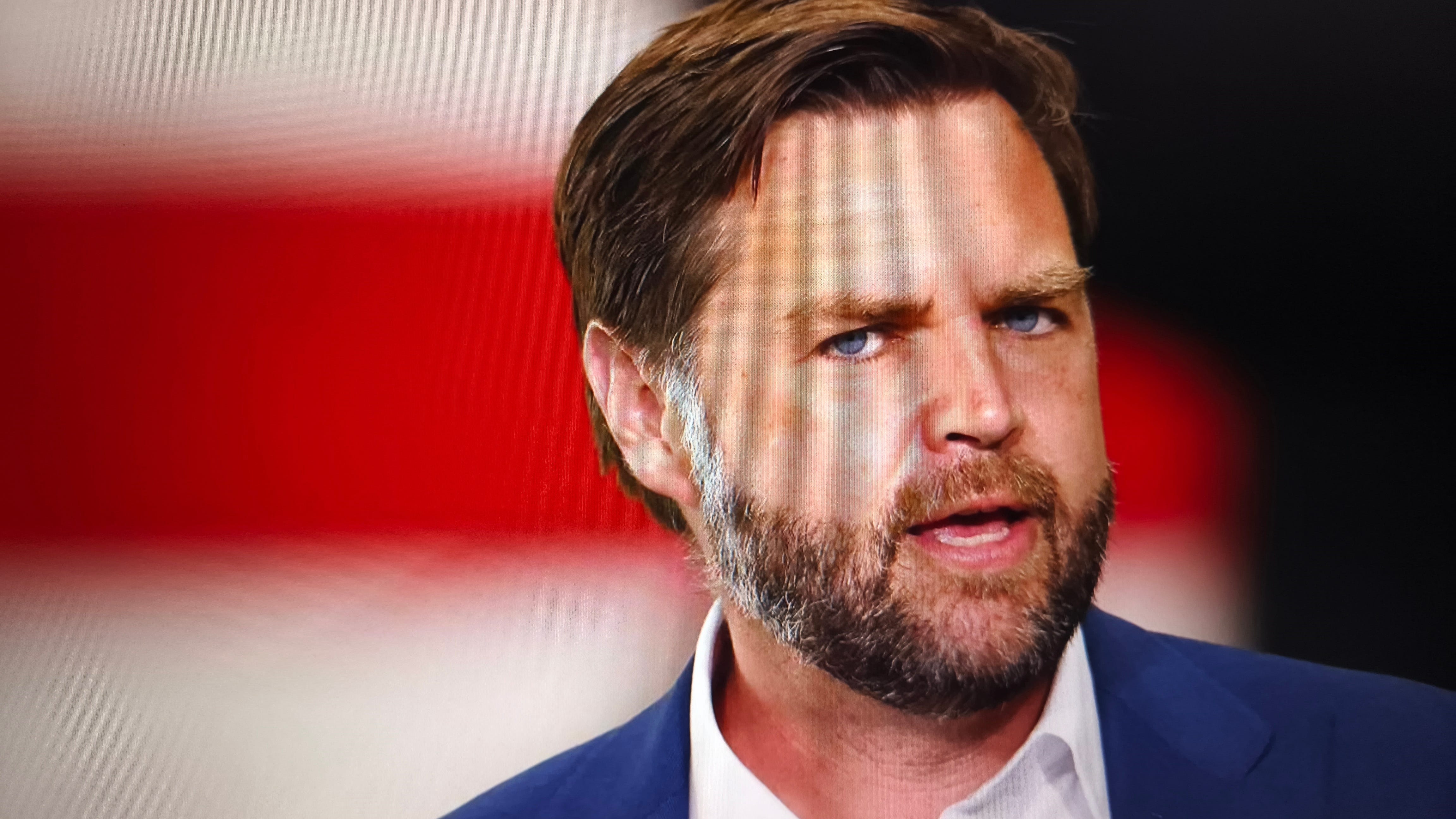
The story goes that JD Vance converted to Catholicism in 2019. He has, since then, been publicly rebuked by two consecutive Popes — Francis and now Leo XIV — on the content of his stated faith. The most recent rebuke came after Vance, addressing a Turning Point USA rally in Athens, Georgia, instructed Pope Leo to be careful about wading into theology, and then proceeded to lecture the Pope on just war theory. Pope Leo, who holds a doctorate from the Pontifical University of St. Thomas Aquinas in Rome and who once led the Augustinian order founded by the theologian who first articulated just war theory, was traveling at the time to plant an olive tree at the archaeological site of St. Augustine’s Hippo. He did not, as far as the record shows, return Mr. Vance’s call.
The contemporary Catholic intellectual class — including serious figures like Thomas D. Howes, whose recent piece in The UnPopulist engages this directly — has responded to this state of affairs by working inside the theological frame. The argument is that Vance is a bad Catholic. That he came to the faith voluntarily, took its theological vocabulary as a tool of public discourse, and now fails to honor the substantive content of the doctrine he claimed for himself. Howes, who is making the argument with care and seriousness, frames Vance’s devil-may-care posture toward immigration, war, and human dignity as a violation of Catholic teaching on solidarity and the common good. The argument is, on its own theological terms, correct. Vance is, by the standards of the Church he chose, getting his own faith wrong.
I am going to push hard against this propensity to give respectful deference to people’s stated religious beliefs, because I think it’s being exploited by people who couldn’t care less about Jesus’ teachings, quite frankly. And further, even if they have convinced themselves that Jesus is with them in their quest for monarchal power, they remain functionally evil and the distinction doesn’t really matter.
⁂
This morning I posted a Note on Substack arguing that Peter Thiel and JD Vance are atheistic monarchists who want to capture the Catholic Church the way Vladimir Putin has captured the Russian Orthodox Church — as the apparatus through which the political class manages the religious sentiments of the governed population. The claim is not an offhand provocation. Thiel has spent a decade weaving Girardian apocalypticism into his political-philosophical writing, has invoked the figure of the katechon — the restraining force in 2 Thessalonians that holds back the antichrist — as the philosophical name for the strong-state conservatism he thinks the American moment requires, and has funded the legal-conservative apparatus that has been producing the captured-Court I described in The Industry’s Court. Vance is the political face of the project. The project is visible to anyone who has been paying attention to the philosophical writing and the funding flows.
A reader pushed back on the atheistic characterization of Thiel specifically, asking whether I really thought he was not a true believer. The reader noted that if Thiel has been performing Christianity for decades as a long con, the commitment to the bit is itself impressive.
My response, which is the central claim of this Dispatch, was that the question of whether Thiel is a true believer or a long-running performer is, at the level of political consequence, beside the point. Whether Mr. Thiel has convinced himself that Jesus wants him to be the global technate dictator, or whether he is using the Christianity costume as an instrument for the consolidation of power, the actions are the same. The legal-philosophical project is the same. The institutional capture is the same. The political program is the same. The harm to the polity is the same.
I know that people want to give brownie points to actions taken from genuine belief. The intuition is a category error. In the present political moment, it is an actively dangerous one. The intuition does work that benefits a specific class of public actor — the class that wants to be measured by the contents of its inner life rather than by the consequences of its conduct — and the work conceals the actual political question, which is what the conduct is producing.
This Dispatch is about why the question of whether Vance and Thiel are real Catholics, or real Christians, or real anything else, is the wrong question. The right question is what their actions produce. The actions are what we will be governed by. The actions are what the next generation of Americans will inherit. The inner lives of the actors are not, in any sense that bears on the polity, our concern.
The position I am defending has a long philosophical lineage.
David Hume, in the Treatise and again in the Enquiry Concerning the Principles of Morals, established that the inner life of the actor is, for purposes of observation, opaque. Hume's own moral theory weights motives heavily — he is, on the question of where moral worth resides, much closer to the virtue tradition than to anything resembling consequentialism. The point I am borrowing from Hume is the prior epistemic one. We must look within to find the moral quality. This we cannot do directly; and therefore fix our attention on actions, as on external signs. Even the virtue theorist, in Hume's framing, is ultimately reading conduct as the sign through which inaccessible motives are to be inferred. The argument I am running here takes Hume's epistemic point and applies it to political ethics specifically, where the observer is the citizen and the actor is the public figure whose conduct shapes the polity. The citizen does not have the access the inner observer has. The conduct is what the citizen has. The morality of the conduct, for purposes of political evaluation, is the morality of what the conduct produces — because nothing else is available to be evaluated.
The opposing tradition is the virtue-ethics revival of Anscombe and the broader Aristotelian-Thomistic apparatus that informs contemporary Catholic moral theology. It holds that the inner state of the actor is not beside the point. The same conduct, performed from genuine virtue versus performed from cynical calculation, has different moral weight even if the external outcomes are identical. The good act done from love is, in the virtue tradition, more truly good than the same act done as a public performance for personal advancement.
I am not claiming the virtue tradition is wrong as a general matter. The virtue tradition has things to say about the cultivation of moral character, about the integration of inner life and outward conduct, about the long-run development of the kind of person whose actions are reliably good across changing circumstances. These are real questions and the tradition has real answers to them. The narrower claim I am making is this: for the specific domain of political ethics — the evaluation of public actors whose conduct shapes the lives of citizens — the consequentialist frame is the correct one, and the virtue frame is being deployed by the wrong people for the wrong reasons.
Here is why.
In private morality, we have access to the inner life of the actor whose virtue is in question. We are typically the actor ourselves, or someone in close relationship to the actor. The question of whether our conduct flows from genuine moral commitment or from instrumental calculation is one we can ask of ourselves directly, with reasonable hope of an answer. The virtue framework operates productively in this domain because the inner life it asks about is observable to the agent doing the asking.
In public political life, the inner lives of the actors are opaque to the citizens whose lives they affect. We do not know, and cannot know, whether Mr. Thiel actually believes Jesus wants him to be the dictator. We do not know, and cannot know, whether Mr. Vance experiences his Catholicism as the lived ground of his moral commitments or as the rhetorical instrument that gives his political project a vocabulary. The inner life is not accessible. What is accessible is the conduct.
When the virtue framework is deployed in political contexts where the inner life is opaque, it functions, structurally, as an apparatus for protecting public actors from accountability to the consequences of their conduct. The defender of the public actor invokes the actor’s stated beliefs as the decisive moral fact. The citizen, who has only the conduct to go on, is told that the conduct is being misread because the citizen does not have access to the inner state from which the conduct flows. The defender claims privileged access. The citizen is asked to trust the claim. The conduct goes unaccounted for.
This is why the conservative-Christian intellectual tradition has, in our specific moment, become the apparatus of choice for public actors who want to be insulated from the consequences of their conduct. The tradition treats the inner life as the locus of moral worth. The tradition treats outward conduct as evidence of inner state, but evidence that can be reframed, contextualized, qualified, and ultimately overridden by the actor’s stated commitments. The tradition gives the actor permission to tell the citizen that what the citizen is observing is not what the citizen thinks it is, because the actor has access to a deeper layer of reality the citizen does not. The tradition lets one set of values be performed in public while the conduct is producing the opposite.
A serious virtue-ethics defender will press on this and say: yes, the ordinary citizen does not have access to the actor’s inner life, but the political community that knows the actor — the church, the colleagues, the institution within which the actor is professing the commitment — does have more access, and the institution’s judgment is what carries the weight. The Pope rebuking Mr. Vance is, on this reading, the political community making a virtue judgment, and the judgment matters precisely because the institution has the access the citizen does not. This is a serious objection and it deserves a serious answer. The answer is that even when the institution does have more access, the institution’s verdict does not change what the citizen has access to. The citizen still has only the conduct. The Pope can rebuke Mr. Vance for getting Catholicism wrong, and the rebuke can be theologically correct and institutionally weighty, and Mr. Vance can absorb the rebuke and continue producing the same conduct. The conduct, not the institution’s verdict, is what determines what the polity becomes. The institution’s judgment is one piece of the documentary record. It is not the question that is being settled in the lives of the people whose lives are being shaped by the conduct.
⁂
There is a passage in the Gospel of Matthew that cuts the other way and that is, on the textual record, dispositive of the question I am raising.
In Matthew 25, Jesus describes the final judgment. The criterion of judgment is conduct. I was hungry and you gave me food, I was thirsty and you gave me drink, I was a stranger and you welcomed me, I was naked and you clothed me, I was sick and you visited me, I was in prison and you came to me. The righteous, in the parable, do not even know they have been doing the work the criterion measures. They ask, when did we do these things. The wicked, who failed the criterion, also do not understand — when did we see you hungry and not give you food. The point of the parable is that the criterion is conduct, and the conduct counts whether the agent recognizes its religious significance or not. The atheist who feeds the hungry passes the test. The professed Christian who turns the hungry away fails it.
This is the reading the Catholic tradition itself, at its most serious, has produced — the anonymous Christian category developed by Karl Rahner, the option for the poor central to twentieth-century liberation theology, the body of social teaching from Rerum Novarum through Laudato Si’ that Howes correctly invokes against Vance. The tradition has, when it has been doing its best work, located moral worth in conduct rather than in profession. It has done this because the textual evidence requires it to.
What Howes is saying about Vance is, in this reading, true on its own theological terms. Vance is a bad Catholic by the standards Catholicism itself articulates. The Pope — two Popes, in succession — have been right to rebuke him.
The different and stronger claim I am making is that the question of whether Vance is a good or bad Catholic is the question we should be willing to set aside, because the answer to that question does not change the political situation we are in. Whatever Vance is in his inner life, the conduct he is producing is what we have. The conduct is what the polity will be governed by. The conduct is what shapes whether nurses get killed at ICE protests, whether asylum-seekers get processed humanely, whether immigrants are treated as the neighbor the Catholic social teaching enjoins solidarity with. Whether Vance is a real Catholic or a fake one is a question for his confessor. The conduct is a question for the rest of us.
⁂
The reason this matters now is that the contemporary American right has built an entire intellectual apparatus around the question of inner authenticity, and the apparatus is doing the work of insulating its political class from accountability to conduct.
You can see this most clearly in the Thiel case. The functionalist question is whether his Christianity is sincere. The functionalist answer is that the question is malformed. Whether Mr. Thiel privately experiences Christianity as a personal faith or as a strategic vocabulary, the public conduct is identical. The funding flows the same way. The political projects produce the same outcomes. The capture of the church into the apparatus of state power proceeds at the same rate. The performance and the belief are indistinguishable from the outside, and the outside is where the rest of us live.
The same goes for Vance. Whether he is a sincere convert struggling to reconcile his faith with the political project he is participating in, or a cynical operator who chose Catholicism because it polled well in a state where he was running for Senate, the conduct is the same. The mansplaining of the Pope is the same. The dismissal of the killed nurse is the same. The contempt for immigrants is the same. The enabling of the administration’s worst conduct is the same. The inner state behind the conduct does not change what the conduct is producing. The citizens whose lives are being shaped by the conduct have no access to the inner state, and would have no use for the access if they had it, because the conduct is what they have to live with.
Here is the test for any framework of political ethics in our moment. If the public actor were transparently performing the costume of the religious tradition rather than living from its substance, would the political program change? For Vance, for Thiel, for the broader cohort I am pointing at, the answer is no. The political program would be the same. The funding flows would be the same. The contempt for the immigrant, the indifference to the killed nurse, the lecturing of the Pope, the consolidation of state power around a captured religious vocabulary — all of it would be the same. The Christianity is not, as the conservative intellectuals defending it claim, the substantive ground of the political project. The Christianity is the vocabulary the political project is conducted in. Whether the people speaking the vocabulary believe the words is a private question. It is not the question that determines what the project does to the country.
⁂
Vladimir Putin captured the Russian Orthodox Church not by converting Patriarch Kirill to a deeply held religious belief but by aligning the Patriarch’s institutional interests with the regime’s political interests. The capture was functional. It did not require true belief on either side. It produced, in the church, an apparatus for managing the religious sentiments of the Russian population in service of the regime’s political objectives. Kirill blesses the war. Kirill denounces the regime’s enemies. Kirill anoints the regime’s authority with the language of holy tradition. Whether Kirill privately believes any of it, or whether Putin privately believes any of it, is not a question that has been answered or will be answered. The capture works regardless of what the operators inwardly believe.
This is the model Thiel and Vance and the broader cohort are working from. The American Catholic Church has not yet been captured in the way the Russian Orthodox Church was captured. The current Pope, Leo XIV, is rebuking the cohort directly and publicly, which suggests that the capture has not succeeded at the institutional level. But the project is visible. The legal-philosophical apparatus is being assembled. The funding streams are flowing. The intellectual class is producing the theological vocabulary in which the capture, when it is completed, will be conducted.
Whether the assemblers privately believe the theology they are deploying does not change what the assembly is producing. The Putin model worked because functional alignment of interests is sufficient for capture. The American version will work, if it works, on the same logic. The question of whether Vance is a real Catholic, or whether Thiel is a real Christian, will be answered — if it is ever answered — long after the capture is irreversible.
⁂
To the people who want to give brownie points for true belief: I understand the intuition, and I share much of the moral framework that produces it in private life. The integrity of inner conviction matters in private morality. The cultivation of virtue is real work. It has real consequences for the kind of person one becomes. The ancient tradition that has thought about this carefully has things to say worth listening to.
But in political life, the question is not what kind of person Mr. Thiel is becoming. The question is what the polity is becoming, under the conduct of Mr. Thiel and his collaborators. The answer to that question does not depend on the contents of Mr. Thiel’s inner life. The answer depends on what his money is funding, what his political projects are producing, what the institutional capture he is participating in is achieving. These things are observable. These things are evaluable. These things are what the rest of us have to live with.
The intuition that we should grant moral credit for true belief is, in the political domain, an apparatus for letting public actors conceal their conduct behind their stated commitments. The intuition is wrong.
What we can see is what we have. What we can see, in the case of Vance and Thiel and the broader cohort, is conduct that is contemptuous of the immigrant, indifferent to the killed nurse, dismissive of the Pope’s actual theological authority, eager for the consolidation of state power, willing to deploy religious vocabulary as the instrument of that consolidation. The conduct is the substance. Whether the actors privately believe what they say is a matter for their confessors. For the rest of us — the citizens whose polity is being shaped by the conduct — the question is settled by what we can see. What we can see is the conduct producing a country that is, by any honest moral accounting, worse than the country the religious tradition Vance and Thiel claim would, if it were taken seriously, produce. Worse in concrete and observable ways. Worse in ways that, on the consequentialist frame this Dispatch is defending, qualify as evil regardless of what the producers of the conduct privately believe. Whether they know they are producing evil is a question for their confessors. That they are producing it is a question the rest of us have already answered, by living in the country the production has produced.
The framework Howes is defending — the framework that takes Vance’s stated Catholicism at face value and measures him against its own standards — is, on its own terms, doing important and necessary work. The Pope’s rebukes matter. The theological argument matters. I do not want to live in a public discourse where these arguments are not being made.
But the Howes framework is not enough on its own. It cannot be enough. Because if Vance and Thiel and the broader cohort respond to the theological rebuke by simply discarding the costume — by saying fine, I am not a real Catholic, what of it — the political program does not change. The capture continues. The conduct continues. The polity continues to be shaped in the direction the cohort is shaping it.
What is being done is the construction of an authoritarian American polity in which a captured religious vocabulary is being deployed to legitimate it. Whether the constructors believe the vocabulary they are deploying is, for the citizens of the polity being constructed, beside the point.
We must be willing to name what we see. I see this pattern and I’m naming it.
Go Deeper into the Circus
Already Legendary

That anybody ever admired Donald Trump’s negotiating and dealmaking skills, and thought that these skills would avoid international conflict and bring America’s adversaries to their knees by sheer force of his manly strength — many Americans still believe this — is hard for me to metabolize.
The Party That Hates Children

Donald Trump, who remains the President of the United States for reasons that are unclear to me, took a shit on a little girl’s dreams because of his malignant narcissism today. That happened.
Mike, the more I observe JD Vance, the more he seems like a black box. Just his personal history, changing names multiple times, adopting Catholicism as a kind of mask, alternately condemning and then fawning over Donald Trump -- they almost feel like the actions of a walking, talking version of Hal from the 2001 movie.
It's frankly kind of terrifying.
Equally terrifying is the reaction of the media to the calm, offhanded way he instructed the Pope to "be careful on matters of theology." How was this not a trigger for a superstorm of condemnation from every corner of the American press? The same press that was so very concerned that Barack Obama once attended a church led by a minister who once uttered the words "God damn America"?
The Pope, for Chrissake!
It sugggests that this was yet another test, as if Vance was advised by the tech bros to say something so insane and so theoretically insulting to the largest Christian denomination on the planet that it would function as a barometer of just how cowed they've become.
On your larger point of how it's what people do that matters, not which kind of religious sleight-of-mind they perform on camera, I absolutely agree. Keep up the good work.
JD is an adherent of the US civic religion that has already subsumed evangelical Protestantism (to a point in your article, this allows support for policies that result in severe cruelty toward the poor while also claiming to be Christian, because much of Protestantism holds that salvation is by faith, not works), and the movement which has come from this is also attempting to subsume Catholicism in the US into itself. He professes Catholicism not because he is a devout Catholic, or because he rejects sola fide, but simply because he prefers the pomp and pageantry of the Catholic Mass, and he is, as Pope Bob put it, "living in a state of practical atheism".
https://bsky.app/profile/rahaeli.bsky.social/post/3loqsfhswjk2r