


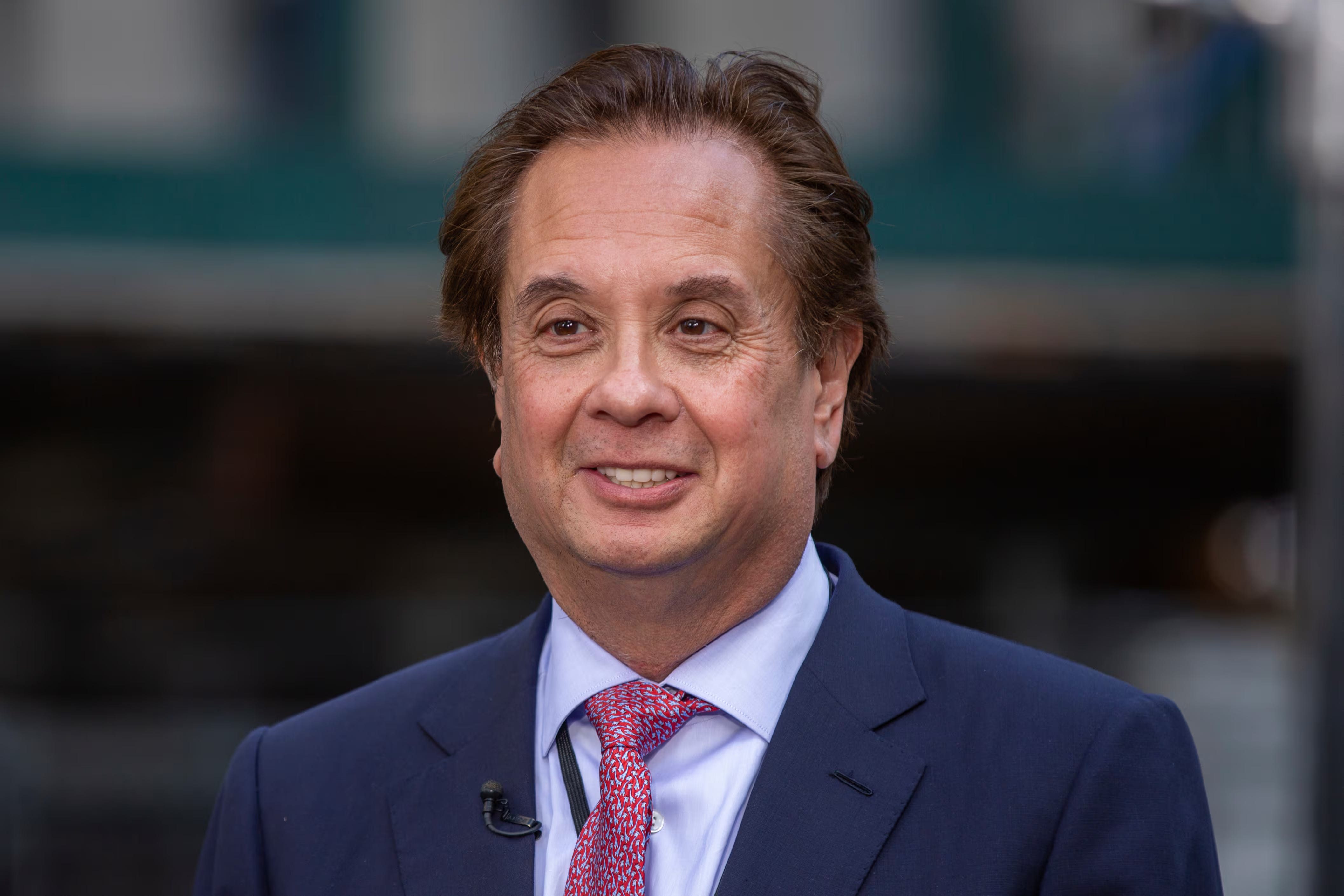
George Conway loves this country. That much I am sure of. He should be an impeachment manager. I have donated to his campaign. I call on New Yorkers in the 12th Congressional District to cast their ballots for an American patriot in the Democratic primary on June 23.
⁂
The case for George Conway is the case for what kind of person the polity needs in the House of Representatives during a constitutional emergency. The constitutional emergency is real. The current administration is operating against the constitutional order it swore to defend. The House of Representatives is the chamber the Constitution placed at the center of accountability for executive misconduct. The impeachment power has been used at the presidential level four times in American history — Andrew Johnson, Bill Clinton, Donald Trump twice — and it is the constitutional instrument the founders designed for exactly this kind of moment. The question for voters in NY-12 is who they want sitting in the House when the moment for that instrument comes.
George Conway is one of the most qualified people in American public life to be that person. He is a constitutional lawyer of forty years’ experience. He clerked for the U.S. Court of Appeals for the D.C. Circuit. He spent thirty years at Wachtell, Lipton, Rosen & Katz — one of the most demanding corporate-litigation firms in the country — handling the kind of complex legal work that produces the analytical discipline impeachment requires. He won a Supreme Court case, Morrison v. National Australia Bank, in 2010. He was considered for two senior positions in the first Trump administration, Solicitor General and Assistant Attorney General for the Civil Division, and he withdrew himself from consideration when he saw what the administration was going to be. He is a founder of the Lincoln Project. He is the board president of the Society for the Rule of Law, the constitutional-democracy advocacy organization that has been doing serious legal-political work across the Trump era.
The choice was personally hard for him. He chose the country over comfort, and the country over the life he had built. He lost friends. He lost professional standing inside an establishment that had been his home for thirty years. He watched his marriage end in 2023 after years of public conflict over the constitutional crisis his wife was working inside the White House to administer. He absorbed Trump’s personal attacks — including racial mockery aimed at his Filipino heritage — across eight years of relentless public abuse. He spent more than a million and a half dollars of his own money on television advertising and billboards attacking Trump, when he could have spent the money on anything else and kept his life intact. He has paid for what he is now offering the country in real coin across nearly a decade of personal cost that he could have avoided at any point by simply going quiet.
He did not go quiet. He has not gone quiet. He is, right now, asking the voters of NY-12 to send him to the House to do what no one in his original political tribe was willing to do, and what very few in the tribe he has crossed into know how to do as well as he does. He has done the work. He has the skills. He has the standing.
The campaign he is running is a campaign about impeaching Donald Trump. He launched on January 6, 2026 — fifth anniversary of the attack on the Capitol — with a video naming the work he intends to do in the House. He has been explicit about the framing. He has used the words modern legal reconstruction to name what the country has to undertake to recover from this regime. He has used the words make sure this never happens again to name what the work is for. He is not running on a vague anti-Trump posture. He is running on a specific constitutional-legal project, with specific operational content, that requires a constitutional lawyer in the House to actually execute.
⁂
The species of leftist and progressivist commentator that has been holding Conway’s former Republican status against him needs to be addressed directly.
This is ridiculous. Stop it.
The position seems to be that because Conway was a Republican for most of his adult life, because he was a Federalist Society member, because he helped litigate cases the contemporary left finds politically distasteful, because his ex-wife worked for the Trump administration he was simultaneously trying to destroy in the courts and in public commentary — because of all of this, he cannot be trusted, cannot be welcomed into the coalition, cannot be supported even now, when the constitutional emergency is at its apex and the work he is offering to do is the work the emergency most directly calls for.
This is wrong on the substance. It is wrong on the strategy. It is wrong on the philosophy. And it reveals, more than its proponents seem to understand, exactly the kind of factional-loyalty politics that has been making the American left less than the sum of its parts for two decades.
On the substance, the question of whether someone can be trusted to defend the constitutional-republican tradition is a question about what they are doing now, not about what they were doing in 1994. The conservative-legal-movement project produced figures who stayed and figures who left. The ones who stayed have ended up where the project ended up — in the captured Court, in the Federalist Society pipeline that has been remaking the federal judiciary, in the Vance-Thiel monarchical infrastructure that is operating against the constitutional order. The ones who left did the harder thing. They identified the catastrophe the project was producing and they refused to ride it. Conway is one of the figures who left.
On the strategy, the constitutional-republican tradition is not the property of any particular faction. It is the inheritance of every American citizen who is committed to the project of self-government under the rule of law. The people defending the tradition right now include former Republicans, lifelong Democrats, independents, libertarians who have seen what the Vance-Thiel project actually is, religious conservatives who have read the founders carefully enough to know that the Christian-nationalist project is not what the founders built, and a broad coalition of citizens who have made the political-philosophical commitment to the constitutional order regardless of what tribe their family voted for in 1988. Treating former Republicans as forever-suspect is the strategy of a faction that has decided it would rather lose with its purity intact than win with the coalition that the constitutional emergency actually needs.
On the philosophy, the gatekeeping move reveals the same costume-versus-substance error that has been showing up in this corner of the discourse for years. The costume is the party identification. The substance is the political-philosophical commitment. The leftist-progressivist gatekeeper is applying the costume test — what tribe did you belong to — when the constitutional emergency requires the substance test — what are you doing now to defend the republican tradition. The costume test produces the false confidence that one can identify allies by tribal markers. The substance test requires the harder analytical work of evaluating each person on what they have done and are doing. Conway passes the substance test. The costume test is the test the gatekeeping operation has been using to fail him.
⁂
And then there is the other faction — the anti-anti-Trump asshole who has been calling George Conway a grifter. I have special disdain for these people.
The grifter charge is the specific accusation the anti-anti-Trump faction has been deploying against figures who broke with Trump at personal cost. It works by reframing principled political conduct as cynical financial conduct, so that the figure who paid the cost of the break can be repositioned as someone who is profiting from the break. The accusation does not require evidence of bad faith. It requires only that the figure has continued earning a living after the break, which every human being has to do.
The accusation, applied to George Conway, is so empirically wrong it deserves to be called what it is. George Conway was independently wealthy before he broke with Trump. Thirty years at Wachtell Lipton produced an income that made the post-break commentary financially unnecessary. He has spent his own money — a documented million and a half dollars on television advertising and billboards — on the public commitment, rather than only earning from it. The Society for the Rule of Law is a 501(c)(3) advocacy organization, not a personal income vehicle. The congressional campaign he is now running is, by any honest reading, a downgrade from the financial position he was already in. Running for Congress at sixty-two in a long-shot primary is not a grift. It is a public-service commitment by someone who has chosen to spend his late-career years doing the work rather than enjoying the comfortable retirement he could have had.
The grifter accusation is itself the same costume-versus-substance error in different clothing. The accusation applies a costume test — does this figure earn money from public commentary — when the substance question is what they have been saying with the public commentary. Many of the anti-anti-Trump figures deploying the grifter charge against Conway are themselves earning a living from public commentary, often from positions inside institutions that have been calibrated to produce a comfortable career under the regime they are accommodating. The accusation is selective, and the selectivity reveals what the accusers are actually doing — protecting themselves from having to account for their own accommodation by accusing the figures who refused accommodation of being motivated by what their own conduct exemplifies.
This is contemptible. It is contemptible in a specific way that warrants special disdain. The anti-anti-Trump faction has been the comfortable position throughout the Trump era — the position that lets the holder critique Trump just enough to maintain a posture of independence while never having to pay the cost of actual political opposition. The grifter accusation aimed at figures who did pay the cost is the move that protects the comfortable position from the moral accounting the cost imposes. The accusers cannot defend their own conduct against the example Conway’s conduct sets. So they attack the example.
I see you. These pages see you. The historical record will see you.
⁂
I have argued in these pages that the constitutional-republican tradition is what this country is for. I have argued that the contemporary American right has, in its current configuration, become the most dangerous threat to that tradition in living memory. I have argued that the work of defending the tradition requires a broad coalition that includes everyone who has made the philosophical-political commitment to it, regardless of where they started and regardless of what their party-registration history looks like.
George Conway has made that commitment. He has made it visibly, sustainedly, and at personal cost. He has made it in the venues where his particular skills — constitutional-legal expertise, prosecutorial discipline, public credibility on the legal questions the moment is going to require congressional action on — can do the maximum work. He is offering to take those skills into the House at exactly the moment the House is going to need them.
The progressivist commentator who refuses to support him on grounds of his Republican history is, in operational effect, demanding that the constitutional-republican coalition fail to recruit the most qualified available impeachment manager because the recruitment would require admitting that the coalition is broader than the progressivist faction prefers it to be. This is not a serious political posture. It is a luxury belief held by people who have not done the work of asking what the present situation actually demands.
⁂
I do not endorse every position George Conway has ever taken. I do not need to. The endorsement is for what he is doing now, in the configuration of the present political-emergency conditions, for the specific role he is offering to play in the House if NY-12 voters send him there. The endorsement is for the substance of what he brings to the moment, not for an idealized version of his entire political-biographical record.
The NY-12 primary is on June 23, 2026. The district covers Manhattan. The race is crowded — Alex Bores, Micah Lasher, Jack Schlossberg, Conway, and several other Democratic candidates. Each candidate has their merits and their backers. I am not here to tell NY-12 voters that the other candidates are unworthy. I am here to tell them that George Conway is the candidate this constitutional emergency calls for.
I have donated to his campaign. I encourage every American who has the means and shares the analysis to do the same. I encourage every voter in NY-12 to consider what the constitutional emergency requires of the House, and to consider whether George Conway is the person they want in the chamber when the emergency reaches the moment where the constitutional instruments designed for it have to be deployed.
He loves this country. He should be an impeachment manager. I would be proud to see him as Representative from the 12th Congressional District of the State of New York, and prouder still to watch him take the floor of the House to do the work the founders designed the chamber to do when a president has lost the trust of the polity to faithfully execute the laws of Congress and defend the Constitution he swore to uphold.
George Conway is the man for the job.
Cast your ballots accordingly.

Go Deeper into the Circus
I Endorse Graham Platner

I really wanted to like David French. In fact, I did like David French. I enjoyed listening to him on the Dispatch podcasts — I listen to a lot of podcasts — and now, I have to tell you, I am not quite sure if I continue to like David French. Because what he has done here with Graham Platner makes me question his intellectual honesty.
On the Dance

This is, after all, a philosophy blog and today I gave advice to someone I deeply care about. I gave them the advice because it is what I believe to be true. I want to give everyone the same advice as we move through these troubled waters of our incomprehensible social reality. Because the thing is, you don’t need a map. You only need a compass. A way t…
I love George. I was very impressed with him, watching him with Sarah Longwell on The Bulwark .
We need a coalition to oppose the fascists. Some of the sharpest commentators and most articulate opponents of MAGA are former Republicans—Steve Schmidt, Adam Kinzinger, Charlie Sykes, Judge Michael Luttig, and George Conway (to whose campaign I also contributed). As Lyndon Johnson used to say, “Don’t spit in the soup; we’ve all got to eat.” We need each other.