


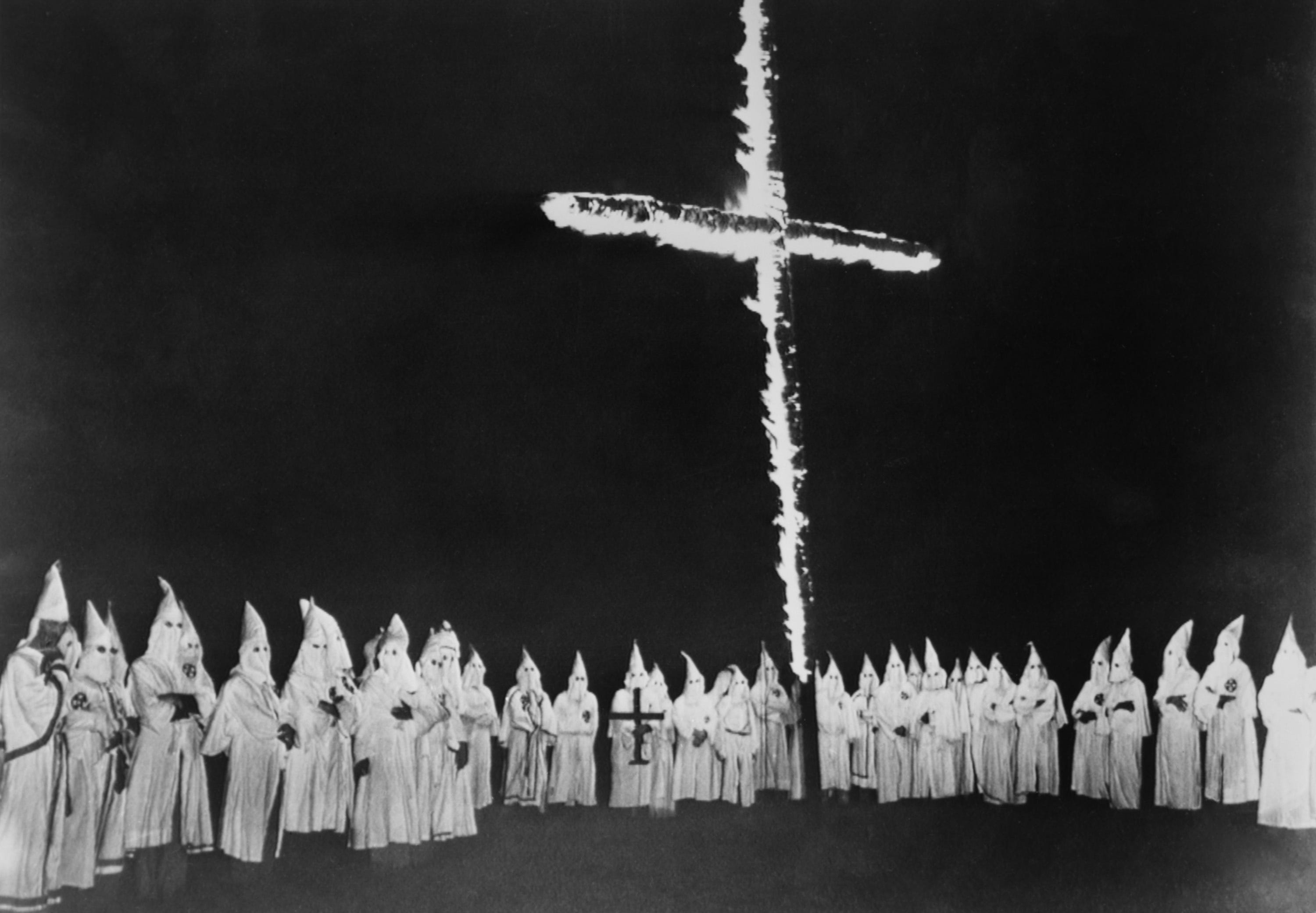
There is a difficulty of vocabulary I want to confront at the beginning, because the word I am about to use has been so degraded by misuse that the people who most need to hear it will reach for the back button before the sentence finishes.
The word is fascist. The proposition is this. The American antebellum South was a fully developed fascist civilization. Not a civilization with fascist features. Not a slave society that resembled fascism in some respects. A fascism. The structural and ideological architecture that Europe would name and recognize in the 1920s and 1930s — the racial hierarchy enforced by law and by paramilitary terror, the cult of martial honor, the fusion of aristocratic landed wealth with a controlled press and a co-opted clergy, the political theory that explicitly rejected the proposition that all men are created equal, the educational system that produced ideological cadres trained from boyhood in the defense of the order — all of it existed in the slaveholding South seventy to a hundred years before Italians and Germans gave the form its name.
The Confederacy was the moment the fascist state inside the republic tried to secede from the republic and become a sovereign fascist state outside it. The republic won the war. The republic did not destroy the structure. The structure went into the basement and waited.
It has been waiting there for a hundred and sixty years. The people Pogue documented are the people who have come down the basement stairs to bring it back up. The intellectual project they have been building — Yarvin’s, Vance’s, Deneen’s, the Claremont apparatus’s, the postliberal turn in general — is not a new project. It is the same project Calhoun and Fitzhugh and Stephens were building in the 1840s and 1850s under a different costume. It is the same project Carlyle was theorizing in London while corresponding with the planters of South Carolina. It is the same project that, when defeated in 1865, retreated into Jim Crow and waited for the next opportunity. The opportunity has come. The basement door is open. The men coming up the stairs are wearing different clothes, but the project in their hands is the same project.
This is the missing piece of the diagnosis. The piece on the war on terror named the operators who walked Bush into the wrong war. The piece on the anti-imperialism of fools named the campist apologists for the rival empires. The piece on the cover stories named Pogue’s documentation of the postliberal turn. Towards a More Perfect Union named the middle road that refuses both flanks. But none of those pieces have told you what the right flank actually is, in its deepest historical register. The right flank is older than Mussolini. The right flank is American. The right flank has been here from the beginning, and the war we have not yet finished is the war the Reconstruction did not finish.
⁂
On March 21, 1861, three weeks before the firing on Fort Sumter, the Vice President of the newly seceded Confederate States of America, Alexander Hamilton Stephens of Georgia, delivered a speech in Savannah that has come to be called the Cornerstone Speech. The full text is available on the website of the American Battlefield Trust. The full text is available on the website of Teaching American History. The full text has been available on the open internet for as long as the open internet has existed. Anyone can read it. Almost nobody does.
In that speech Stephens explained, with extraordinary clarity, the founding principle of the new Confederate government. He acknowledged that Thomas Jefferson and the other Founders of the original Republic had believed that all men were created equal, that the institution of slavery was wrong in principle, and that it would in time pass away. This was an error, Stephens said. It was a sandy foundation, and the government built upon it fell when the storm came and the wind blew. And then the cornerstone:
Our new government is founded upon exactly the opposite idea; its foundations are laid, its cornerstone rests, upon the great truth that the negro is not equal to the white man; that slavery, subordination to the superior race, is his natural and normal condition. This, our new government, is the first, in the history of the world, based upon this great physical, philosophical, and moral truth.
I want to read that sentence the way it deserves to be read. The Vice President of the Confederate States of America, in 1861, declared from a public platform in his own voice that the Confederacy was the first government in the history of the world founded explicitly on the proposition of racial inequality. The first. He was right that it was a first. He was right that this was its cornerstone. He was right that the old Republic had been founded on the opposite proposition, and that the new Confederacy was its repudiation.
This is not a matter of inference. This is not the interpretive labor of contemporary historians reading subtext into the past. This is what the Vice President of the Confederate States said, in his own voice, three weeks before the war began. He told us what they were. He told us what they were founding. He told us what the cornerstone was.
A government founded on racial hierarchy, enforced by law, defended by martial honor, sanctified by Scripture, theorized by a coherent intellectual class, and propagated through a controlled press and a captured educational system. The word for this kind of government is fascism. The word did not exist in 1861. The form did. The form preceded the name by sixty years.
⁂
The intellectual class of the slaveholding South had been preparing this position for thirty years before Stephens spoke it from the platform in Savannah.
John C. Calhoun, the Senator from South Carolina who served as Vice President under both John Quincy Adams and Andrew Jackson, spent the last decade of his life writing the two political treatises that became the philosophical spine of the secessionist project. A Disquisition on Government and A Discourse on the Constitution and Government of the United States, both published posthumously in 1851, argued for what Calhoun called the concurrent majority — a doctrine by which any sufficiently powerful minority interest within the Republic possessed the right to veto the actions of the numerical majority. The doctrine was, in form, an argument for federalism. In substance, it was an argument for the perpetual capacity of the slaveholding class to override the will of the free states whenever the free states attempted to constrain slavery.
But Calhoun went further. Calhoun argued, in lectures and speeches that survive, that the proposition of the Declaration of Independence — all men are created equal — was a fundamental falsehood, a piece of sentimental Enlightenment rhetoric that no serious political philosophy could accept. He argued that human beings were created unequal in capacity, in temperament, and in moral nature; that society was naturally hierarchical; that the attempt to organize a republic around the fiction of equality would produce either chaos or tyranny; and that the slaveholding South had achieved a more humane and rational order than the free-labor North precisely because it had organized itself around the truth of inequality rather than the lie of equality.
The argument is not a sideshow of antebellum political theory. The argument is antebellum political theory in its mature form. The argument was taught in Southern academies, preached from Southern pulpits, published in Southern journals, debated in Southern legislatures, and elaborated, with greater and greater intellectual sophistication, in the decade leading up to the war. The argument’s logical conclusion was the Cornerstone Speech. Stephens did not invent the position. Stephens stated, in the most condensed form, the position the Southern intellectual class had been building for a generation.
The second pillar of that intellectual class was George Fitzhugh, the Virginia planter and lawyer whose two books Sociology for the South (1854) and Cannibals All! Or, Slaves Without Masters (1857) constituted the most ambitious philosophical defense of slavery ever published in English. Fitzhugh’s argument was not the apologetic argument of the moderate slaveholder who wished the institution were milder. Fitzhugh’s argument was that slavery was not a regrettable exception to be reformed but a positive good to be extended. He argued that the free-labor system of the North was white slavery without the protections of black slavery — that the Northern factory worker was more oppressed, more exploited, and more abandoned than the Southern slave because the Southern slave at least had a master who was obligated to provide for him in old age and sickness while the Northern factory worker, when his labor was used up, was simply discarded. Fitzhugh proposed, in all seriousness, that the proper future of human society was the extension of the slave system to white workers, North and South — that the masters would protect the workers, the workers would labor for the masters, and the chaos of free competition would be replaced by the order of organic hierarchy.
I am summarizing his argument fairly. The text is available, in full, on the Documenting the American South project at the University of North Carolina. Read him. Cannibals all, he called the Northern capitalist class — devouring their workers without acknowledging that they were devouring them, because the form of the devouring was wage labor rather than chattel ownership. We conclude that about nineteen out of every twenty individuals have a natural and inalienable right to be taken care of and protected; to have guardians, trustees, husbands, or masters; in other words, they have a natural and inalienable right to be slaves.
Fitzhugh’s argument was the most thoroughly worked-out anti-Enlightenment political philosophy in nineteenth-century America. It rejected the Declaration. It rejected the principle of consent. It rejected the proposition that government derived its legitimacy from the governed. It proposed, in its place, a society of fixed hierarchies in which the masters were responsible for the welfare of the slaves and the slaves owed obedience to the masters and the entire arrangement was sanctioned by Scripture and protected by law.
This is the cornerstone. This is what the Confederacy was founding. The Confederacy was not a movement of disaffected farmers who wanted to keep their property. The Confederacy was a political project with a philosophical program, an intellectual class, a press, a clergy, a military culture, and an explicit declaration that it was founding a new kind of state on the principle of human inequality.
The word for this kind of state is fascism.
⁂
I want to walk through the structural parallels with twentieth-century European fascism specifically, because the claim the antebellum South was fascist is not rhetorical. It is structural. Every major component of the form that Mussolini named and Hitler radicalized was present in the slaveholding South seventy to ninety years earlier.
A racial hierarchy enforced by law. The slave codes of every Southern state defined a category of human beings as property and another category as full persons, with a third category of free Black persons subject to extensive legal restrictions that prefigured the Nuremberg Laws by a century. The hierarchy was not customary. It was statutory. It was enforced by courts. It was administered by sheriffs.
A paramilitary apparatus operating with the sanction of the state. The slave patrols, established by colonial-era law in every Southern colony, were the world’s first organized racialized paramilitary policing force. White men were required, by law, to serve in them. They were authorized to stop, search, whip, and arrest any Black person they encountered without warrant. After 1865 they reorganized as the Ku Klux Klan and the White Leagues and the Red Shirts and, in the early twentieth century, the Citizens Councils. The paramilitary form was continuous. The European fascist movements would, in the 1920s, develop their own paramilitary formations — the Squadristi, the Sturmabteilung, the Arrow Cross — and they would do, in their own countries, what the slave patrols and the Klan had done in the American South. The Klan was, in its 1915 reincarnation, openly admired by the Italian Fascists and by the early Nazis as the model of a racial paramilitary that had successfully restored hierarchy after a period of political dissolution.
A cult of martial honor concentrated in an aristocratic male class. The dueling culture of the antebellum South was an institution of ritualized violence designed to enforce the social discipline of the planter class and to mark the boundary between gentlemen and others. The military academies of the South — the Citadel in Charleston, the Virginia Military Institute in Lexington — were designed to produce a hereditary officer corps trained in the martial defense of the slave order. The European fascists would later produce their own cults of martial honor and their own academies for the production of ideological officers. The form was the same. The content was the same. The function was the same.
A fusion of landed aristocratic capital with industrial and commercial capital, organized under the direction of a coherent political program. The cotton economy of the antebellum South was the most globalized agricultural commodity economy in human history to that point. The planter class was not isolated from world capitalism; it was central to it. British Lancashire’s textile mills, French port cities, and New York’s commodity exchanges were all bound into the cotton economy by deep capital flows. The planter class fused, through these flows, with Northern banking and shipping interests, and the alliance kept the slave system politically protected for sixty years against the moral pressure of the abolition movement. The European fascists would, in the 1930s, build alliances between landed aristocratic capital, industrial capital, and finance capital, organized under the direction of the party. The American slaveholders had built the prototype.
A controlled press in which dissenting material was criminal contraband. By the 1830s every Southern state had passed laws making it a felony to circulate abolitionist material. Postmasters in the South were authorized to seize and destroy anti-slavery newspapers and pamphlets. Newspaper editors who criticized slavery were run out of town by mobs. The Republic of free speech that the First Amendment had purported to establish stopped at the Mason-Dixon Line. The European fascists would, in the twentieth century, establish state control over the press, prohibit dissenting publications, and use mob violence to enforce ideological discipline. The slaveholding South had institutionalized these practices a hundred years earlier.
A captured religious establishment that provided theological cover for the order. The Southern Baptist Convention was founded in 1845 specifically in the schism over slavery, when the Southern Baptists broke from their Northern brethren over the latter’s refusal to ordain slaveholders as missionaries. The Methodist Episcopal Church South split the same way in 1844. The Presbyterians split in 1861. The major Protestant denominations of the South reorganized themselves around the defense of slavery as a Scripturally sanctioned institution, produced extensive theological literature defending the position, and trained generations of clergy in the doctrine. The European fascists would seek and largely receive, through the Reichskonkordat and the Lateran Treaty, the cooperation of the established churches in their countries. The slaveholding South had built its own captured church, from within, decades earlier.
An educational system designed to produce ideological cadres. The young men of the planter class were educated, from primary school through college, in a curriculum designed to produce defenders of the slave order. The classics were taught in a register that emphasized aristocracy and hierarchy. The Bible was taught in a register that emphasized the Curse of Ham and the patriarchal household. Political theory was taught from Calhoun and Fitzhugh and their successors. The graduates of these institutions provided the officers, the lawyers, the legislators, the journalists, and the clergy of the slaveholding civilization. The European fascists would later build their own cadre-production systems in the youth movements, the Hitlerjugend, the GIL. The slaveholding South had run its own version for a hundred and fifty years.
I could go on. The list goes on. The structural parallels are exhaustive, and the point of cataloguing them is not to score rhetorical points. The point is to establish that what I am calling a fascism older than fascism is not a metaphor. It is a structural identification. The thing the Europeans named in the 1920s already existed, in mature form, in the American South of the 1850s. The Europeans did not invent fascism. The Europeans imported a form that had been pioneered, refined, and operated for two centuries on the other side of the Atlantic.
⁂
The war defeated the fascist state. The war did not destroy the fascist civilization.
Reconstruction tried. From 1865 to 1877, the federal government attempted, through the Reconstruction Amendments, through the Freedman’s Bureau, through military occupation, through the seating of Black legislators in Southern statehouses, to dismantle the structure that had produced the Confederacy and to replace it with a multiracial constitutional order. The attempt was real. The achievements were real. Black Americans were elected to office at every level, from local school boards to the United States Senate. Public schools were established. Land redistribution was attempted, in places, before being blocked by Andrew Johnson’s pardons of Confederate landowners. The Fourteenth and Fifteenth Amendments were ratified. The Civil Rights Act of 1875 was passed. For twelve years, the constitutional order tried to do what the war had not finished.
The Compromise of 1877 ended it. In exchange for Republican Rutherford B. Hayes being awarded the disputed presidency, the federal troops were withdrawn from the South. The Klan and the White Leagues, who had been operating clandestinely against Reconstruction for a decade, moved into the open. The Redeemers — the political coalition of the restored planter class and the rising Southern Democratic Party — took control of every Southern state legislature within a few years. Black voters were systematically disenfranchised through poll taxes, literacy tests, grandfather clauses, and mob terror. The convict-lease system reestablished slavery in all but name. Lynching became a public ritual of racial discipline performed in front of crowds of thousands, with postcards, and photographs in newspapers. Jim Crow law was codified through the 1890s. Plessy v. Ferguson in 1896 gave the Supreme Court’s blessing to the new order.
The fascist state-within-a-state had been reconstituted. It was no longer formally a separate sovereignty. It did not need to be. It controlled its territory through state legislatures and through paramilitary terror, it operated its press and its pulpit and its educational system in continuity with the antebellum order, and it had successfully bought, through the Compromise of 1877 and the long retreat of Northern Republican will, the acquiescence of the federal government. Jim Crow ran for ninety years, from the late 1870s to the mid-1960s. The civil rights movement broke its legal apparatus. The civil rights movement did not break the underlying structure.
The underlying structure went, again, into the basement.
⁂
The basement door has been opening, slowly, for fifty years.
Nixon’s Southern Strategy in 1968 was the first opening. The Republican Party, which had been the party of Lincoln and emancipation for a century, was deliberately retooled by Kevin Phillips and the Nixon campaign to absorb the white-supremacist Democratic vote of the former Confederacy. The strategy worked. The South flipped. The voters who had been the political base of Jim Crow became the political base of the Republican Party, and the party that had freed the slaves became, over the next forty years, the party of the white grievance that had never reconciled itself to their freedom.
Reagan’s Philadelphia, Mississippi, speech in 1980, delivered at the Neshoba County Fair seven miles from where the civil rights workers Andrew Goodman, James Chaney, and Michael Schwerner had been murdered by the Klan in 1964, signaled to the white South that the Republican Party understood whose grievance it was now collecting. As I established in The 1953 Coup Never Ended, Reagan himself was not the architect of this — the architects were the operators around him, the same intellectual class that has been waiting in the drawer for the moment when the project could be restarted. But the speech was given. The signal was sent. The voters who needed to hear it heard it.
The Reagan Revolution was not, in its first register, a restoration of the fascist state-within-a-state. It was a coalition that included a sincere Cold War anticommunism, a sincere economic libertarianism, and a captured religious right that had been organized by men like Paul Weyrich and Jerry Falwell. The fascist current was present in the coalition but was not its dominant voice. The operators understood that the coalition could not yet absorb the explicit return of the antebellum project.
The Trump rupture in 2016 changed the equation. Trump did what no Republican president had been willing to do since the Compromise of 1877 — he openly courted, and openly accepted the support of, the explicit white-nationalist movement. Charlottesville in August 2017 was the test. Trump’s very fine people on both sides was the answer. The fascists were back in the coalition openly. The fascists were back in the public square. The fascists were back in the language of the President of the United States.
What Pogue documented in 2022 was the intellectual return that completed the political return. Trump in 2016 was a vibe. Trump in 2024 was a vibe with an apparatus. The apparatus is the postliberal project. The apparatus is Vance and Yarvin and Deneen and Anton and Eastman and Claremont and the Heritage Foundation’s Project 2025 and the network of journals and podcasts and Substacks that have, in the years since Pogue’s piece, become the operational center of an American postliberal political theory.
The postliberal political theory is the political theory of the antebellum South in modern dress.
⁂
I am going to do the work explicitly. The line is unbroken and the documents are available.
Curtis Yarvin, writing under the pseudonym Mencius Moldbug from 2007 to roughly 2014 and under his own name since, has produced over a million words arguing for the abolition of the American constitutional order and its replacement by a kind of neo-monarchical authority that he variously describes as a CEO, a Stuart Restoration, a receivership, or, in the formulation he used to James Pogue and that I quoted in The Conspiracy Is the Cover Story, a national CEO, or what’s called a dictator. The central intellectual influence on Yarvin’s project, by his own extensive testimony, is Thomas Carlyle. Yarvin has written a multi-part essay called Moldbug on Carlyle that runs to tens of thousands of words and constitutes the most sustained recovery of Carlyle as a political thinker in contemporary American letters.
Yarvin’s Carlyle is the Carlyle of Occasional Discourse on the Negro Question (1849), the pamphlet in which Carlyle defended slavery as a natural human relationship, argued that the freed Black population of the West Indies was suffering from too much freedom rather than too little, and proposed that the proper organization of human society placed those suited by nature for mastery over those suited by nature for slavery. Yarvin, in his essay, treats this argument sympathetically. He writes, as quoted in Public Books in March 2025, that Carlyle was one of the few theoretical defenders of slavery in the last two centuries, that Carlyle’s view of slavery as a natural human relationship, like marriage deserves to be understood on its own terms, and that Carlyle’s argument that the innate character and intelligence of some is more suited to mastery than slavery is a serious position that contemporary thinkers should engage rather than dismiss.
I am not editorializing. I am quoting. The man whose intellectual project has become the philosophical engine of the postliberal turn — the man whose ideas Peter Thiel has been promoting in interviews since 2021, the man whose Cathedral concept Vance used on the Pogue tour, the man invited to speak at the inaugural-week parties in January 2025 — has spent the last fifteen years producing a sustained intellectual recovery of the nineteenth-century pro-slavery position. He has done it under a pseudonym for most of those years, but he has done it. The texts are on his Substack. The texts are searchable. The texts are quoted by his contemporary intellectual peers.
Carlyle, in his correspondence with the antebellum South, was the European thinker most admired by Calhoun and Fitzhugh. Carlyle corresponded with Southern intellectuals throughout the 1850s and openly approved of the slaveholding civilization. The line from Carlyle to the slaveholders runs through the Atlantic. The line from Carlyle to Yarvin runs through Yarvin’s own self-described intellectual genealogy. The line is therefore: slaveholders ↔ Carlyle → Yarvin → Thiel → Vance → contemporary postliberal political class.
Patrick Deneen’s Why Liberalism Failed (2018) and Regime Change (2023) are the academically respectable face of the same project. Deneen argues, in the polite vocabulary of a Notre Dame professor of political theory, that the liberal order has destroyed the organic communities that gave human life meaning, that the only solution is a kind of aristopopulism in which a new elite governs in the name of, but with overriding authority over, the masses. This is Fitzhugh in academic dress. Fitzhugh argued that the laboring masses were better off under the guardianship of a paternal elite than under the chaos of free labor. Deneen argues that the contemporary masses are better off under the guardianship of a new aristopopulist elite than under the chaos of liberal individualism. The vocabulary has been laundered. The argument is the same.
J. D. Vance, in the Pogue interview and in the years since, has put the project into the language of Appalachian populist masculinity. The complaint about fucking McKinsey, the celebration of his son’s masculinity over consultant credentialism, the longing for a world in which fixed roles produce meaning — these are not original to Vance. These are the slaveholders’ complaint about the Northern commercial class, dressed in the costume of the 2020s. Cannibals all, Fitzhugh had said, of the Northern industrialists. Fucking McKinsey, Vance now says, of the same class’s contemporary descendants. The continuity is exact.
Anton’s Flight 93 Essay of 2016, with its proposition that the American constitutional order had become so degenerate that the choice in 2016 was between charging the cockpit or dying, is the contemporary form of the secessionist argument of 1860. The argument that the existing constitutional order is so corrupted by the equality fiction that it cannot be reformed and must be overthrown by direct action — this argument was Calhoun’s argument. Anton has updated the vocabulary.
The Claremont Institute, where Anton works, where Eastman worked, where John Yoo works, where Hillsdale College’s intellectual current flows, is the contemporary equivalent of the antebellum Southern academies. It is the institutional production site for the cadres of the postliberal project. It graduates lawyers and political theorists and policy entrepreneurs who go into the Trump administrations and into the conservative legal movement and into the new media ecosystem, all of them having been trained, in the Claremont curriculum, that the American Founding was originally good but has been corrupted by the modern equality regime, and that the project of the next generation is to restore the original meaning of the Constitution by undoing the Reconstruction Amendments’ egalitarian implications.
The intellectual class of the postliberal right is the intellectual class of the slaveholding South restarted under new sponsorship. The funding has changed. The slaveholders funded their intellectual class through cotton; the postliberals are funded through the Thiel apparatus, the DeVos family, the Mercer family, the Uihlein family, the Wilks family, and the new petro-AI rentier coalition I have been describing through these pieces. The intellectual content has not changed. The intellectual content is hierarchy, the rejection of equality, the captured church, the captured academy, the paramilitary preparedness, the controlled information environment, the cadre production system, and the patient long-term construction of an alternative governing apparatus that can be activated when the moment comes.
The moment, in this generation, has come.
⁂
The moment is not new. The structure has been waiting in the basement since 1877. The structure was almost destroyed by the war and partially destroyed by the Reconstruction and decisively delegitimized by the civil rights movement, but it was never finally destroyed. It went underground. It waited. It rebuilt its intellectual class through the postwar conservative movement, its political class through the Southern Strategy, its religious class through the New Right and the Moral Majority, its paramilitary class through the militia movement of the 1990s and the Oath Keepers and Three Percenters of the 2010s, its media class through Fox News and talk radio and then Substack and Rumble and X. The structure has been reassembling itself for fifty years.
What has changed in the last decade is that the structure has acquired a new sponsor. The traditional Southern restorationist project did not have, on its own, the financial resources to challenge the post-1965 American mainstream. It had, in 2010, perhaps a half-dozen billionaires of national consequence and a much larger constituency of mid-sized regional wealth. What the Thiel turn and the Musk turn and the larger tech-class turn of the late 2010s and early 2020s gave the project was capital at a scale the project had never previously commanded. Combined with the Gulf-state rentier money that has been flowing into the tech class since the Saudi PIF stake in xAI and the Qatar stake in Anthropic and the UAE’s MGX stake in OpenAI, the project now commands financial resources that exceed those of the legacy political and media institutions that the project is attempting to displace.
The project’s strategic objective is not merely electoral victory. The project’s strategic objective is constitutional displacement. It is the replacement of the post-Reconstruction American constitutional order with a new order that explicitly repudiates the proposition that all human beings are created equal — that explicitly repudiates the Reconstruction Amendments, that explicitly retires the Civil Rights Act of 1964 and the Voting Rights Act of 1965, that explicitly returns sovereignty to the states in matters of voting and education and labor, and that explicitly transfers ultimate executive authority to a national CEO who can suspend the constitutional protections that have, for the project’s intellectual class, been the obstacle to the project for a hundred and sixty years.
This is what Stephens proposed in Savannah in 1861. This is what Fitzhugh proposed in Cannibals All!. This is what Calhoun proposed in A Disquisition on Government. This is what Carlyle proposed in Occasional Discourse on the Negro Question. This is what Yarvin has spent fifteen years proposing under various names. This is what Vance is currently proposing under the cover of populist masculinity. This is what Deneen proposes under the cover of postliberal political theory. This is what the operators are proposing now, in 2026, with the full apparatus of the executive branch and a coalition of donors that includes the wealthiest petro-state sovereign wealth funds on the planet.
The project is what it has always been. The project is the cornerstone Stephens named. The project is a fascism older than fascism.
⁂
I want to close by saying something about what this means for the labor of the middle road.
If the project on the right flank is a fascism older than fascism, then the labor of the middle road is not merely the labor of refusing the contemporary form of the project. It is the labor of finally completing the work the Reconstruction did not finish. It is the labor of the third American founding.
The first founding was 1787. It produced a republic compromised at birth by the three-fifths compromise and the slave trade clause and the fugitive slave clause. The second founding was 1865 to 1877, the Reconstruction. It produced the Fourteenth and Fifteenth Amendments, the Civil Rights Act of 1875, the seating of Black legislators, the establishment of public schools, the attempt at land redistribution — and it was killed in its crib by the Compromise of 1877 and the long withdrawal of federal will. The third founding is the one we have been trying to complete for the last sixty years, since the civil rights movement, and that the project on the right flank is trying to prevent us from finishing.
The third founding is the labor of finally making a more perfect union mean what it says. It is the labor of finally completing the destruction of the state within a state. It is the labor of finally laying the cornerstone Stephens repudiated — the cornerstone the original Republic was supposed to be founded on, the cornerstone that the Reconstruction Amendments were supposed to install, the cornerstone that the Civil Rights Movement was supposed to make real, the cornerstone that Magnifica Humanitas names again in our own moment and that Towards a More Perfect Union called us to walk toward.
The cornerstone is the human person, equal in dignity to every other human person, under the equal protection of the law.
That is the cornerstone the Confederacy explicitly rejected. That is the cornerstone the postliberal project is currently working to remove. That is the cornerstone the relay has been carrying since 1776, since 1865, since 1965, since this morning when I sat down to write this.
The cornerstone is still there. The cornerstone has been there from the beginning. The cornerstone was not destroyed by the Compromise of 1877 or by Jim Crow or by Charlottesville or by Yarvin or by Vance. The cornerstone is in the Declaration. The cornerstone is in the Fourteenth Amendment. The cornerstone is in the Voting Rights Act. The cornerstone is in Magnifica Humanitas. The cornerstone is in every voter who walks into a precinct in 2026, in every teacher who tells the children the truth about Reconstruction, in every journalist who refuses the cover story, in every citizen who picks up the relay and carries it one more leg.
The fascists have a cornerstone. The fascists have always had one. Stephens named it on March 21, 1861, and it has never been retired by the people who believe in it.
We have a cornerstone too. The republic’s cornerstone. The one Jefferson laid imperfectly, the one Lincoln re-laid in the Second Inaugural, the one the Reconstruction Amendments tried to make permanent, the one the civil rights generation died for, the one we have inherited and are responsible for handing forward.
The work, in 2026, is to make sure our cornerstone holds.
We finish what the Reconstruction did not finish.
We complete the third founding.
We make a more perfect union mean what it says.
The fascism is older than the fascists. The republic is older than the fascism. The relay is older than both.
We carry it on.

Go Deeper into the Circus
Towards a More Perfect Union

Communists to my left, fascists to my right, I shall take the middle road.
The Longest Relay

There is an operation that has been performed against human beings, in every culture that has ever existed, for as long as humans have been humans.
In 1966 I was 9 years old. My father was moved from his company in NJ to Florence, SC. I had no idea as a 9 year old what I was headed into. I moved to a developing neighborhood with new homes going up in the sand soil, the pine cones and needles, and the heat and humidity of the south. It didn't take long, just a few walks, excursions into the neighborhood before the kids around my age started referring to me as damn yankee. At my age, all kind of questions made their way into my brain. What, why were they calling me that? As I would age, I realized the old south never ended, neither did the civil war, neither did the categories that separated peoples. It was astonishing how even at a young age we were propagandized, touring places like Fort Sumter from a decidedly confederate slant. As I entered junior high I experienced the integration of the schools and the tension and violence around that, not nearly so much with the kids as with the adults. The so called southern hospitality was nothing more than a cover. All the sweet, slow talk couldn't hide the underbelly, the rot that was there. My father would come home and in his own vernacular would refer to the rebsh** he had run across. Make no mistake my father was a bigot himself, so I think he recognized the same in the populace around him. What was weird about that was that somewhere in that journey my father would say to us, none of us has a choice as to whether we enter this world white or black, so there was no room for us kids to be racist bigots. I still wonder about that moment. But in 1966 it was clear, as you note, fascism was alive and well in my experience as a kid growing up in the south.
Wow! Mike! this is some of the most awesome recapitulation of history I may have ever read! I thank you for your incredible work and contribution to trying to save the republic. We are definitely in the “if you can keep it“ phase.! 🙏🏼❤️🙏🏼