


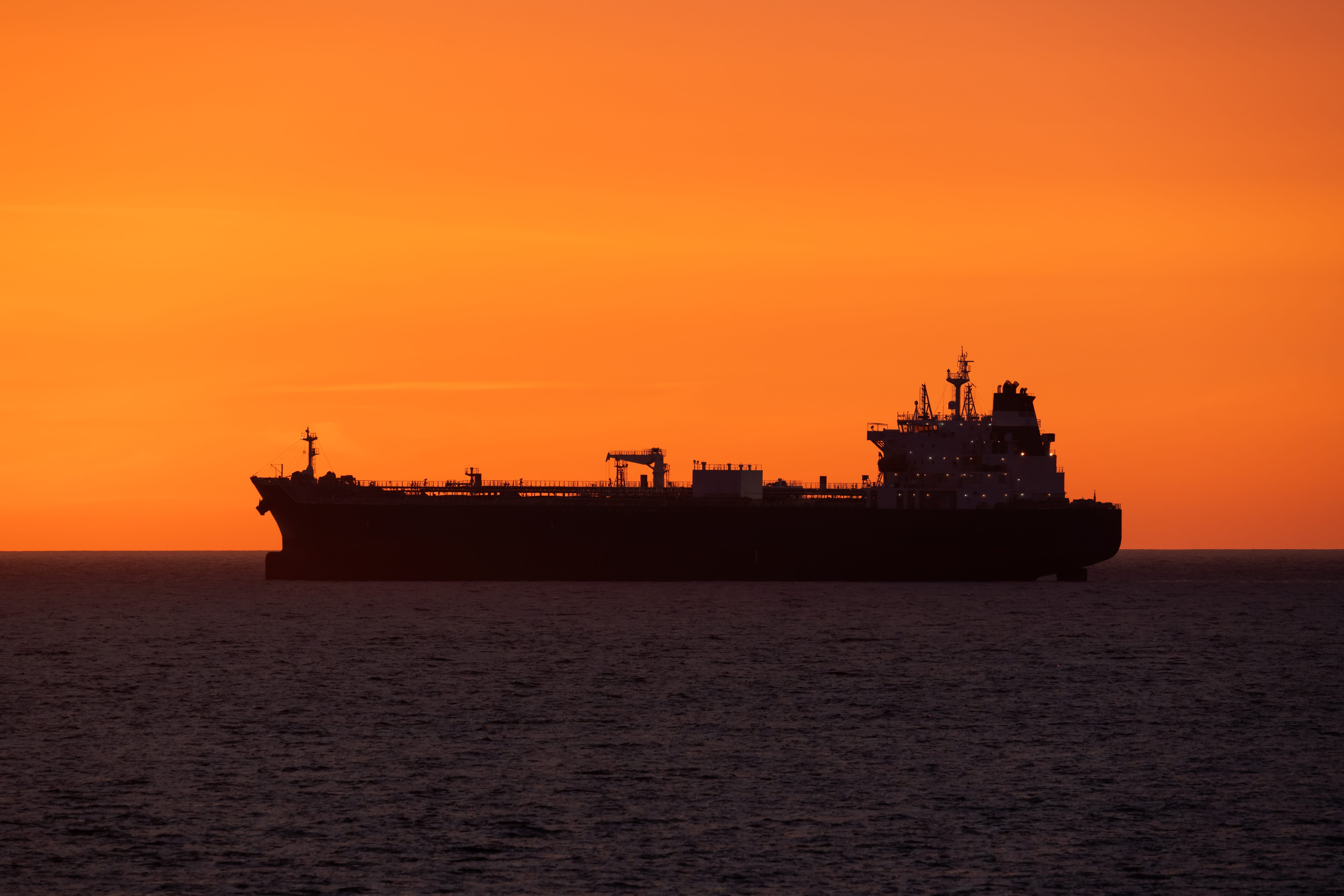
Remember three weeks ago? The Iranian people were going to rise up. There would be a glorious democratic revolution in the streets of Tehran. Those of us who called the action unconstitutional and ill-conceived were going to be made fools of, as the celebrating free Iranian people thanked Israel and the United States for their liberation.
I remember that.
I remember it as I watch the largest liquid natural gas plant in the Gulf go up in flames on social media, with the Strait of Hormuz crisis worsening by the day.
These same people were celebrating the imminent democratic revolution in Caracas — right before Trump installed Delcy Rodríguez as his in situ warlord viceroy. Many in the Venezuelan opposition believed working with Trump and Rubio was their golden ticket. Some of these people I know personally. They abandoned their principles by allying with fascists in Washington out of the deluded belief that they would get democracy in Caracas.
Karma is a bitch.
One should never work with fascists. The fascists always have their own agenda. And it is never yours.
Into this landscape, Emmanuel Macron has proposed a moratorium on strikes targeting civilian infrastructure — energy facilities, water supply, the arteries of modern life. It is a reasonable proposal. It is the kind of proposal that reasonable parties in a reasonable war consider seriously.
This is not a reasonable war.
It is a war begun without a declaration by Congress, without the authorization of the legislature that the Constitution designates as the sole authority to commit this nation to armed conflict — initiated through the manipulation of Article II by a foreign head of state operating under criminal indictment in his own country. I have said this before. I will keep saying it until it is no longer necessary to say it.
The question Macron’s proposal forces us to answer is this: what does the IRGC actually want? And the answer, examined honestly, makes the moratorium proposal appear not as diplomacy, but as a measure of how badly things are going.
⁂
The IRGC’s strategic logic is not difficult to read if you are willing to read it without illusion.
Regime survival is their first principle. They have watched, with great attention, what happens to regimes that show weakness — Gaddafi in the ditch, Saddam on the gallows, the Iranian reformists of 2009 crushed in the streets by the very apparatus the IRGC controls. The lesson they have drawn from each of these episodes is the same lesson: capitulation is death. Never show weakness. Make the cost of attacking you so high, so sustained, so globally distributed, that the attacker’s domestic politics eventually force a retreat.
They have a weapon perfectly suited to this strategy. The Strait of Hormuz is not a bargaining chip. It is not a pressure valve they are threatening to open. It is the weapon. Closing it is the strategy. Every ship that cannot pass, every LNG facility that burns, every point added to the global price of energy is a data point in an argument the IRGC is making to the world: the cost of this war falls on everyone. Not just on America. Not just on Israel. On everyone.
This is the playbook of every successful asymmetric adversary in modern history. The IRGC has studied it carefully. Vietnam taught them that the economically superior power blinks when the domestic cost of continuing exceeds the domestic cost of stopping. Afghanistan confirmed it. Iraq confirmed it again. The question they are asking — the bet they are making — is whether the Strait of Hormuz gives them enough leverage to force that domestic reckoning before the regime collapses.
They are not miscalculating. They are executing.
⁂
Here is the contradiction at the heart of the Trump and Netanyahu regimes’ own argument, and I want to state it with some care because it is devastating.
They have told us, repeatedly and with great conviction, that the Islamic Republic is a death cult. That its leadership is animated by a fundamentalist religious dogmatism that is genuinely willing to die for its beliefs. That this is precisely why the regime is so dangerous, and why it had to be struck. We were told this as justification for the action. We were told this as the reason normal deterrence calculus did not apply.
If this is true — and there is good reason to believe it is, given that the regime murdered an estimated 35,000 of its own protesters in January alone — then the strategic conclusion that follows is the opposite of the one the war’s architects drew. A regime genuinely willing to die for its beliefs does not have a breaking point that airstrikes can reach. It has no incentive to back down. The calculus of Tehran, on the Trump and Netanyahu regimes’ own terms, is infinite escalation.
They have been planning for this for thirty years. They watched what happened to Saddam. They watched what happened to Gaddafi. They drew their conclusions and spent three decades hardening their infrastructure, dispersing their capabilities, and preparing for exactly this scenario. And now, despite the vastly superior military capacity of the United States and Israel, they have demonstrated the ability to inflict catastrophic damage on energy infrastructure across the Gulf region — damage that neither superior airpower nor the most advanced military technology available has been able to prevent.
The regime that was going to collapse under the weight of its own people’s desire for liberation is instead bringing the world economy to its knees. And it knows this. The IRGC understands the energy shock that is beginning to move through the global economy. They understand it is going to get very acute, very fast. And from the perspective of a fundamentalist regime whose leadership has concluded that survival requires making the cost of this war unbearable to the world — not just to America, not just to Israel, but to everyone who heats their home and fills their tank and buys goods that arrive by ship — there is quite a bit of upside in precisely that outcome.
They were told they were a death cult. They appear to have taken it to heart.
⁂
It would be quite convenient for the world if the IRGC agreed to Macron’s moratorium. And it doesn’t hurt to ask.
But a moratorium on infrastructure strikes requires the other side to believe the war ends better for them if they agree. The IRGC does not believe that. Every day the Strait remains closed is a day the global economy absorbs damage that accumulates faster than any military campaign can resolve it. Your grocery bill. Your heating bill. The cost of every good that moves by ship, which is most goods, in most countries, for most people.
Most people have not yet begun to feel what a closed Strait of Hormuz means. They will. The question is whether they will feel it before or after the political class that started this war is held to account for starting it.
The IRGC is betting on after. They may be right.
⁂
It cannot be overstated what a catastrophic mistake this has been — for Trump, for Netanyahu, and for everyone who lives on this planet and participates in the global economy, which is to say everyone.
I shall cut through the niceties and get straight to my point: setting aside that this war is unconstitutional in the first instance — that Trump should already have been impeached and removed for giving the directive without congressional authorization — the consequences of what has been set in motion cannot be contained by any political resolution that arrives now. The supply shock working its way through global energy, transportation, and food supply chains is catastrophic. And there is almost nothing anyone can do to stop it.
Even if the world suddenly had adults running it tomorrow — even if the Strait reopened, the bombing stopped, and a genuine diplomatic settlement were reached by morning — the damage already in motion would continue to metastasize through supply chains for months. The inflationary impacts on consumer staples globally will make the 2021 to 2023 inflation crisis look like a mild inconvenience. That crisis destabilized governments, produced political upheaval across the democratic world, and handed demagogues the opening they needed to seize power. What is coming is not in the same category.
This is going to bring about the end of both regimes. Not because their enemies are strong enough to destroy them — though the accountability is coming — but because the consequences of what they have done cannot be contained within the borders of the countries they govern. When ordinary people in the United States, in Europe, in Asia, in the developing world begin to feel this in their grocery bills, their heating bills, the price of everything that arrives by ship — and they will, very soon — the political reckoning will be of a scale that neither Trump nor Netanyahu has any apparatus to manage.
They have broken something that cannot be quickly fixed. And the people who will pay for it are not them.
⁂
The people who told us the Iranian people would rise up in gratitude have gone quiet. The people who told us Rubio would be the steadying hand, the adult in the room, the man who would ride to the rescue of the suburban soccer moms — they have also gone quiet. The people who told the Venezuelan opposition that allying with fascists in Washington was their golden ticket have perhaps noticed, by now, that the fascists had their own agenda.
The fascists always have their own agenda.
An unconstitutional war, started without the consent of the governed, prosecuted in service of a foreign government’s domestic political crisis, has produced exactly the outcome that those of us who called it unconstitutional and ill-conceived said it would produce. The Strait of Hormuz is closed. The largest LNG facility in the Gulf is burning. The moratorium proposal is on the table.
And the people who told you this was going to be a liberation are very busy right now explaining why it isn’t their fault.
Save these words. They’ll age quite well. Of that I am sure.
Go Deeper into the Circus
On the Morality of the Sober Observer

There is a peculiar pathology that has settled into certain corners of the right-libertarian and classically liberal commentariat, and I want to name it precisely, because imprecision here is its own form of capitulation.

Fact check: As a parliamentary republic, Israel separates the roles of head of state and head of government. As Prime Minister, Benjamin Netanyahu is the head of government. The head of state of Israel is the President, a post currently occupied by Isaac Herzog.
As for the IRGC's strategy, note further that they have been allowing tankers to transit the Strait of Hormuz safely, but only those which have had their cargo paid for in (so far) Chinese yuan. It is possible the EU will negotiate to allow euro-denominated cargo to pass. But Iran's aim with the Strait seems at least in part to be to end the dominance of the US dollar in the global trade in oil, gas, and fertilizer. (What will happen with their Houthi proxy and the Bab-el-Mandab is another matter.)
The IRGC has also been designated a terrorist group and has heard (along with the rest of Iran) Pete Hegseth say "no quarter". They have absolutely no incentive to surrender.
Excellent and true. Like the American bishops, slowly realizing that Trump is bad for humanity, the Church. I have been telling them that for five years. If gas hits 5 bucks a gallon, the maga idiots will spring from the abandoned buildings like zombies, flailing, as they realize the gig is up.