


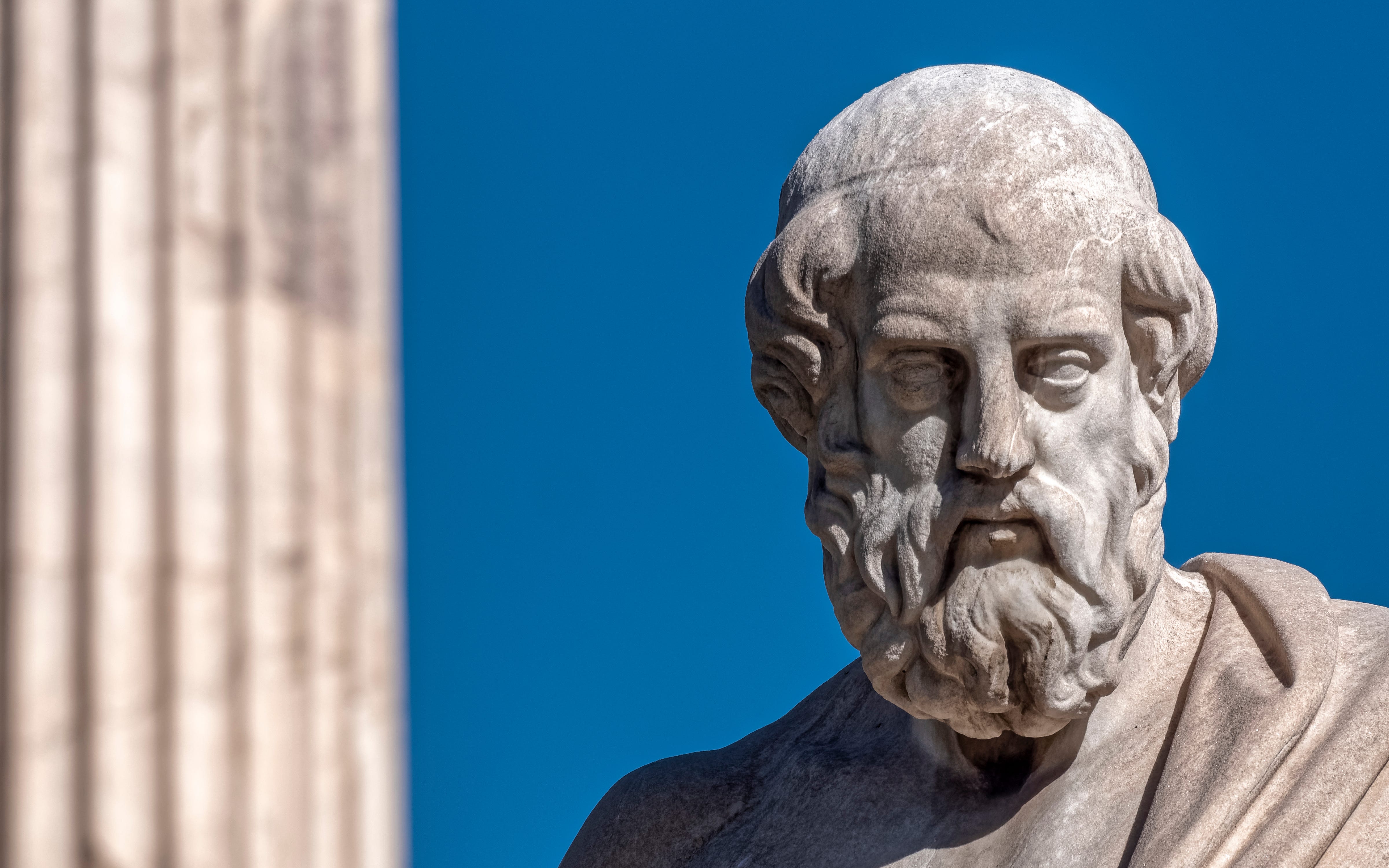
There is a notion, circulating among a certain class of venture capitalists — some of whom have taken to calling themselves capital allocators, dressing their pursuits in the language of virtue — that they are philosopher kings.
It is worth sitting with that claim before we proceed. Not to mock it. To examine it.
The philosopher king, in Plato’s telling, was the person who had ascended from the cave. Who had seen the Form of the Good — not its shadow on the wall, not its reflection in the market, but the thing itself. Who had returned, reluctantly, to govern the city, not because he wanted power, but because he was the only one qualified to wield it without being corrupted by it.
This is the self-conception. This is what is being offered.
Marc Andreessen is a particularly vulgar specimen of this ilk. His effective accelerationist philosophy — e/acc, in the argot of the tech-right — presents itself as a grand vision for human flourishing. Technology will solve everything. The builders must be freed from the constraints of the timid, the regulated, the democratic. Growth is the only morality that scales.
What it actually is, examined carefully, is a Pascal’s Wager.
Pascal’s original wager was this: the potential upside of belief in God is infinite — eternal life — and the potential downside of disbelief, if God exists, is catastrophic. Therefore, regardless of the evidence, bet on God. The genius of the wager, and its fatal flaw, is that it works by making the promised payoff so cosmically large that no present-tense cost of the bet is worth calculating. It is designed to foreclose inquiry. Once you accept the terms, the questions stop.
Andreessen’s wager has precisely this structure. The potential upside of technological acceleration is infinite — post-scarcity, indefinite life extension, abundance beyond any previous human imagining. The potential downside of deceleration, of regulation, of democratic deliberation over the pace and direction of development, is stagnation, poverty, death. Therefore, surrender governance to the people building the future. Do not ask what they are building it for, or for whom. Do not ask whether the distribution of its benefits is just. Do not ask whether the people making these decisions were elected, or accountable, or even correct. The upside is infinite. The bet must be taken.
It cannot be overstated how tragically absurd this is.
The philosopher-king move in Plato requires one thing above all: that the king has actually seen the Good, and not merely convinced himself that he has. The entire apparatus of the Republic — the years of mathematical training, the dialectic, the reluctance of the philosopher to rule — is designed to answer the question of how you tell the difference between a man who has seen the Good and a man who merely wants power and has found a flattering story to tell about it.
Andreessen substitutes “has seen the Form of the Good” with “has a carried interest in the next wave of compute.”
The epistemological claim is identical. The justification for authority is identical. The contempt for democratic deliberation — the impatience with the slow, the unglamorous, the unscalable work of self-governance — is identical. It is Plato for people who did not read Plato. Which would be forgivable, except that they are building political philosophies on the foundation of the misreading.
The network state is where the wager reveals its actual structure.
If effective acceleration were genuinely about abundance for everyone — if the philosopher-king pose were sincere — the political form it produced would be universal. It would strengthen democratic institutions. It would distribute the gains broadly. It would build the public infrastructure that compound growth requires. It would accept the friction of accountability as the price of legitimacy.
Instead it produces exit. Fiefdoms. Opt-in jurisdictions for people with enough capital to opt in. The promise of infinite material comfort turns out, on inspection, to be infinite material comfort for the people who already have material comfort — behind a wall, administered by the people who built the wall, governed by the terms of service rather than the consent of the governed.
Pascal’s wager, at least, promised heaven to everyone.
This one promises it to the cap table.
There is a tragedy underneath the absurdity, and I want to name it precisely.
Andreessen was, once, part of something genuinely democratizing. The browser changed the world. The early internet was, for a moment, a real disruption of the existing order of things — a moment when the tools of production and distribution became available to people who had never had them, when the hierarchy of attention could be circumvented, when a person with nothing but a connection and something to say could find an audience.
That moment was real. The democratic energy of it was real.
What is being sold now is a betrayal of that moment, dressed in its language. The vocabulary of disruption remains. The posture of the rebel remains. What has changed is the direction of the disruption — which is now aimed, with increasing precision, at the democratic institutions that might impose accountability on the people who captured the gains from the first wave.
Effective accelerationism is the ideology you construct when you have accumulated enough power from a democratizing moment that you need a philosophy to justify keeping it. When the regulatory state starts to look less like an obstacle to progress and more like an obstacle to you, specifically.
When the cave starts to look, from the outside, less like ignorance and more like self-government.
The philosopher king was supposed to return to the cave because he understood that power without wisdom is catastrophe. Because he had seen enough of the Good to know that the city could not be left to people who hadn’t.
What we have instead are men who have mistaken their term sheets for enlightenment. Who have looked at their net worth and seen, reflected there, evidence of superior cognition. Who have concluded, from the fact of their wealth, that the rest of us should be grateful for whatever they decide to build next, and in whatever jurisdiction they decide to build it, and under whatever terms they decide to offer.
This is not philosophy. It is rent-seeking dressed in a toga.
And the network state is not a city on a hill. It is a gated community with a podcast.
Never follow people who are afraid of their own natural deaths. For to place the subject of ones own mortality as the primary object of concern within ones own moral outlook, is the true sign of selfishness. You do not want to be in foxholes with such men.
Go Deeper into the Circus
On What We Are Permitted to Notice

The Atlantic has a piece this week about Zohran Mamdani and his views on Israel. I must confess something before we proceed.

Marc has made a career out of mistaking good fortune for wisdom, and now, for a mandate.
SOMETHING IS DYING
When the men gathered in Philadelphia in 1787 at the Constitutional Convention, after signing the Declaration of Independence and during the Revolutionary War, they unanimously agreed on two conditions that needed to be protected in creating this new government.
First, they need to find a way to prevent any emperor, monarch, or other ruler from governing this country. They established a government with three branches instead of just one.
Second, power in the country would rest entirely with the citizens; they should constantly correct and oversee the government through their votes. These men created a separate branch of government where the people's representatives would vote on and supervise the other two branches; they believed this would keep power in the hands of the citizens. These two principles had to be incorporated into the design of this constitution: no rule by kings and government oversight by the citizens.
Today, we have a madman in the White House, billionaires with their money controlling Congress, two Supreme Court justices on their payroll, and they are working to reduce the voting power of citizens, so we are suffering.
Unfortunately, two conditions were beyond their understanding. If they had known about these two conditions when designing this government, they might have changed the map or the ideas in their constitution. Remember, in 1787, the population of the Thirteen Colonies was 4 million, and their western border was the Mississippi River. If they had known that their country would grow to a population of 380 million and cover a land area of 3.8 million square miles, I believe they would have put safeguards in place, such as limiting the country's territory to its current size. They were representatives of the thirteen states, aiming to control the conditions that would give them a sense of limits and control. The future expansion of this country would threaten their way of thinking, so they would limit their own growth by excluding other territories.
The next step beyond their recognition was the future existence of billionaires and MAGA organizations that would control their country with their wealth; they were not royalty or kings, but their power was such that they could force the government into submission. If they had known about this possibility, I think they would have included controlling documents in the Constitution. Even with whatever precautions they implement, we are witnessing our democratic government die, along with our way of life and our values, which are disappearing and being destroyed.
I understand that death is an ongoing process in nature; things die, leading to new growth. We are witnessing the decline of our government, marking the end of a 250-year chapter. We don't have a king ruling us, but other forces are taking control and limiting our citizens' ability to voice their opinions through votes. These changes are happening, and as a result, our government is dying. The compost of dead things can serve as fertilizer for something new.
We know one thing about our enormous, unruly, diverse, and dysfunctional states: how their size contributes to stagnation in our government, where factions clash and wait for their turn to take control and push their ideas. We see this daily and observe the variety of ideas, principles, and rules of social responsibility that have existed throughout our history. This is our compost, and we must grow from it to build a new and better government. We are aware of and accept corruption in every aspect of our lives—our government, our businesses—and consider it inevitable. If we returned control of our government to the smaller states, they could better manage corruption. Smaller states would allow for greater oversight of abuses and corruption. America, we are a land of creative thinkers, and we can use our current circumstances as compost for our future ideas.