


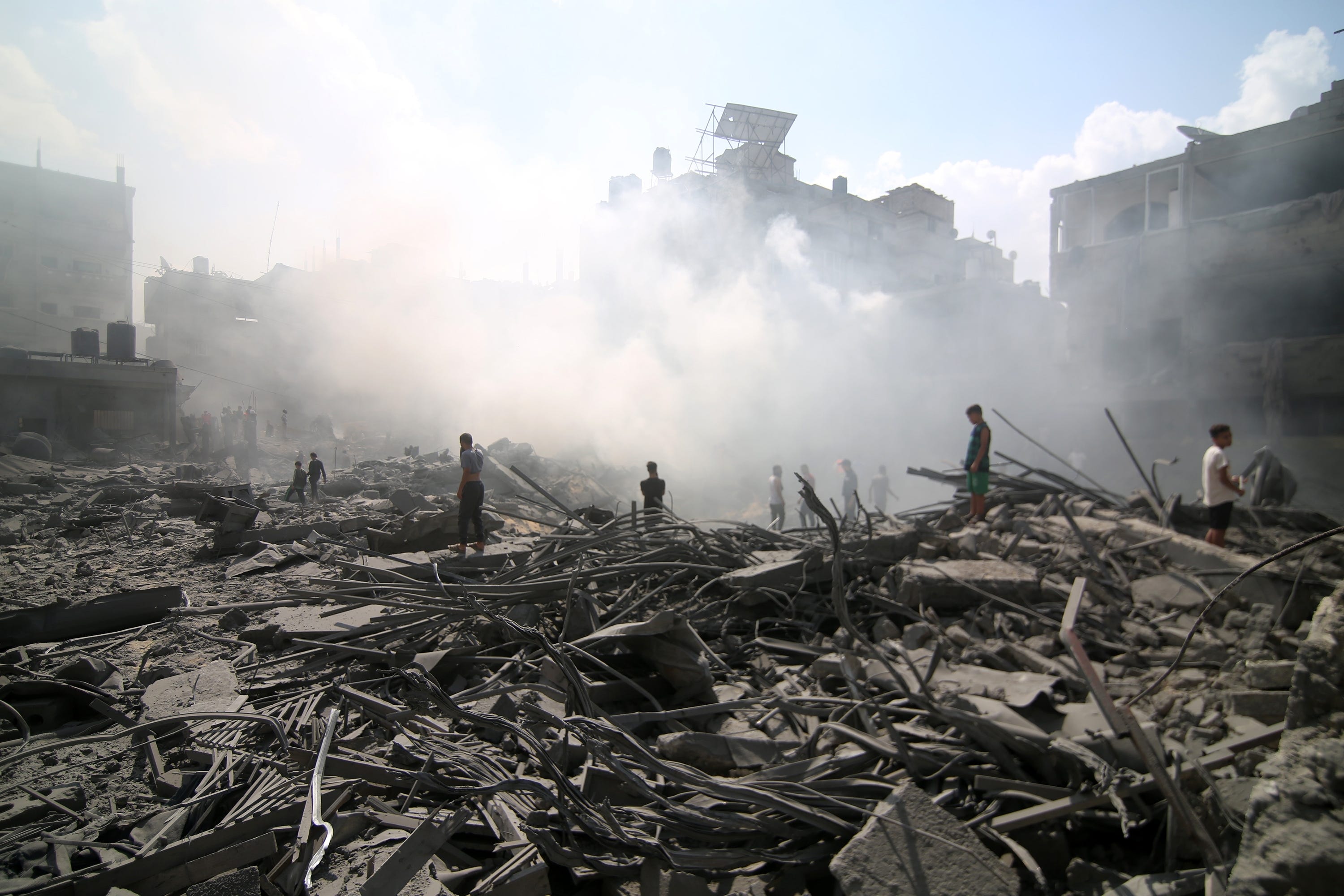
When I tell someone in a comment thread that I’m a coherentist, that I’m working from outside the rationalist tradition, that I have spent the last few years in contemplative practice trying to dismantle the Cartesian and Kantian metaphysics still running underneath my thinking, I am not making a small clarification. I am naming what the disagreement is actually about. The generative discussions I have been having recently about whether the term genocide applies to what is happening in Gaza are not, at root, disagreements about international law or the documentary record or even about the application of the 1948 Convention to a specific contested case. They are disagreements about how concepts work. About what kind of thing a moral concept is. About what we are doing when we apply one to a case. And until the disagreement at that level is named, the surface argument cannot resolve, because the moves available to each side are constrained by metaphysical commitments the participants don’t share and rarely articulate.
Here is mine, and what changes when you take it seriously.
⁂
The rationalist position, as it operates in the kinds of conversations I am having about Gaza, descends from a particular philosophical lineage. Descartes wanted knowledge built up from indubitable foundations. Clear and distinct ideas. A method of doubt that scrapes away everything contestable until what remains is certain. Kant wanted to identify the transcendental conditions of possibility for knowledge — the structures any mind would have to bring to experience for experience to be possible at all. The categories of understanding. The architecture of pure reason. The neat distinction between the noumenal and the phenomenal.
These projects had enormous consequences. They produced the mathematical physics that gave us the modern world. They shaped the scientific method, the discipline of analytic philosophy, the foundations of computer science, the training of every working scientist and engineer alive today. The Cartesian-Kantian inheritance is what allows us to do mathematics, to build machines, to run hypothesis tests, to reason about probability. It is the metaphysical water STEM education swims in.
But the inheritance does something else, too. It tells us that the right way to use a concept is to define it precisely, in necessary and sufficient conditions, before applying it to any case. That clarity is a function of definitional rigor. That moral reasoning, like mathematical reasoning, ought to begin with axioms and proceed by derivation. That if a concept resists this treatment, the concept is defective and should be replaced with a more precise one. That vague language is a bug, not a feature. That disagreement about application is downstream of disagreement about definition, and that the way to resolve substantive disputes is to first resolve definitional ones.
This is the metaphysics the rationalist community has internalized. The LessWrong move of tabooing your words and replacing them with their underlying mechanics. The effective altruist project of operationalizing moral concepts into utility calculations. The Bayesian-everything ambition. The claim that moral truth is, in principle, as accessible to scientific reasoning as physical truth is. Every one of these moves treats concepts the way Descartes treated knowledge: as needing foundational definition before they can be applied, and as deficient to the extent they resist this treatment.

I think this is wrong, and I think the wrongness matters.
It is wrong because concepts do not work the way Descartes and Kant claimed they do. They never have. They never could. The story Descartes told about clear and distinct ideas was, even in his own century, a story rather than a description. The story Kant told about the categories of understanding was an architecture, not a discovery. What concepts do — including the concepts we use most carefully — is something more like what Wittgenstein described in the Philosophical Investigations. They get their meaning from use in language games and shared practices. They cluster features by family resemblance rather than by necessary and sufficient conditions. They are open-textured, which is to say their boundaries are negotiated in application rather than fixed in advance. The concept of a game doesn’t have a precise definition. Nothing in the cluster of activities we call games shares a single necessary feature. Yet we use the concept without difficulty, because what we are doing is recognizing family resemblance and applying it to new cases by analogy and by considered judgment.
Take the word murder. Most people might think that word has an objective definition. But stop and think about murder. Is an accidental killing murder? Most people will say, of course not. So we then move into a deeper normative dimension where we have to split apart the moral categories of accident itself, and find that even here there are normative embeddings. Was it negligence? Was it reasonable to expect an average person to have avoided the mistake? Was the actor in a position where a particular standard of care applied? Did the actor know the risk, and if so, did they accept it? These are not questions that can be answered by reaching for a more precise definition of murder. They are questions that can only be answered by doing intersubjective normative work — by reaching for considered moral judgments about what kinds of conduct count as which kind of killing, refined over centuries of legal practice, refined still in the courtroom every day where the prosecution and defense argue over which features of which killing place it where in the constellation. The concept of murder is shot through with normative embeddings the supposedly-objective definition does not resolve. The supposedly-objective definition is in fact the precipitate of the intersubjective work, not the foundation that grounds it.
And we have entire categories of justified killing. In law and in norms, as well. What are those justifications? Is it justifiable to kill a dictator like Adolph Hitler or Mao Zedong? People disagree. Some may disagree on strictly moral grounds — killing is always wrong. Some may disagree on ideological grounds — Hitler and Zedong had the right ideas, which is certainly not my position, dear reader. Some may disagree on pragmatic grounds — perhaps the person who would have replaced them, say Goebbels in Hitler’s case, could have been just as bad or worse, and provided more perceived legitimacy to the regime by martyring him. My point here is not to spin around endlessly on an infinite regress of questions. It is to show you that the idea of these words having a universal objective meaning is simply not true, by the very fact that all of these normative embeddings are contested among the humans alive on this planet.
If the concept of murder works this way, the concept of genocide certainly does.
This is not a relativist claim. Relativism would mean there are no shared standards at all, that your application of the concept and mine are simply preferences, that anything goes because nothing constrains. That’s not the situation we are in, and it has never been the situation we are in when we are trying to think carefully about moral concepts. The constraints are real. They just aren’t foundational. They are intersubjective. They are built up through practice. They are refined through reflection on cases. They are stabilized by considered moral judgments that converge when reasonable people look closely at what was done.
There is a tradition that has worked carefully on what this looks like. Hume showed that morality is not derivable from reason alone — that the foundational project for ethics fails. But Hume also showed that morality is not arbitrary, because human beings share sentiments and capacities for sympathy that converge under reflection. James showed that meaning is what concepts do in the world — how they connect to other concepts, how they guide action, how they survive contact with cases. Wittgenstein showed that the foundational project for language also fails: meaning emerges from use in shared practices, not from foundational definition. Orwell showed what happens politically when this is forgotten — when language is severed from honest application to cases and made to serve power. Weil showed what it looks like to do moral work as attention, as the patient effort to see what is in front of you rather than what your concepts predispose you to see. Didion showed what it costs when received narratives fail to track the actual. These are very different writers. They converge on a single point: meaning lives in the work of applying concepts honestly to cases, and the work cannot be replaced with a method.
I am, in some combination, all of these things. A coherentist about justification. A pragmatist about meaning. A Humean about morality. A Wittgensteinian about language. A naturalist about mind. A dual-aspect monist about the relation of mind and world. I do not think this is exotic. I think it is, with various local emphases, the working metaphysics of most people who have done careful philosophical work in the last century. What is exotic, looking at the longer history of thought, is the Cartesian-Kantian foundationalism the rationalist community treats as obvious.
⁂
Consider what this means for the concept of genocide.
The word was coined by Raphael Lemkin in 1944. He was a Polish-Jewish lawyer who had been working on the problem of state-sponsored destruction of peoples since the Armenian massacres. He lost most of his family in the Holocaust — forty-nine relatives, including his parents. He gave the world a word for what had been done to them, and he spent the rest of his life campaigning for its codification in international law. The 1948 Convention on the Prevention and Punishment of the Crime of Genocide was the result. Its definition has five prongs. The intent to destroy a national, ethnic, racial, or religious group, as such, in whole or in part, manifested through any of: killing; serious bodily or mental harm; conditions of life calculated to bring about physical destruction; measures intended to prevent births; or forcible transfer of children.
This definition was not produced by a rationalist methodology. It was the outcome of a particular historical reckoning, in a particular political context, with particular compromises baked in — including, famously, the stripping out of Lemkin’s original cultural-genocide language under Soviet insistence. The Soviets had their Russification policies to protect. The definition that emerged was the one that could be ratified, not the one Lemkin would have preferred. Its features were forged by the practice of reckoning with what human beings had done to other human beings in living memory.
And what has happened since is more reckoning. Cambodia, where the Khmer Rouge destruction of urban populations and ethnic minorities was eventually recognized as genocide despite its targeting of political and class categories rather than purely ethnic ones. Rwanda, where the ICTR convicted Hutu Power leaders and established that genocide can occur in less than a year if the destruction is systematic. Bosnia, where the ICTY found that the Srebrenica massacre — roughly eight thousand Bosniak men and boys, killed in days, in one location — constituted genocide. Darfur, where the U.S. State Department determined genocide while other bodies demurred. The Yazidis. The Rohingya. The Uyghurs. Each application has involved intersubjective work. Each has involved scholars and lawyers and political bodies looking at the cluster of features in a case and asking whether the case coheres with what the concept has been used to track.
The cases do not share a single set of necessary and sufficient features. Srebrenica was eight thousand people in a week. The Holocaust was six million over years. Rwanda was eight hundred thousand in a hundred days. Cambodia targeted class and politics as much as ethnicity. The Yazidi case involved a mix of killing, enslavement, and forced conversion. The Uyghur case involves forced sterilization and cultural destruction without mass killing. None of these fit a single template. All of them have been called genocide by considered international judgment.
The intersubjective work has been ongoing for eighty years. It is not the absence of standards. It is the substance of standards. The concept of genocide means what it means because of this body of reckoning, and applying it to new cases is the work of asking whether the features cluster, whether the documentary record converges, whether the case belongs in the constellation.
⁂
So what about Gaza.
I have been writing about this for two years now. I have read more about it than is good for the soul. I have watched the documentary record accumulate. I have read what Israeli officials have said in Hebrew and in English. I have read the South African filing at the International Court of Justice. I have read Omer Bartov’s progression from “no proof that genocide is taking place” in November 2023 to “I know it when I see it” in July 2025. I have read the reporting on the Lavender and Where’s Daddy targeting systems. I have looked at what has been destroyed — the universities, the hospitals, the agricultural land, the water systems, the housing stock — in proportions that do not track tactical military necessity. I have watched the West Bank settlement expansion accelerate in the shadow of the Gaza war, and I have read the public statements of Israeli coalition members who say in plain language what they want. I have read the casualty figures and the dispute about them. I have read the population displacement maps.
The features cluster. The documentary record converges. The case coheres with the constellation of cases the concept has been used to track. Not perfectly — no case ever has — but recognizably. The conduct includes systematic destruction of the conditions of group existence, in proportions and over a duration that point at ends beyond the immediate military objective. The intent record — Galant, Smotrich, Ben-Gvir, on-the-record statements about depopulation and territorial expansion — supplies the kind of evidence the Convention’s intent prong was written to accept. The political context — the coalition’s pre-existing settlement program, the indictment-driven incentives, the rhetorical asymmetry between Hebrew and English statements — supplies the broader frame within which the documentary record sits.
The rationalist response to this is to demand that I produce a precise universal definition of genocide that mechanically generates the Gaza determination from the documentary record alone, without any intersubjective work. The demand is unreasonable, because the determination of every case of genocide ever has involved intersubjective work. The Convention itself emerged from intersubjective work. The case law has been intersubjective work. The scholarly literature is intersubjective work. The demand that this one case, uniquely, be resolved through definitional formalism rather than through the same work that resolved the others is not a demand for rigor. It is a demand that the concept be locked into a form that excludes the case in question.
That is not how concepts work. It has never been how moral concepts work. And it is not how the concept of genocide, specifically, has worked since Lemkin first proposed it.
⁂
There is a deeper political point underneath this, and it is worth saying plainly.
The rationalist demand for precise universal definitions has, over and over again in history, served as a tool of the status quo. The civil rights movement had to fight to apply the concept of discrimination to subtle institutional patterns that did not fit the original precise definition of individual acting on conscious racial animus. The environmental movement had to fight to apply the concept of harm to diffuse long-term consequences that did not fit the precise definition of intentional physical contact causing immediate injury. The labor movement had to fight to apply the concept of coercion to economic conditions that did not fit the precise definition of physical compulsion. The me-too movement had to fight to apply the concept of assault to patterns of professional coercion that did not fit the precise definition of force or threat thereof. In every case, the rationalist move was deployed by defenders of the status quo: you are stretching the concept, that’s not really discrimination, that’s not really harm, that’s not really coercion, that’s not really assault. And in every case, the coherentist move — the features cluster, the cases belong in the same constellation, the considered judgment of reasonable people who look closely at what is happening converges — was the move that allowed moral progress.
This is why the rationalist demand for precise definitions is not a neutral demand for clarity. It is, structurally and historically, a defense of the form moral concepts had at the moment the powerful first wrote them down. It locks the concept against application to cases the original definition did not anticipate. It treats the original precision as a feature of the concept itself rather than as an artifact of the particular historical moment in which the concept was codified. And it uses the rhetoric of rigor to do what is, in effect, conservation work.
I do not begrudge anyone the desire for clarity. I want clarity too. But clarity in the use of moral concepts is achieved through careful coherentist work — through asking whether the features cluster, whether the documentary record converges, whether the case belongs in the constellation — not through retreat to a foundational definition that was never as foundational as it claimed to be.
⁂
This is what I mean when I tell my interlocutors that I am a coherentist, that I am a critic of the rationalist community, that I have been working to dismantle the Cartesian and Kantian metaphysics still running underneath my own thinking. I am not making a small clarification. I am telling you what the disagreement is actually about.
If you and I look at Gaza and at the historical record of genocide cases and at the public statements of Israeli officials and at the documentary record of what has been destroyed, and you tell me that the case fails to satisfy your precise universal definition of genocide, I do not think we are having a disagreement about Gaza. I think we are having a disagreement about what kind of thing a moral concept is.
I am willing to have that disagreement. I think it is the disagreement worth having. But I am not willing to pretend the surface argument can be resolved while the deeper one remains unspoken. The surface argument will continue to circle, with each side accusing the other of definitional manipulation or definitional rigidity, because each side is operating from a different account of what definition is for.
What I am asking, in the end, is something modest. Look at the cases. Look at how the concept has been used. Look at the documentary record of Gaza. Ask whether the features cluster. Ask whether considered moral judgment converges. Ask whether the case belongs in the constellation. That is the work. It is hard work. It involves judgment, not formula. It is open to revision in light of new evidence. It can be done in good faith. Doing it in good faith is different from refusing to do it because the concept fails some standard of precision the concept has never met. It is the only honest way to engage the question. And it is what I am trying to do, here, in public, with everyone who will engage me in good faith.
To give name to patterns of reality in the intersubjective space of meaning between consciousness is, I think, also the site of human agency. It is the point from which you contribute your verse to the song that is shared existence. Eudaimonia is that way.
Go Deeper into the Circus
In Defense of Milton Friedman

This is a defense of Milton Friedman, which the political coalition I have located myself in will find disagreeable. And I want to tell them why they err. The historical-intellectual record of what Friedman actually thought and did has been systematically obscured by two opposed receptions — the contemporary-left demonization that treats him as the architect of authoritarian neoliberalism and the contemporary-libertarian canonization that treats him as the prophetic figure whose every claim is doctrinally settled. Neither reception is accurate. The historical figure was more interesting than either reception allows. The contemporary American left is damaging its own intellectual and coalitional position by accepting the demonization. The contemporary American right is damaging the historical figure by canonizing him in service of contemporary political projects he would not have endorsed. The historical Friedman deserves better from both factions, and the broader political-intellectual culture deserves better than the flattened Friedman both factions have produced.
On the Dance

This is, after all, a philosophy blog and today I gave advice to someone I deeply care about. I gave them the advice because it is what I believe to be true. I want to give everyone the same advice as we move through these troubled waters of our incomprehensible social reality. Because the thing is, you don’t need a map. You only need a compass. A way t…
I truly appreciate the bravery of these explorations. They are quite unusual to witness because of the cost to the explorer. But the briarpatch must be escaped, and most are not Br’er Rabbit; accommodators are the rule. The thicket is philosophy itself. The western tradition fears the forest, where it finds darkness, and reconstructs its alter-environment between the ears.
In the end, the region between the ears benefits most completely from the upwelling of true Nature in the neurons’ dialog with the mycelium. The unspoken but fully communicative mutuality of signaling. The sensibility supporting the cerebrum is vast and behind the mystery of life.
In the end, we are not meant to be tools – that is a rationalist delusion. Rationalists themselves have succumbed to the forest darkness of their own victimhood. Holistic bodily intelligence is another dimension, not to be confused as a solely human property, as it is in fact, more universal, but an unfortunate casualty of human conceits. Nor does holistic bodily intelligence begin at the skin, but in the synapses between mycelium and neuroplasm.
Eudaimonia is the child of deeper sensibilities not fully comprehensible to human “thought”.
Reading this, I can't get Lewis Carroll out of my head:
“When I use a word,’ Humpty Dumpty said in rather a scornful tone, ‘it means just what I choose it to mean — neither more nor less.’
’The question is,’ said Alice, ‘whether you can make words mean so many different things.’
’The question is,’ said Humpty Dumpty, ‘which is to be master — that’s all.”