


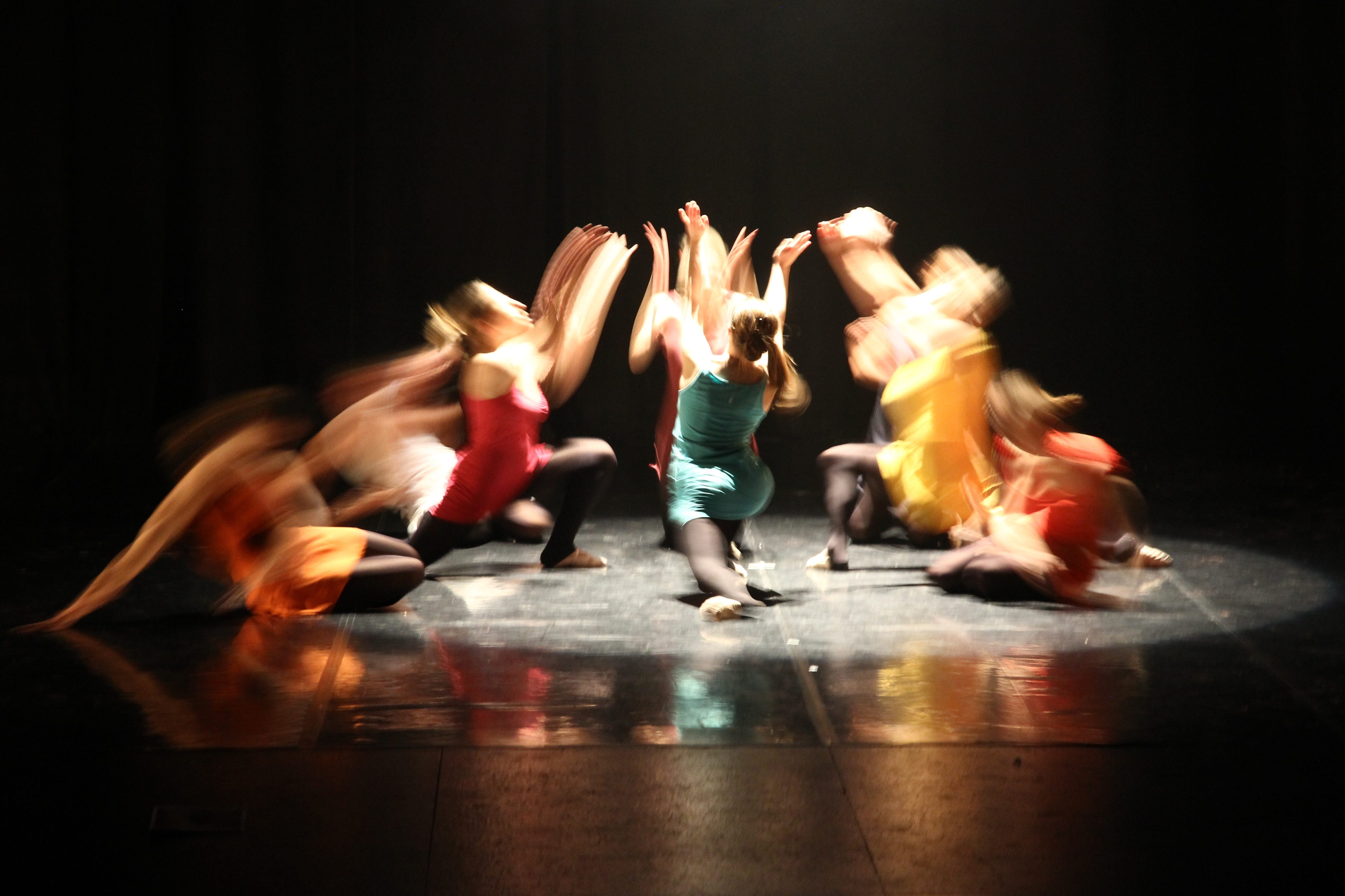
This is, after all, a philosophy blog and today I gave advice to someone I deeply care about. I gave them the advice because it is what I believe to be true. I want to give everyone the same advice as we move through these troubled waters of our incomprehensible social reality. Because the thing is, you don’t need a map. You only need a compass. A way to orient through the storm.
Here is what I said. You should do whatever feels right and feel no guilt about it. Wasting money or not showing up socially are not ethical crimes. That we feel guilt over such things, is us living inside the perceived judgement of others. And this creates unnecessary suffering. Take people as they are. And don’t ask more than they can give. And always keep the door open to love and friendship. That is how to dance.
Let’s slow down and unpack this. Let’s return to the human frame, shall we?
⁂
Think about the last time you felt guilty about something that you knew, on some level, did not actually warrant guilt. The thing you bought that you did not need. The dinner you skipped because you were tired. The friend you did not call back as quickly as the friend would have preferred. The vacation you took when you maybe should have been working. The hour you spent on something that did nothing for anyone but you. The minor preferences and minor failures of availability that ordinary life is made of.
The guilt felt real. The guilt may even have produced the felt sense that some essential failure of character was being documented — that you are not the person you should be, that the demands on you are greater than you can meet, that the world is watching and finding you wanting.
What I want to tell you is that this is mostly not true. Wasting money on something you wanted is not a moral failure. Skipping a social event because you needed to rest is not a moral failure. The guilt you feel over these things is not a sign of moral seriousness. It is a sign of having absorbed a social-judgment infrastructure that has been calibrated, across your whole life, to produce guilt over things that are not actually wrong. The guilt itself serves the interests of the people doing the calibrating, often without their conscious awareness that they are doing the calibrating either.
And here is the cost. Ordinary people, going through ordinary lives, carrying chronic low-grade suffering over decisions that should not have produced suffering at all. The suffering accumulates. It produces the felt sense that life is harder than it needs to be. The felt sense is real. The conclusion the felt sense reaches is wrong. The inadequacy is not in you. The inadequacy is in the apparatus that has been measuring you against standards the apparatus was never authorized to apply.
Where does the apparatus come from?
It comes from other people. Or rather — it comes from what you imagine other people are thinking about you. That we feel guilt over such things, is us living inside the perceived judgement of others. The judgement is perceived rather than actual. The perception is itself the apparatus that produces the suffering.
Other people, in their actual lives, are mostly not thinking about whether you wasted your money or skipped the dinner. They are thinking about their own lives. The judgement you feel from them is largely a model you are running inside your own mind, calibrated to a parental or institutional voice you absorbed decades ago, projected outward onto people who are not actually saying the things the model has you hearing them say. The neighbor you imagine is judging your lawn is mostly thinking about their own life. The colleague you imagine is judging your work output is mostly thinking about their own work output. The family member you imagine is judging your choices is mostly thinking about their own choices. You are mostly alone with the judgment. The judgment is mostly you.
The mechanism is what the Buddhist tradition has been describing for two and a half millennia. Attachment to outcomes that the situation does not actually require attachment to. The suffering is produced by the grasping rather than by the world. The grasping is the obstacle. Releasing the grasping discloses what was already there underneath it.
The Stoic tradition arrives at the same recognition through a different vocabulary. Equanimity is what becomes available when we cease giving over our internal state to circumstances outside our control. The judgement of others is outside our control. Giving them control over our internal state is the move that produces the suffering. Withdrawing that control is the move that ends it.
The existentialist tradition arrives at the same recognition through a third vocabulary. We are radically free. The structures of social-judgment that feel like external constraints are, on close examination, constraints we have absorbed and continue to consent to. The consent can be withdrawn. The withdrawal is what existentialists called authenticity. The authentic person is not the one who follows the inner voice in defiance of the world. The authentic person is the one who has stopped pretending that the projected-judgement of the world is a real external constraint rather than an internal apparatus they can choose to disengage.
The three traditions converge. The Buddhist, the Stoic, and the existentialist are all describing the same underlying recognition through different cultural-philosophical vocabularies. The recognition is what makes the dance possible.
⁂
The dance is what conscious beings do together when they have released the judgment apparatus and received each other as substance. Take people as they are. And don’t ask more than they can give. And always keep the door open to love and friendship.
The first move — take people as they are — is the receiving-the-substance move. People are who they are. They have the capacities they have, the limitations they have, the histories they have, the wounds they have, the gifts they have. The work of being-with-them is not the work of measuring them against an idealized standard. It is the work of receiving the actual texture of their actual presence, in its actual configuration, on whatever day you are encountering them on. The receiving is the foundation of the dance.
The second move — don’t ask more than they can give — is the practical-ethical corollary. The relationship that demands more than the other person can provide is the relationship that produces the same projected-judgement suffering in the other direction. You are now the social-judgment apparatus being applied to them. You are now the source of the chronic low-grade guilt-production that the framework has just diagnosed. Refusing to be that apparatus is the discipline that lets the relationship be substantive rather than instrumental. Receive what they can give. Do not require what they cannot.
The third move — always keep the door open to love and friendship — is the affirmative-ethical move. The release of judgment is not the release of connection. The point of releasing the apparatus that produces suffering is to make available the connection that the apparatus was obstructing. The door open to love and friendship is the operative posture of the conscious being who has done the philosophical-existential work of release. Welcome is the disposition. The welcome is what the world is for.
That is how to dance. Embodied. Rhythmic. Attentive. Welcoming. With other people who are themselves dancing or themselves learning. With music that the dance is the inhabitation of.
⁂
There is a dark dance, of course, for those who want to stop the music.
The dark dance is real. The people who want to stop the music exist. They have material reasons to want it stopped. They have philosophical-political projects that depend on the music being silenced or replaced by something that is not music. The work of confronting the dark dance is also a dance, but a darker one, and not the one the dancer would have chosen.
I am cursed to dance with them. This is the work the Crisis Dispatches in these pages have been doing. The work is not the work I would have chosen if I had been given a choice. The work is the work the moment has required of someone who can see what the dark dancers are trying to do and who has the analytical apparatus to name it and the platform to name it on. The cursing is real. The curse is the acknowledgment that the person who loves the music has obligations toward defending the music against those who would stop it, and that the obligations are themselves a form of dance even though the dance is the one the dancer would have preferred not to do.
The dark dance and the dance are happening in the same world at the same time. The condition of contemporary American political-philosophical life is that we cannot have the dance without also defending the conditions under which the dance is possible. The defense is itself the work of love, even where the work looks like polemic and looks like diagnosis and looks like the harder forms of public-intellectual confrontation. The polemic is for the music. The diagnosis is for the music. The harder forms are the love that the conditions of the moment have forced love into.
The diagnostic work is the clearing of the ground. The music is what plays on the ground that the diagnostic work has cleared.
⁂
The diagnostic work has been treating the dark dance as a political emergency. The political emergency is real. But the dark dance is not only a political phenomenon. The dark dance is a structural feature of what conscious existence is, and the political emergency is one of its expressions. There is something to say here that goes deeper than the political-emergency framing has yet allowed. The dark dance reveals the dialogical nature of, well, nature. We exist in between the void and infinity. In between light and dark. Presence and absence. For anything to have shape, there must be space. For anything to have meaning, there must be the absence of meaning against which the meaning becomes visible. For anything to be heard, there must be the silence the sound moves through.
This is an observation very central to the Eastern philosophical traditions. The yin and yang is the iconographic compression of it — the curve that divides the circle is not a line, the two halves contain the seeds of one another, the boundary is itself the field through which each constitutes the other. Daoism has been articulating this for two and a half millennia. The Tao Te Ching opens on the named and the unnamed, the visible and the invisible, being and non-being arising together as the dialogical structure of what is.
The Western contemplative traditions have circled the same features of our existence through different vocabularies. The apophatic tradition in Christian mysticism — Pseudo-Dionysius, the Cloud of Unknowing, Meister Eckhart, John of the Cross — has been articulating the same dialogical structure through the negative-theology vocabulary. The divine ground can only be approached through what the divine ground is not. Presence requires absence as its condition. The contemplative practice is the practice of holding the dialogical structure in mind rather than collapsing it into one side or the other.
Spinoza is the figure in the Western philosophical tradition who gives this observation its sharpest formal expression, and the figure whose work I treat at length in the book I have been writing on human meaning. The Ethics lays out a metaphysical architecture in which there is one substance — Deus sive Natura, God or Nature — and mind and extension are two aspects of the same underlying reality rather than two separate domains requiring two separate methodologies. The dialogical observation runs through the whole architecture in compressed form as omnis determinatio est negatio — every determination is a negation. For a thing to be this thing, it must not be every other thing. The shape requires the space because the determination requires the negation. The dual-aspect monist framework I have been articulating across these pages descends directly from Spinoza, who articulated three and a half centuries ago the metaphysical ground that the contemporary sciences would eventually arrive at through their own methodologies. Einstein, asked whether he believed in God, named Spinoza specifically — I believe in Spinoza’s God, who reveals himself in the lawful harmony of the world. Einstein was not being evasive. He was naming the philosophical ancestor whose framework the physics he had spent his life working inside had vindicated.
Deus sive Natura is itself a piece of language doing something language can barely do. Spinoza is not asserting that God equals Nature in the way an equation asserts equivalence between two terms. He is naming a middle position — the substance that the religious tradition has been pointing at when it says God and that the scientific tradition has been pointing at when it says Nature — and using the sive construction, or in the sense of that is to say, to mark that the two terms are linguistic attempts to point at the same thing from different angles. The formulation succeeds because it acknowledges its own linguistic inadequacy. The thing being pointed at cannot be fully captured in either of the words being used to point at it. The or holds both pointings together while marking the gap between the words and what the words are reaching toward.
Wittgenstein arrives at the same recognition through a different route. The Tractatus spends most of its length building the picture-theory of language and then closes on whereof one cannot speak, thereof one must be silent. The most important things the Tractatus has been pointing at cannot be said in the language the Tractatus itself is composed in. The later Wittgenstein, in the Philosophical Investigations, walks back from the picture-theory toward language-games and forms of life — meaning is not fixed by correspondence but emerges from use within shared practices. Both Wittgensteins are operating on the dialogical recognition that language is doing something other than the direct-correspondence work the naive theory assumes. The early Wittgenstein names the limit. The late Wittgenstein names the practice that operates within the limit.
The linguistic-anthropological vocabulary, in the Sapir-Whorf tradition, names the same recognition — that language shapes the categories through which experience is organized, and the categories the language makes available are the determinations that mark the negations.
David Hume belongs in this picture and is one of the figures in my intellectual lineage I have spent the most time with in these pages. Most people misunderstand what Hume was doing in his critique of reason. The standard reception treats him as a destructive skeptic who showed what reason cannot do — cannot establish causation, cannot bridge the is-ought gap, cannot ground the continuous self — and then concludes that Hume left philosophy with the wreckage of the rationalist project. This misreads him. Hume’s critique was not nihilistic. It was the demonstration that reason alone is insufficient for the work of being a conscious creature making meaning in a world, and that the work conscious creatures actually do is grounded in something else — habit, sentiment, the passions, the natural sympathies that arise from being embodied social creatures encountering one another. Reason is the slave of the passions is the formulation, and it is usually read as an attack on reason. It is not. Reason is the instrument conscious creatures deploy in service of the meaning-making activity that is prior to reason and that gives reason its purpose.
Hume was a careful observer of what consciousness actually does, and what he saw was that meaning-making is the underlying activity. The is-ought distinction is the marker of where this activity sits in the structure of human life. The ought is not derived from the is through reason. The ought is produced by the meaning-making activity of conscious beings encountering one another and the world. Hume was already pointing in the eighteenth century at the same recognition.
And this is the fulcrum. Meaning-making is what consciousness is. Consciousness is not a passive recipient of an already-meaningful world. Consciousness is the dialogical-structuring activity through which meaning emerges from the substrate of what is. The substrate has the dialogical structure built into it — Spinoza’s single substance with mind and extension as aspects, the yin-and-yang of the determination-and-negation relation, the dialogical structure that runs all the way down to the level of physics. But the meaning is not in the substrate alone. The meaning is what conscious beings make when they encounter the substrate and bring the dialogical-structuring activity to bear on it. The single substance contains the conditions for meaning-making. The meaning-making is what mind does when mind, as one aspect of the substance, takes the substance as its object.
Love is the paradigm case. Love is an existential prisoner’s dilemma. Two conscious beings, each of whom could be hurt by the vulnerability of opening to the other, each of whom would be better off in the narrow self-protective sense by withholding, each of whom faces the prospect of devastating loss if they open and the other does not. The rational-game-theoretic analysis says defect. Protect yourself. Withhold. The rational-game-theoretic analysis is correct on its own terms and is also catastrophically wrong about what conscious beings are for. Love cannot be reasoned into. Love is the act of faith — the constitutive choice to refuse defection and open to the possibility of devastating loss in service of the possibility of mutual flourishing. The opening is faith because the opening is not justified by any rational calculation. The opening is justified by what the opening makes possible, which is everything that makes a conscious life worth living and which cannot exist in the world where everyone defects.
The Kantians keep trying to do the work Hume already showed reason cannot do. Kant’s whole moral-philosophical project was the attempt to derive moral obligation from reason — the categorical imperative as the universal law generated by rational consistency, the kingdom of ends as the community of rational beings each treating others as ends in themselves. The project is beautiful. The project does not deliver, and the failure to deliver is not a failure of effort but of the assumption. Reason cannot generate the moral content the project requires. The Kantian moves always require additional substantive content that reason cannot supply, and the supplement is always smuggled in from the meaning-making activity Hume identified — the sentiments, the natural sympathies, the social-embodied life conscious creatures actually live. The Kantians keep trying because the project is beautiful and because the philosophical infrastructure of modernity has invested heavily in the rationalist promise. They keep despairing of the world because the world keeps refusing to deliver what the rationalist project requires. The world does not deliver because the world is not organized the way the rationalist project assumes. The world is organized around the meaning-making activity of conscious creatures who love through an act of faith that reason cannot ground.
In information theory, information at its most basic level is dialogical. A bit is the resolution of a difference. A signal carries information only against the background of what the signal could have been but is not. Shannon’s foundational insight is that information is not a substance — it is the difference that makes a difference, in Gregory Bateson’s later formulation. The minimal unit of information is the minimal unit of dialogical structure. Zero against one. Presence against absence. Signal against noise. The yin and yang is right there in the physics.
This is why the dance and the dark dance are not accidents of the political moment we happen to live in. They are aspects of the same underlying structure that has always characterized conscious existence in a real world. The dance is the music made visible against the silence. The dark dance is the silence trying to overwhelm the music. The music is real because the silence is real. The silence is what gives the music its shape. The dancers who love the music have to defend it against the silence not because the silence is alien but because the silence is the condition under which the music has the shape that makes it worth defending.
⁂
I would very much like the music to continue. It is my purpose that it does.
The music is the broader category that the dance is the inhabitation of. The music is love. The music is creation. The music is authorship. The music is exploration. The music is experience. The music is the substantive content of conscious life lived in relationship to other conscious life under conditions of mutual flourishing. The music is what conscious beings do when they are not being prevented from doing it. The music is what the human experiment, at its best, has been an attempt to create the conditions for.
The music is not background. The music is not entertainment. The music is not the inessential extra that fills the time between the serious activities of survival and reproduction. The music is what the conscious organism is for. The conscious organism evolved capacities — for relationship, for meaning-making, for creative production, for the inhabitation of beauty and the inhabitation of one another — that have no instrumental justification at the biological-evolutionary level and that are nonetheless what conscious life consists of in its actual texture. The music is the actual texture. The instrumental survival activities are what allow the music. The music is what they are in service of.
This is the move my dual-aspect monist framework lets me make without claiming more than the substance supports. The music is not a metaphor. The music is the experiential aspect of what conscious organisms substantively do, and the substantive doing is what reality consists of at the level where conscious organisms participate in it. The music is real in the same way the body is real. The two are aspects of a single underlying substance, and the substance is what we are. The framework lets the music be received as substantive without requiring any specific religious-metaphysical apparatus to underwrite it. The music is what is there. The receiving is what conscious organisms do.
⁂
The closing move is Hamlet’s. The undiscovered country. Hamlet uses the phrase to name death — the realm from whose bourn no traveler returns. The phrase has carried that funereal weight for four centuries.
The undiscovered country, in the framework I am describing, is not death. The undiscovered country is what opens on the other side of the act of faith. The act of faith is the willingness to step across the threshold the apparatus has been holding us back from. The threshold is where love becomes possible. And love, real love, is the recognition that to love is to accept the possibility of loss. The apparatus has been telling us the possibility of loss is the reason not to cross. The apparatus is wrong. The possibility of loss is what makes the crossing meaningful. The crossing is what love is.
And on the other side of the crossing — the great frontier. The country is undiscovered because it is being discovered by each conscious being who crosses, in the specific configuration of their own life, with the specific people their own life has put in front of them. The country is yours. The country is mine. The country is what every conscious being who has done the work of release encounters when they stand on the other side of the apparatus and look at what is actually there.
That you are here. That is the first fact. You are here — alive, conscious, capable of choosing. Walt Whitman, in O Me! O Life!, named the answer to the question of what to do with the fact of being here. That the powerful play goes on, and you may contribute a verse. You may contribute a verse. The play does not require your verse. The play has been going on for as long as conscious beings have been conscious of one another. But the play is also not complete without your verse, because the verses are what the play is made of, and the play is what we are all making together, each from our own position, each in our own voice, each for the duration of the time we have to make it.
The play is the music. The verses are the dances. The angels are singing. They have been singing the whole time. If you will allow me the word for what every tradition has reached for and called by different names — the music has been playing the whole time. The work of release is the work of finally being able to hear them.
Can you hear them? Can you hear the music underneath the apparatus that has been telling you the music is not real? Can you hear the verse that is yours to contribute? Can you hear the dance the conscious beings around you have been doing, in their own configurations, with their own people, in the time they have been given?
The undiscovered country is where the song is. The song has been waiting for you. The song is what your life will have been, once you have done the work of release and stepped across the threshold and begun to sing.
⁂
If you have been reading these pages for the political-philosophical diagnostic work — for the Crisis Dispatches, for the engagement with the authoritarian project, for the costume-versus-substance analysis of the contemporary American political infrastructure — I want you to know that the diagnostic work is in service of this. The music is what we are defending. The dance is what the defense is for. The undiscovered country is what waits for the polity if we can hold the conditions under which the dance continues.
The current political emergency is real and the dark dance it has forced is real and the cursing of the people who can see what is happening and have to confront it is real. But underneath the emergency, underneath the dark dance, underneath the cursing, is the music. The music has not stopped, and the music is what the work is for.
I would like the music to continue. It is my purpose that it does. It is the purpose of every conscious being who has done the work of release and arrived at the welcome that the release makes available.
That is how to dance. And it is why we dance.
Go Deeper into the Circus
The Positive Case For Liberalsm

Liberal intellectuals have become experts at arguing what they are against as reactionaries have forced them into the defensive stance. They have become very rusty at making the positive case.
For Frodo

I look at the Eastern tradition, and I say: I think you are right about the nature of this existence.
For the first time in a very long time I was reminded of Tolkien's Ainulindalë, The Music of the Ainur.
WISDOM YOU SPEAK