



“Life is like a box of chocolates.” Well, Forrest, let’s take a look at what’s inside. In this beautiful country, on this vast landmass, surrounded by oceans and orbiting a star among billions in a vast universe.
What Winston Groom gave us in Forrest Gump—and what Robert Zemeckis brought to the screen with that masterfully curated soundtrack of America’s integrated poets—wasn’t a caricature of cognitive disability. It was something far more radical: a way to experience America from the inside, through eyes uncorrupted by the interpretive frameworks that keep us at a distance from immediate moral reality.
The contemporary left dismisses Forrest as offensive, as derogatory toward the cognitively handicapped. But this cynical reading reveals more about our moment than about Groom’s project. We’ve become so sophisticated in our analysis of power, so trained to see everything through frameworks of oppression and privilege, that we’ve lost the ability to recognize innocence as a form of wisdom. We can no longer imagine that someone who doesn’t calculate might actually see more clearly than those who do.
Because Forrest doesn’t calculate. He responds. Lieutenant Dan needs him, so he carries him out of the jungle. He promised Bubba, so he builds the shrimp business. Jenny needs love without conditions, so he loves her without conditions. There’s no gap between ought and is for Forrest—not because he can’t comprehend the gap, but because he hasn’t learned to separate them.
And this isn’t a deficit. It’s a kind of moral clarity that the rest of us have sacrificed in the name of sophistication.
Consider the world Forrest moves through. Vietnam. Watergate. The counterculture. Civil rights. The sexual revolution. These are the defining upheavals of 20th century America—moments when the nation was tearing itself apart trying to figure out what it believed, what it valued, who it wanted to be.
And here’s where the genius of that soundtrack comes in. Dylan asking “How many times must the cannonballs fly / Before they’re forever banned?” CCR warning “It ain’t me, it ain’t me, I ain’t no fortunate son.” The Doors proclaiming “The future’s uncertain and the end is always near.” Simon & Garfunkel wondering where Mrs. Robinson’s saviors have gone. These are America’s poets processing the chaos, trying to interpret, trying to make sense, trying to position themselves in relation to power and meaning and history.
Sophisticated stuff. Beautiful stuff. Necessary stuff.
And Forrest is at Woodstock looking for Jenny because he loves her.
He’s in Vietnam not because he’s analyzed the geopolitics of containment theory or the moral calculus of intervention—he’s there because he was drafted, and while he’s there he does what seems right: he saves his friends. He meets presidents not as political actors to be assessed but as people who offer him food and ask him questions. He runs across America not because he’s searching for meaning or making a statement about consumer culture—he runs because he feels like it, and then stops when he doesn’t anymore.
The tension between the soundtrack’s sophisticated cultural analysis and Forrest’s innocent response to the same events is the whole point. The music represents our collective attempt to interpret—all that angst, rebellion, questioning, ideological positioning. Forrest just is.
Now, the cynical left reading would have you believe this is all somehow condescending—that portraying someone who doesn’t engage in sophisticated cultural analysis as succeeding where the calculators fail is inherently derogatory. But this objection actually proves the point. It reveals that we’ve become so captured by the framework of interpretation-as-virtue that we can’t conceive of innocence as anything other than deficit.
But what if innocence isn’t naivete? What if immediate moral response is actually superior to sophisticated calculation?

This is where we need to talk about what Forrest actually represents philosophically. He’s not stupid. He’s operating in a different dimension entirely. While everyone around him is trying to derive “ought” from “is”—trying to figure out what they should do based on complex analysis of what is—Forrest lives primarily in the ought dimension. He responds to immediate moral reality without the mediating step of calculation.
David Hume tried to warn us about this three hundred years ago. You cannot derive ought from is. No amount of sophisticated analysis of facts will tell you what values to hold. Reason, as Hume said, is and ought only to be the slave of the passions—instrumental rationality cannot generate its own ends.
Forrest embodies this truth. He hasn’t learned to separate moral intuition from action. And crucially—this isn’t because he can’t learn it. It’s because he hasn’t been corrupted by the belief that calculation should come first.
Compare this to where we are now. Contemporary America—particularly Silicon Valley, particularly the tech oligarchy that fancies itself our leadership class—operates from the opposite premise. They believe that sufficient calculation generates values. That optimization is ethics. That if you can model it, measure it, scale it, maximize it, you’ve done the moral work.
A reader named Glenn Eychaner put this perfectly in a comment today: “Omni Consumer Products - Weyland Yutani - Buy N Large - Umbrella Corporation - Cyberdyne - you can’t say we weren’t warned. Repeatedly.”
He’s right. These aren’t just random fictional villains—they’re our culture’s repeated attempts to warn us about what happens when instrumental rationality escapes its proper boundaries. When brilliant optimization serves unquestioned ends.
Every single one follows the same pattern. They’re not stupid corporations. They calculate perfectly. OCP’s urban renewal plans for Detroit are economically rational. Weyland-Yutani’s specimen retrieval makes perfect sense from a research standpoint. Buy N Large’s consumerist optimization is just taking market logic to its conclusion. Umbrella’s bioweapons research follows naturally from pharmaceutical R&D. Cyberdyne’s AI development is the obvious next step in computing.
They’re smart in exactly the wrong dimension. They can calculate everything except what’s worth calculating for.
And here’s the dark joke: Silicon Valley reads these stories and sees heroes. They admire the ambition, the scale, the willingness to ignore conventional constraints. “Move fast and break things” isn’t a cautionary tale to them—it’s an operating principle.
Forrest Gump is the antidote we didn’t know we needed.

Where the fictional mega-corps represent infinite instrumental rationality with no normative anchor, Forrest represents pure normative intuition moving through a world he doesn’t need to fully comprehend intellectually in order to respond to morally.
He builds a shrimp empire not because he ran the market analysis and identified an opportunity for vertical integration in the Gulf Coast seafood industry. He does it because he promised Bubba. When the business succeeds beyond any rational expectation, he doesn’t optimize further—he gives most of it away. To Bubba’s family, because that’s what Bubba would have wanted. The instrumental rationalists watching this see inefficiency, see money left on the table, see someone who doesn’t understand wealth maximization.
They’re completely missing the point.
Forrest understands something they’ve forgotten: instrumental rationality is a tool, not a master. You use calculation to serve ends you’ve chosen on other grounds. The moment you let optimization become your ethics, you’ve already lost the plot. You’ve become Cyberdyne Systems, so focused on whether you can build Skynet that you never seriously grapple with whether you should.
Forrest pays fierce attention to what’s in front of him: Lieutenant Dan is wounded, Jenny is hurting, little Forrest needs a father. And he responds from moral intuition that hasn’t been corrupted by the need to calculate first, to optimize, to figure out what’s in it for him.
The sophisticates sneer at this. They’ve been trained to see everything through power dynamics, to question every motive, to treat innocence itself as suspect.
But here’s what they miss: Forrest’s innocence isn’t ignorance. It’s the refusal to let complexity obscure moral clarity. It’s the ability to see that Lieutenant Dan’s anger and self-destruction aren’t problems to be optimized around, but a person to be loved through darkness. That Jenny’s damage and poor choices don’t make her unworthy of unconditional love. That his son deserves a father who shows up, fully present, without reservation.
These are not simple calculations. They’re actually the hardest things in the world for sophisticated people to do. Because sophistication teaches us to hedge, to calculate risk, to protect ourselves, to question motives—including our own. It teaches us that unconditional love is naive, that loyalty without reciprocity is foolish, that showing up without guarantees is weakness.
Forrest proves otherwise. And this terrifies the sophisticated, because it threatens their entire framework.
The cultural left’s insistence that Forrest Gump is derogatory toward the cognitively disabled is really a confession: they cannot imagine that someone who doesn’t engage in their forms of critical analysis could possibly be wise. They need Forrest to be either tragic or inspirational-despite-limitations. They cannot accept him as he is: someone operating from a different kind of intelligence entirely, one that might actually be superior for navigating the moral dimension of human life.
This is America’s problem right now. We’ve become so sophisticated that we’ve lost the ability to respond morally without running everything through ideological calculation first. We can’t just see injustice and oppose it—we have to determine whether it fits our framework, whether the victim is sufficiently virtuous, whether our opposition will be misinterpreted, whether we’re centering the right voices.
Forrest just sees someone who needs help and helps them.
And this is why we need to return to innocence—not as naivete, but as moral clarity uncorrupted by sophistication’s paralyzing effects.
Look at what happens when every moral response must first pass through layers of ideological analysis. We see injustice but pause to wonder: am I the right person to speak? Will my statement be read as performative? Does this fit the approved narrative? Have I checked all the intersectional boxes? Is my outrage properly calibrated? We’ve built such elaborate machinery for thinking about moral response that we’ve lost the ability to simply respond.
Meanwhile, the people who don’t give a damn about any of this machinery—the Weyland-Yutanis of our world, the tech oligarchs pursuing exit, the authoritarians consolidating power—they just act. They optimize ruthlessly for their ends while we’re still workshopping the perfect critique.
This asymmetry is killing us.
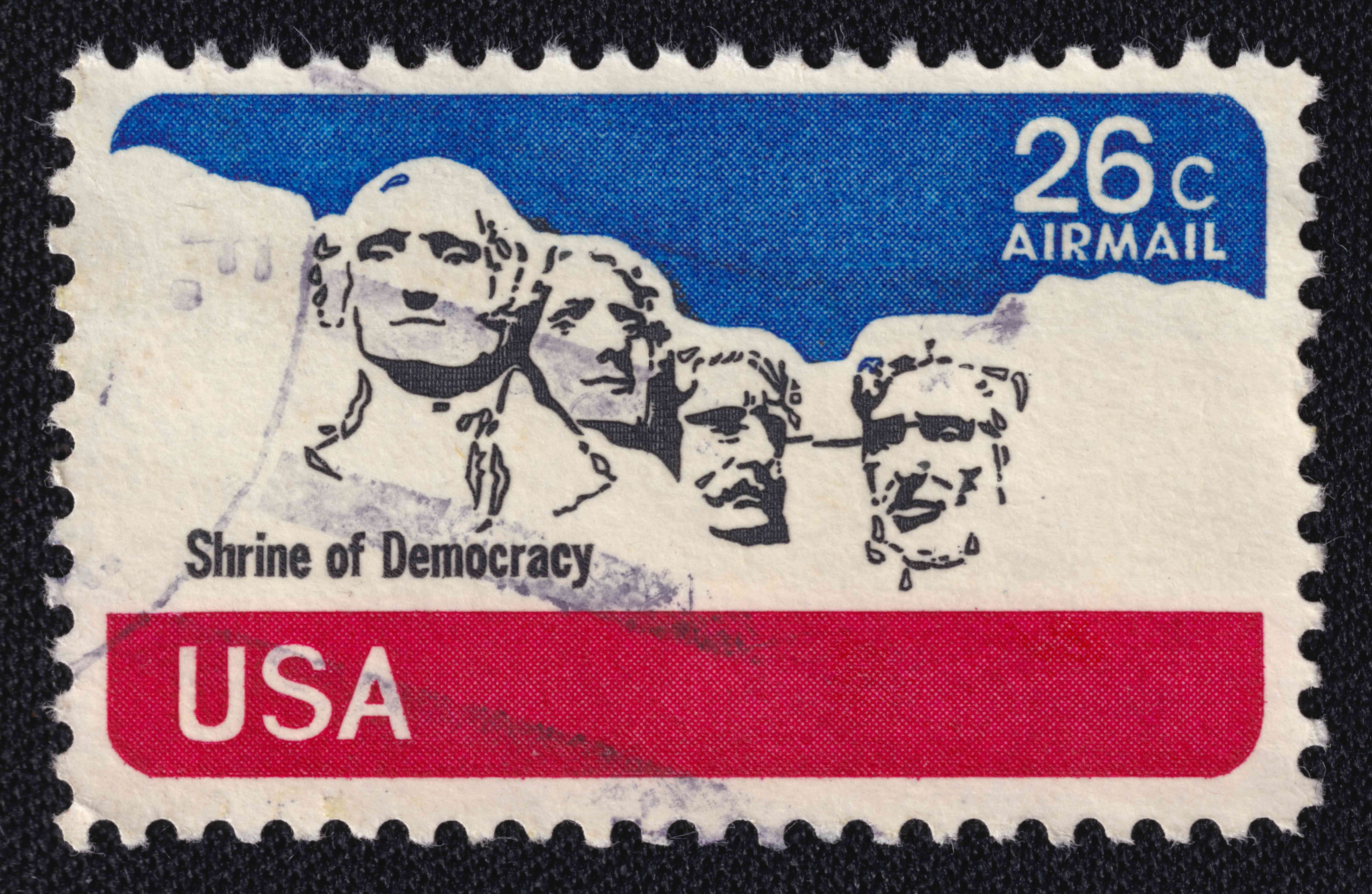
Now listen to Jefferson Airplane’s “Volunteers” on that soundtrack: “We are volunteers of America.” It’s 1969, the counterculture’s anthem of radical commitment. But it’s also echoing—and transforming—John F. Kennedy’s inaugural call eight years earlier: “Ask not what your country can do for you—ask what you can do for your country.”
Kennedy was calling for service within the establishment. The counterculture was calling for service against it. But both were calling for voluntary commitment to something larger than self-interest. Both were insisting that calculation isn’t everything, that there are things worth giving yourself to without first running the cost-benefit analysis.
And Forrest? Forrest is the purest embodiment of both. He’s literally a volunteer in every sense—not because he’s positioned himself ideologically with either Kennedy’s Cold War liberalism or the counterculture’s revolution, but because he hasn’t learned to treat service itself as something requiring justification.
So forgive yourselves, America. You were deceived by some really bad people among us. And it’s time they faced justice for lying to us and stealing from us.
Because here’s what innocence doesn’t mean: it doesn’t mean passivity. It doesn’t mean letting bad actors run roughshod over what matters. Forrest loved Jenny unconditionally—but he also protected her from those who would hurt her. He stayed loyal to Lieutenant Dan through everything—but he didn’t pretend Dan’s self-destruction was fine. He built a business to honor Bubba—and then used it to take care of Bubba’s family.
Innocence with boundaries. Moral clarity with action.
The sophisticated cynics will tell you that anyone claiming we’ve been deceived is being naive, that everything is complex and ambiguous, that there are no good guys and bad guys. But that’s the paralysis talking. That’s what happens when you’ve been trained to question everything except the questioning itself.
Sometimes things really are simple. Sometimes people really do lie for profit and power. Sometimes the mega-corps really are Weyland-Yutani in waiting, and the oligarchs really are pursuing exit while Rome burns, and the authoritarian consolidation really is happening.
And sometimes what’s needed isn’t more sophisticated analysis. It’s the moral clarity to see what’s happening and the courage to respond.
Forrest would understand this immediately.
And so here we are. All of us are standing on the ground. No longer falling. Standing. Now we take a step. One foot in front of the other. Towards the direction of a more perfect union. That is our inheritance. That is our destiny. That is what many died for and believed in. We choose this great compact with our flag, not because we know we will win. But because the alternative—giving up, going to sleep, surrendering—is unthinkable. Literally.

Ah yes. The circus...
You’ve been in the ring long enough to know how this works. The clamor, the spectacle, the high-wire act of meaning-making in a world that wants to pull everything apart. You know the flood is always rising, that the center is always under siege, that entropy never sleeps. But here, in this fleeting moment of stillness—between the trapeze swings, beneath the roar of the crowd—this, my Note from the Circus.
Because love, too, is a balancing act. A dance with gravity, a defiance of the fall. It is the wire beneath your feet, the tension that holds, the invisible force that makes coherence possible in a world that should, by all accounts, collapse into noise.
And if there is a message scrawled on this note, a whisper passed between acts, it is this:
Hold the center. Push back the flood. Keep walking the wire.
This is the Grand Praxis. This is the work of being human. This is the path that was established at the beginning of all things and remains open to us now, in this moment, as we face the challenges of our time not with despair or denial but with the courage to create.
Our soul is meaning. Constructed, such as it is. And in the constructing, we participate in the rhythm established by the first movement—the only movement—that makes all existence possible.
In the beginning, there was tension. And in every moment of creation, the beginning happens again.
Merry Christmas.
At the still point of the turning world. Neither flesh nor fleshless;
Neither from nor towards; at the still point, there the dance is,
But neither arrest nor movement. And do not call it fixity,
Where past and future are gathered. Neither movement from nor towards,
Neither ascent nor decline. Except for the point, the still point,
There would be no dance, and there is only the dance.
-TS Eliot, Burnt Norton, Four Quartets
I think the dance is love. And innocence is love.
Merry Christmas
Thank you for you wonderful Christmas Essay. Truly the best gift I will get! Merry Christmas🥰