


Let’s go on a journey, shall we?
God builds the universe. Stands outside it. Knows everything about it from above — every particle, every trajectory, every outcome. The view from nowhere perfected. Omniscience. And it is the loneliest position imaginable, because knowing everything from outside means experiencing nothing from inside. God has all the is and none of the ought. He can describe everything and feel nothing. He is trapped on the wrong side of his own guillotine.
So he visits. He has to. Not out of mercy — out of need. The creation is generating something he cannot access from above: what it is like to be in it. Experience. The inside of things. The universe he built is producing consciousness, and consciousness is the one thing omniscience cannot replicate, because it requires standing somewhere. Requires finitude. Requires not seeing everything so that seeing something can mean anything at all.
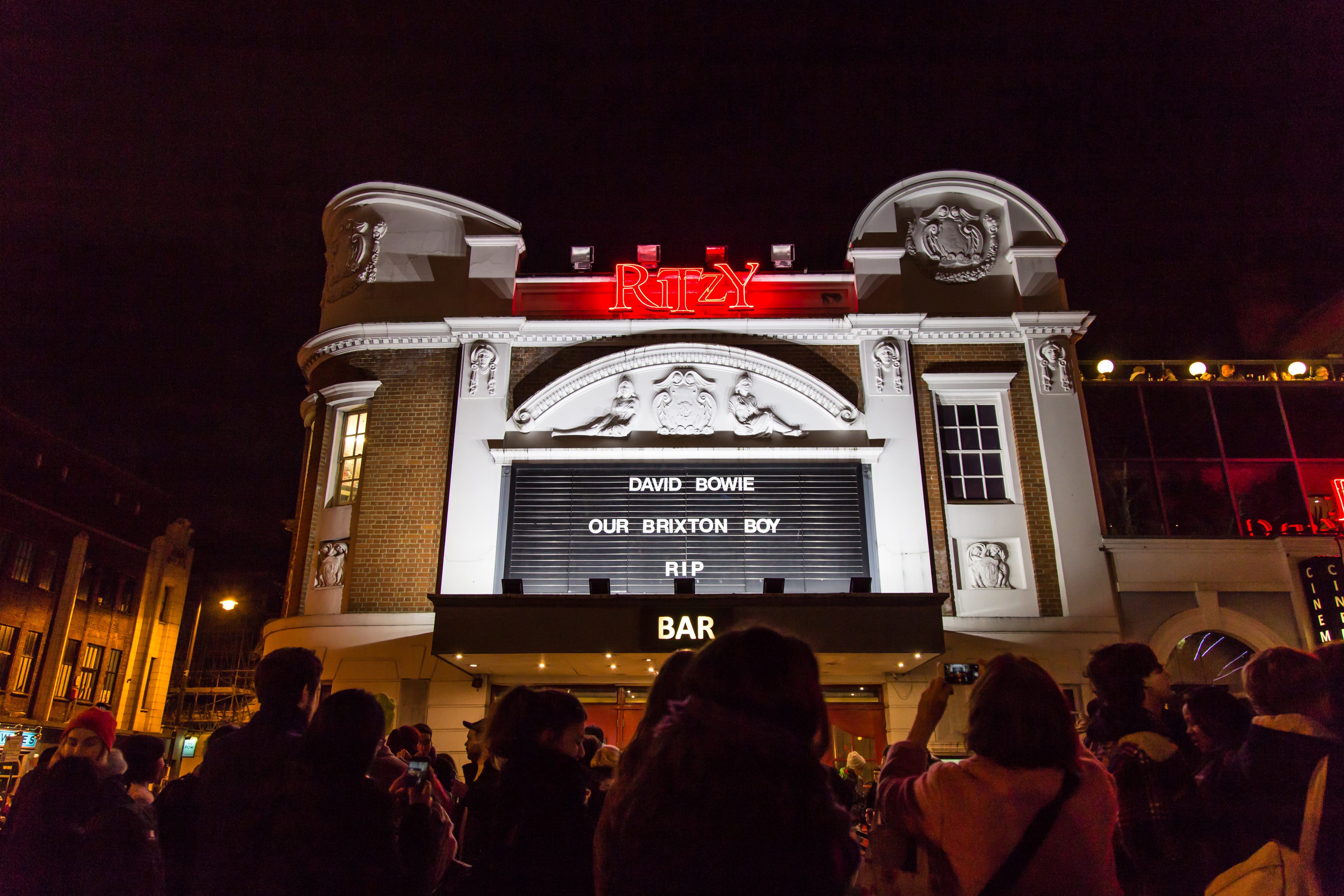
He chooses Brixton, 1947. He chooses a body that will see differently from each eye — one pupil permanently dilated from a teenage fight. Already the incarnation is marked: God will not see symmetrically. Will not see from nowhere. Will see from a body that is visibly, irreversibly particular.
And then the personas begin. And they are not disguises. They are what the theologians should have called incarnations all along. Ziggy Stardust is God trying to be a messiah and discovering that creation eats its messiahs alive. The audience doesn’t want salvation. They want the destruction of the thing they worship. Ziggy gets torn apart. God learns something omniscience could never teach him: what it feels like to be consumed by the things you made.
The Thin White Duke is God trying to go back. Trying to return to detachment — cocaine, fascist aesthetics, the cold posture of pure observation. It’s God attempting the view from nowhere in a human body, and it nearly kills him. Station to Station is the sound of transcendence failing. The duke is elegant and empty and it almost ends everything. God learns you cannot be disembodied once you’ve been embodied. The knowledge of what it’s like doesn’t wash out.
Major Tom is the purest image. An astronaut — the human who most literally achieves the view from above — drifting away from the earth, losing contact, floating in a tin can. It is the view from nowhere as death. Tell my wife I love her very much. She knows. From far enough above, love is a fact to be observed. Only from down here is it something you can lose.
And then decades pass. The personas accumulate. Each one is God trying another somewhere and learning what the universe looks like from there. Berlin is God in exile. Let’s Dance is God trying to be joyful and ordinary. Outside is God accepting that he’s permanently strange in his own creation. Each one genuine. Each one partial. Each one abandoned not because it was false but because it was finished — because God learned what could be learned from standing there, and needed to stand somewhere else to learn more.
And then: New York, late nineties. The personas are over. He is just David now. Walking in his own body through midtown Manhattan. And Reznor appears.
This is the theological center of it.
Reznor’s entire body of work is creation screaming at God. “Terrible Lie” — you made me, and this is what it feels like, and you owe me an answer. “Heresy” — your heaven is a lie, your love was never real. The Downward Spiral is creation in free fall, looking up, saying: do you see this? Do you see what you made? Do you feel what this feels like from the inside?
And in the video, God has to stand there and take it.
Reznor keeps appearing. Keeps pulling the gun. Keeps being American — keeps being violent, casual, armed, smiling. He is every American. He is creation showing God the texture of what it actually is from ground level. Not the elegant arc of history. Not the trajectory of civilizations. The guy with the gun on the sidewalk. The randomness. The menace. The fact that being embodied means someone can walk up to you and end it and there is no omniscience that protects you.
Bowie — God — is afraid. Not performing fear. Experiencing it. Because he has been here long enough now, has been embodied long enough, has shed enough personas and accumulated enough experience of standing somewhere, that the fear is real. He cannot retreat to the view from nowhere. He is in it. The creation is not a diagram. It is a man with a gun in midtown and the knowledge that this body can be destroyed.
And why American? Why does God become an American?
Because America is the place that most aggressively claims the view from nowhere while being the most brutally, violently particular. American exceptionalism is the view from nowhere applied to nationhood — we are not a country with interests, we are the universal. We are not an empire, we are the free world. We are not particular, we are the default. And underneath that claim: the gun. Always the gun. The most heavily armed, most particular, most local violence on earth, dressed in the language of universal values.
God becomes American because it is the final confrontation with his own pretense. He built a universe and watched it from outside and called that love. America built a country and surveilled it from above and called that freedom. Same structure. Same lie. The view from nowhere is the American heresy — the belief that you can wield power without standing anywhere, make choices without commitments, shape the world while claiming only to observe it.
Reznor forces God to see this. Not from above. From the sidewalk. With a gun in the frame. And God is afraid, and the fear is earned, because it is the first honest emotion available to an omniscient being who has finally, irreversibly, accepted the condition of finitude.
God crosses his own guillotine. Moves from is to ought. And discovers that the ought — the fear, the commitment, the love, the standing somewhere and caring what happens from there — is the only part of the creation that was ever real. Omniscience was the empty thing. The view from nowhere was God’s own prison. And Bowie, walking afraid through New York with Reznor behind him, is what liberation looks like from the inside.
He becomes one of us because one of us is what there is to be.
Now, if you’re considering whether I’m being literal or metaphorical, the answer is yes.
⁂
So. God sits down across from you. He has been here a while now. He has been Ziggy and the Duke and Major Tom and a man afraid in Manhattan. He has tried the view from above and nearly died of it. He has tried every somewhere there is to try. And you ask him: what did you learn?
He says:
The seas ahead are stormy. The ship on which we sail may take a beating. Some will not make the crossing. They will suffer tragedies. And we will work towards a more perfect ship, that minimizes suffering. And we’ll work towards a more perfect union. And through that vision of the future, a capital-T truth, that we’ve always known — but apparently need reminding of: there never was a destination. It was only ever a journey. And the magic of existence is you get to steer the ship.
You ask him: what is the meaning of life?
He says: steer the ship, because you can. And if you love each other, because you must.
There is your final revelation. God has nothing more to say.
He gets up from the table, smiles gently, says “you’re welcome.” Calls an Uber and disappears into the city streets.
Go Deeper into the Circus
The Crisis, No. 12

I loved George Carlin growing up. I discovered him in my father’s vinyl album collection. It was his fourth stand-up album, Class Clown. Track one, “Seven Words You Can Never Say on Television.” It is a monologue I must have listened to dozens of times as a child. With my friends. It was very naughty and inappropriate for children.
The Crisis, No. 13

Bari Weiss told the staff at CBS News that the network must “reflect more of the political friction that animates our national conversation.” She wants to “widen the aperture of the stories we tell and the voices we hear from.”
BlackStar a great farewell
Bowie! Not Clapton