


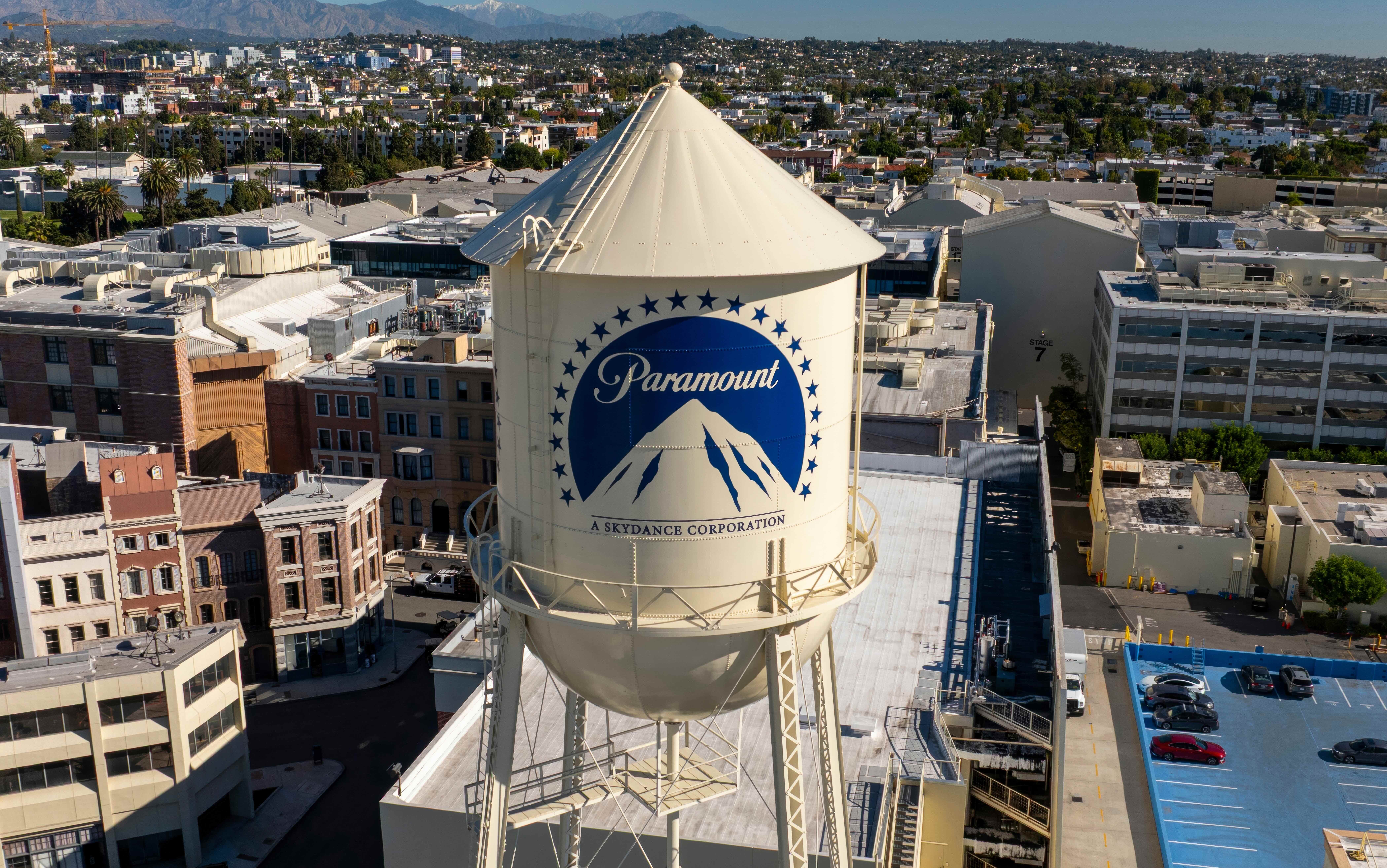
On Sunday evening, CBS News Editor-in-Chief Bari Weiss killed a 60 Minutes segment about men deported to El Salvador’s CECOT mega-prison—a story that had been screened five times, cleared by CBS attorneys, cleared by Standards and Practices, and was scheduled to air in less than three hours.
Her explanation: the story “needed additional reporting.”
On Monday, Canada’s Global TV aired the segment anyway.
And now, CBS and its parent company Paramount Skydance are frantically issuing copyright takedowns across the internet to prevent people from seeing what their own legal team approved, what their own standards team cleared, and what their own Canadian affiliate already broadcast.
They’re threatening to sue people for watching journalism about torture.
Let me be very clear about what’s happening here: this isn’t editorial judgment. This is institutional suppression using copyright law as a weapon. And the desperation of the response—the “flurry” of takedown notices hitting X, YouTube, and other platforms—proves everything I said yesterday about Weiss handing the administration a kill switch over journalism.
What They’re Trying to Hide
The segment CBS is frantically trying to erase from the internet features Luis Munoz Pinto, a Venezuelan college student who sought asylum in the United States. He says he has no criminal record. The Trump administration deported him to CECOT anyway.
Here’s what he describes:
“There was blood everywhere, screams, people crying, people who couldn’t take it and were urinating and vomiting on themselves. Four guards grabbed me, and they beat me until I bled until the point of agony. They knocked our faces against the wall. That was when they broke one of my teeth.”
That’s the journalism Bari Weiss killed Sunday night claiming it wasn’t ready.
That’s the testimony CBS lawyers are now threatening people for sharing.
The Timeline Tells a Story
Friday: Donald Trump complains publicly about his treatment on 60 Minutes.
Saturday and Sunday: David Ellison—who owns CBS through Paramount Skydance and is currently seeking FCC approval for a Warner Bros. Discovery acquisition—speaks with Bari Weiss. (I have this from sources close to both.)
Sunday evening, 2-3 hours before air: Weiss kills the segment.
Monday: Global TV airs it anyway because they’re not subject to whatever pressure was applied to CBS.
Monday and Tuesday: Paramount Skydance issues copyright takedown notices frantically trying to suppress a segment that’s already been broadcast, that was already cleared by every internal check, that people are now sharing because they want to see what was deemed too dangerous to air.
What Editorial Judgment Ought to Look Like
If this were actually about journalistic standards—if the story really “needed additional reporting” as Weiss claimed—CBS would do one of two things:
Let it circulate and issue a statement: “This segment didn’t meet our standards. Viewers will see why.”
Simply decline to comment, understanding that journalism sometimes doesn’t make it to air and that’s normal.
Instead, they’re using copyright law to prevent people from seeing it.
That’s not protecting editorial standards. That’s confession that the story was ready—so ready, so damaging, so dangerous to power that it must be suppressed even after their own affiliate already aired it.
The Legal Clearance Matters
Sharyn Alfonsi, the correspondent who reported this story, sent an email to her CBS colleagues after Weiss killed it. The New York Times obtained it:
“Our story was screened five times and cleared by both CBS attorneys and Standards and Practices. It is factually correct. In my view, pulling it now, after every rigorous internal check has been met, is not an editorial decision; it is a political one.”
Five screenings. Legal clearance. Standards clearance. Factually correct.
Weiss killed it anyway. And now CBS is threatening legal action against people who share it.
What This Reveals About Institutional Capture
When I wrote about this yesterday, some people—including friends of mine who know Weiss—said I was being unfair. Maybe it was just poor editorial judgment. Maybe it was “chaos Bari” making a hasty call. Maybe the timing was unfortunate but the decision was defensible.
The copyright takedowns prove them wrong.
If this were editorial judgment, CBS would stand behind the decision and let people judge the segment for themselves. Instead, they’re using legal threats to suppress journalism that cleared every internal hurdle.
That’s what institutional capture looks like in practice. Not just killing stories that threaten power—that’s been happening forever. But using legal mechanisms to prevent people from seeing what was killed. Weaponizing copyright law to suppress cleared journalism about government actions.
David Ellison needs FCC approval for his Warner Bros. Discovery acquisition. Donald Trump controls the executive branch that includes the FCC. Trump complained about 60 Minutes on Friday. By Monday, CBS was issuing copyright takedowns to suppress a segment about torture following U.S. deportations.
The mechanism isn’t subtle. The desperation isn’t subtle. And the stakes aren’t subtle.
Men Described Torture and Power Killed the Story
I want to return to what Luis Munoz Pinto said because that’s what this is actually about:
Blood everywhere. Screams. People urinating and vomiting on themselves from terror and pain. Guards beating him until he bled. Knocking faces against walls. Breaking teeth.
That’s what the United States government sent people to. That’s what 60 Minutes documented. That’s what CBS lawyers cleared. That’s what Standards and Practices approved. That’s what Sharyn Alfonsi reported. That’s what was scheduled to air.
And that’s what Bari Weiss killed, claiming it needed more work.
Now CBS is threatening to sue people for watching it.
The Streisand Effect and Moral Clarity
By issuing frantic copyright takedowns, CBS has accomplished something remarkable—what my friend Mike Masnick, who coined the term “Streisand Effect” back in 2005, would recognize immediately: they’ve confirmed that the story matters enormously. They’ve proven it was ready—so ready they don’t want anyone to see it. They’ve demonstrated that the “additional reporting” excuse was cover for political suppression.
The internet being what it is, the segment has been preserved. The Internet Archive has it. People have copies. The takedowns won’t work—not completely, not permanently.
But that’s not the point. The point is what the attempt reveals.
When institutions use legal mechanisms to suppress cleared journalism about government brutality, they’re not protecting standards. They’re protecting power. They’re proving that the indexing apparatus—the systems we built to document reality and hold power accountable—has been captured by the very forces it was designed to constrain.
What Comes Next
Congressman Thomas Massie (R-KY) and Congressman Ro Khanna (D-CA) are preparing contempt proceedings against Attorney General Pam Bondi for violating congressional statute to withhold Epstein files. They’re demanding transparency about who raped whom and why those names stay hidden while survivor names get released.
That’s one fight for the indexing apparatus.
This is another.
Both fights are about the same thing: whether power can simply erase documentation of what it did. Whether legal mechanisms designed to protect speech and property can be weaponized to suppress accountability. Whether institutions designed to constrain power will do so, or whether they’ll become instruments of power instead.
Bari Weiss killed cleared journalism about torture. David Ellison’s company is now threatening legal action against people who share it. CBS lawyers are frantically trying to suppress what their own legal team approved.
That’s not journalism. That’s institutional capture using copyright law as suppression tool.
And if we accept this—if we let this become normal, if we treat copyright takedowns as legitimate response to people sharing cleared journalism about government brutality—then we’ve lost something far more important than one segment.
We’ve lost the apparatus itself. We’ve accepted that power can kill documentation of what it does, then threaten lawsuits to keep it dead.
The Choice Is Simple
Men described torture after U.S. deportation. Journalists documented it. Lawyers cleared it. Standards teams approved it. And power killed it, then threatened to sue anyone who watches.
You can accept Weiss’s explanation that it “needed additional reporting” despite clearing every internal check. You can accept CBS using copyright law to suppress journalism about government actions. You can accept that institutions built to constrain power now serve power instead.
Or you can see what’s actually happening: the indexing apparatus breaking in real time, institutional gatekeepers handing administration a kill switch over accountability journalism, and legal mechanisms being weaponized to prevent people from witnessing what their government does.
I know what I see. The copyright takedowns are confession. The frantic suppression proves the story was ready—too ready, too damaging, too dangerous to those who sent men to places where guards beat them until they bled and broke their teeth against walls.
Bari Weiss is not on the level. David Ellison is not on the level. And CBS News—once an institution that held power accountable—is now using copyright law to protect power from accountability.
The segment is out there. The internet doesn’t forget. But the attempt to suppress it tells us everything we need to know about what journalism has become when power owns the platforms and kills the stories that threaten it.
They can threaten to sue the internet. But they can’t unring the bell. We know what they killed. We know why they killed it. And we know what the desperate attempt to keep it dead reveals about institutions that abandoned their purpose to serve power instead.
Go Deeper into the Circus
What Did Jeffrey Epstein Know About Donald Trump?

Well. After seeing the farewell letter allegedly written by Jeffrey Epstein to Larry Nassar—a letter that was briefly included in the DOJ’s Epstein files release before being pulled, now circulating widely on social media—I’m forced to advance a theory.
Bari Weiss is Not on the Level

On Saturday, Bari Weiss—CBS News’s editor-in-chief—killed a 60 Minutes story about men deported to El Salvador’s CECOT mega-prison. The segment, reported by correspondent Sharyn Alfonsi, had been promoted publicly on Friday. It had been screened five times. Legal counsel cleared it. Standards and Practices cleared it. The story was factually correct.
There's a reason that I define the name Oracle as an acronym: One Rich Asshole Called Larry Ellison.
I grabbed the 1.4G .mp4 for my personal archive.
This is one time they aren't going to be able to quash the distribution.
Omni Consumer Products - Weyland Yutani - Buy N Large - Umbrella Corporation - Cyberdyne - you can’t say we weren’t warned. Repeatedly.